
HumanX by IARetail
The Intentional Sip
A New Playbook for Beverage Retail Design
Beverages have become one of the fastest, lowest-friction ways consumers explore new identities, rituals and aspirations.
Introduction
The beverage category has become one of retail's most powerful windows into changing consumer behaviour. A coffee, protein shake or functional soda is often a daily decision that reflects how someone wants to feel, who they want to be, and how they want to spend their time.
Because beverages are affordable, habitual and highly visible, consumers are far more willing to experiment within this category than almost any other. That makes it an early indicator of wider cultural shifts, from the rise of functional wellness and the sober curious movement to premium daily rituals and identity-driven consumption.
This HumanX playbook explores what those shifts mean for retail design. Drawing on consumer psychology, behavioural research and emerging cultural signals, we translate changing consumer expectations into practical strategies for grocery, convenience, cafés, fast casual and speciality beverage environments.
Our Method
At HumanX, our work starts with understanding people. We look beyond products and categories to understand the behaviours, motivations and cultural shifts shaping how consumers live today. Our methodology moves through four layers.
Human Truths
What endures
These are the fundamental human needs that remain remarkably consistent over time. Belonging, identity, reward, comfort, efficiency and connection form the foundation for every experience we design.
Cultural Signals
What's emerging
Next, we identify the cultural, technological and societal changes influencing behaviour. These signals help us understand where consumer expectations are moving before they become mainstream.
Experience Drivers
What shapes behaviour now
We then translate those shifts into the behaviours people increasingly expect from brands and physical spaces. This includes how they discover products, build habits, make decisions and interact with retail environments.
Design Exploration
How it takes form
Finally, we apply those insights to retail design. Store planning, merchandising, customer journeys, service models and brand experience all become opportunities to respond to changing behaviour in meaningful ways. This framework allows us to move from consumer insight to practical design recommendations that are grounded in evidence and built around how people actually behave.
The Beverage
Ecosystem
Our research found that beverages increasingly play three distinct roles in consumers' lives. Most purchases sit across more than one of these dimensions.
Identity
Drinks as Identity
Consumers increasingly use beverages to express who they are. Matcha, functional drinks, premium coffee and the sober curious movement have all become visible reflections of lifestyle, values and personal identity.
Function
Drinks as Function
Beverages are increasingly purchased for the outcome they deliver rather than simply taste or refreshment. Consumers are becoming more intentional, looking for products that support specific goals such as energy, hydration, gut health, focus, recovery or appetite management.
Ritual
Drinks as Ritual
Morning coffees, afternoon matchas, post-workout protein shakes and evening functional drinks create rhythms that provide consistency, enjoyment and a sense of pause. Consumers are also embedding wellness into these rituals, incorporating beverages that support digestion, hydration and overall health as part of their daily routines.
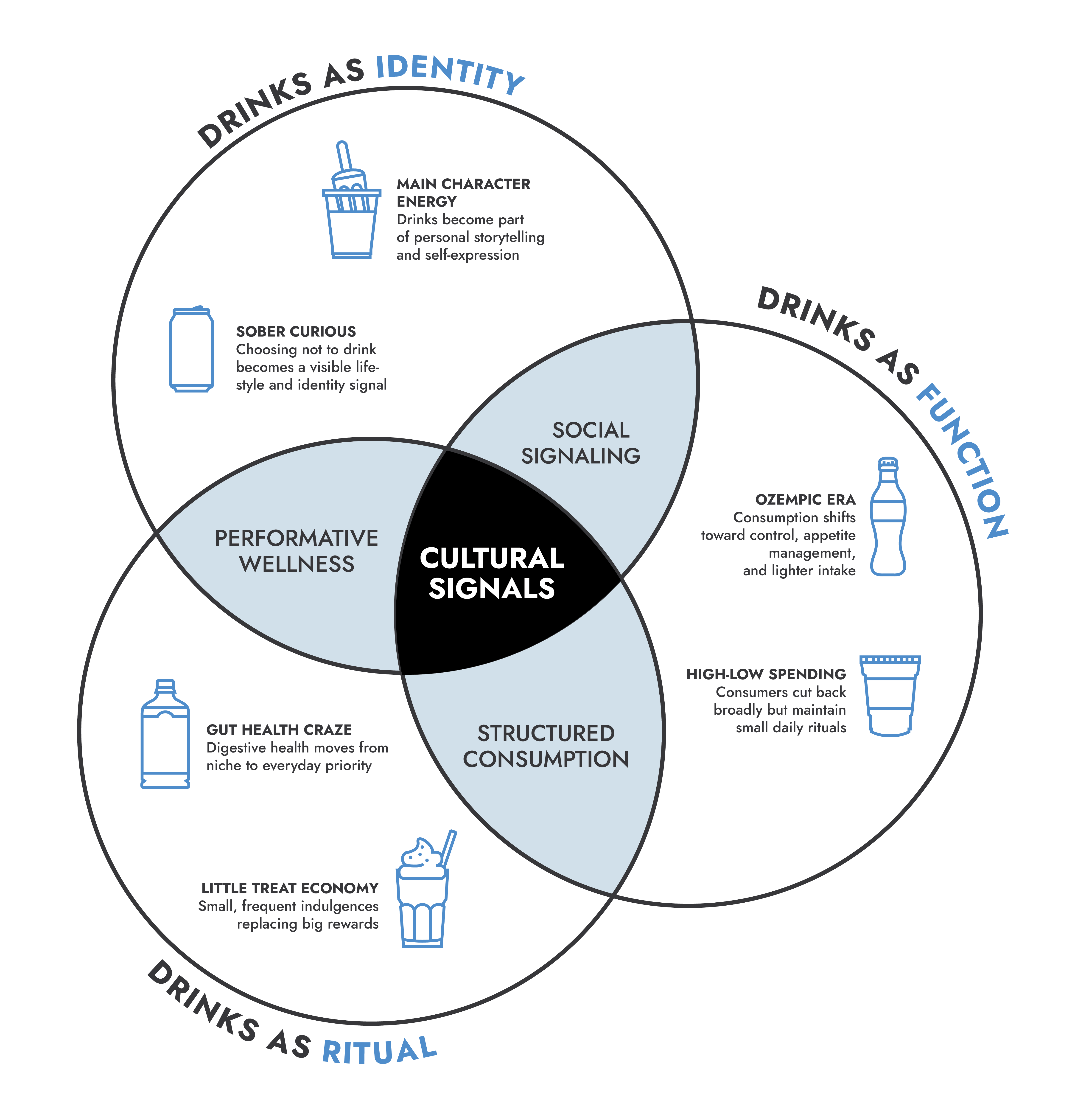
Where these themes overlap, we see some of the strongest opportunities for retailers. Performative wellness, social signalling and structured consumption are influencing everything from merchandising and product innovation to store planning and customer experience.
Applying the Insights Across Beverage Retail
These behavioural shifts create opportunities to rethink how beverage environments are designed, merchandised and experienced across grocery, convenience, cafés, fast casual and speciality retail.
Identity asExpression
Ritual asExperience
Function asNavigation
Self-Expression Displays
Curate products as identity badges

Ritual-Based Layouts
Spaces built around daily moments
Fast vs. Slow Zones
Time becomes a design variable
Visible Consumption
Designed to be seen, held, and shared

Shareable Formats
Consumption is collective rather than individual

Function-Led Zoning
Grouped by desired outcome (i.e. energy, focus, calm, or gut health)

Functional Signaling
Wellness benefits move from product attributes to identity markers

Habit Loops
Design that reinforces repetition
Social Moments
Spaces designed for sharing and visibility

21.5%
of Gen Z abstain from alcohol entirely, while 39% consume it only occasionally.
61%
of Gen Z now buy functional drinks several times a month; two in five of the population do the same.
£9.73bn
the global prebiotics market by 2029, projected to nearly double from £5.17bn in 2023.
4 in 10
consumers still indulge in discretionary spending, favouring food and beverages over personal care.
Liquid Intentions: The Future Laboratory, 2026