
Festival: Transformation
& Celebration
By Lauren Hollaway | Designer
Famous for its vibrant culture, delicious Catalan cuisine, rich history, and relaxed lifestyle, Barcelona’s charms are well known. Each year, the city hosts multiple festivals, and one of the oldest (dating back 200 years) and most anticipated is the Festa Major de Gracia, a neighborhood celebration famous for its elaborately decorated streets and warm hospitality.
I first learned about the festival 10 years ago and was amazed by its blend of creativity, community, history, and design. It seemed to be a living example of everything I love most about design, human ingenuity, and the capacity to embrace joy. Moreover, by emphasizing community participation and celebration, the festival resonates strongly with current workplace design trends that prioritize participatory design, inclusion, and organizational culture.
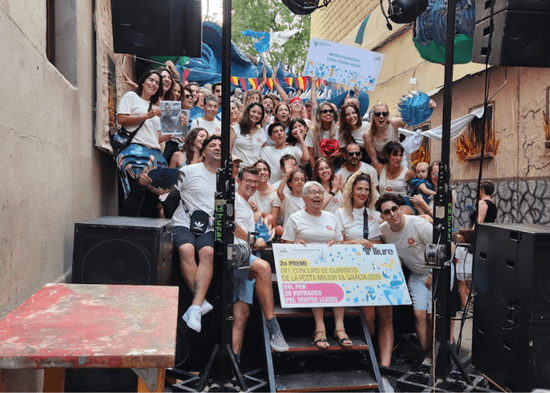
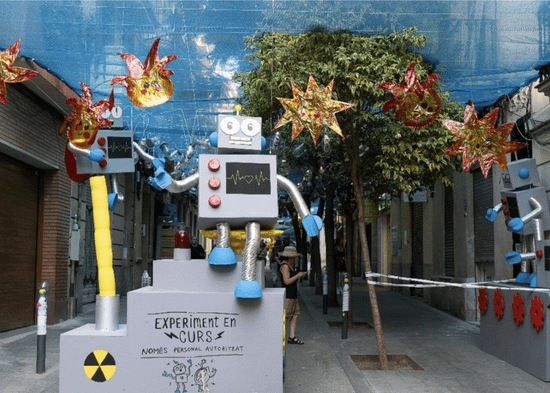
As the 2025 Spark fellow whose focus was global research, I traveled to Barcelona’s Gracia district, a vibrant neighborhood of small shops, artist studios, and local mom-and-pop eateries, to see if the festival was all I had envisioned. It did not disappoint. Every year for one week, Gracia transforms its streets into immersive, community-built installations featuring food and entertainment, along with workshops, children’s crafts, competitions, castellers (human pyramids), and a parade at the conclusion of the festival.
This year, twenty-three streets and plazas and 14 businesses participated, hosting about two million visitors along 1.6 miles of engaging, easy-to-meander medieval streets. A broad overarching theme sets the festival tone, and the community is asked to blend design with creativity while championing the use of recycled materials. It showcases how collective imagination can transform an everyday urban space into an engaging, spirited environment that emphasizes community, identity, and connection.
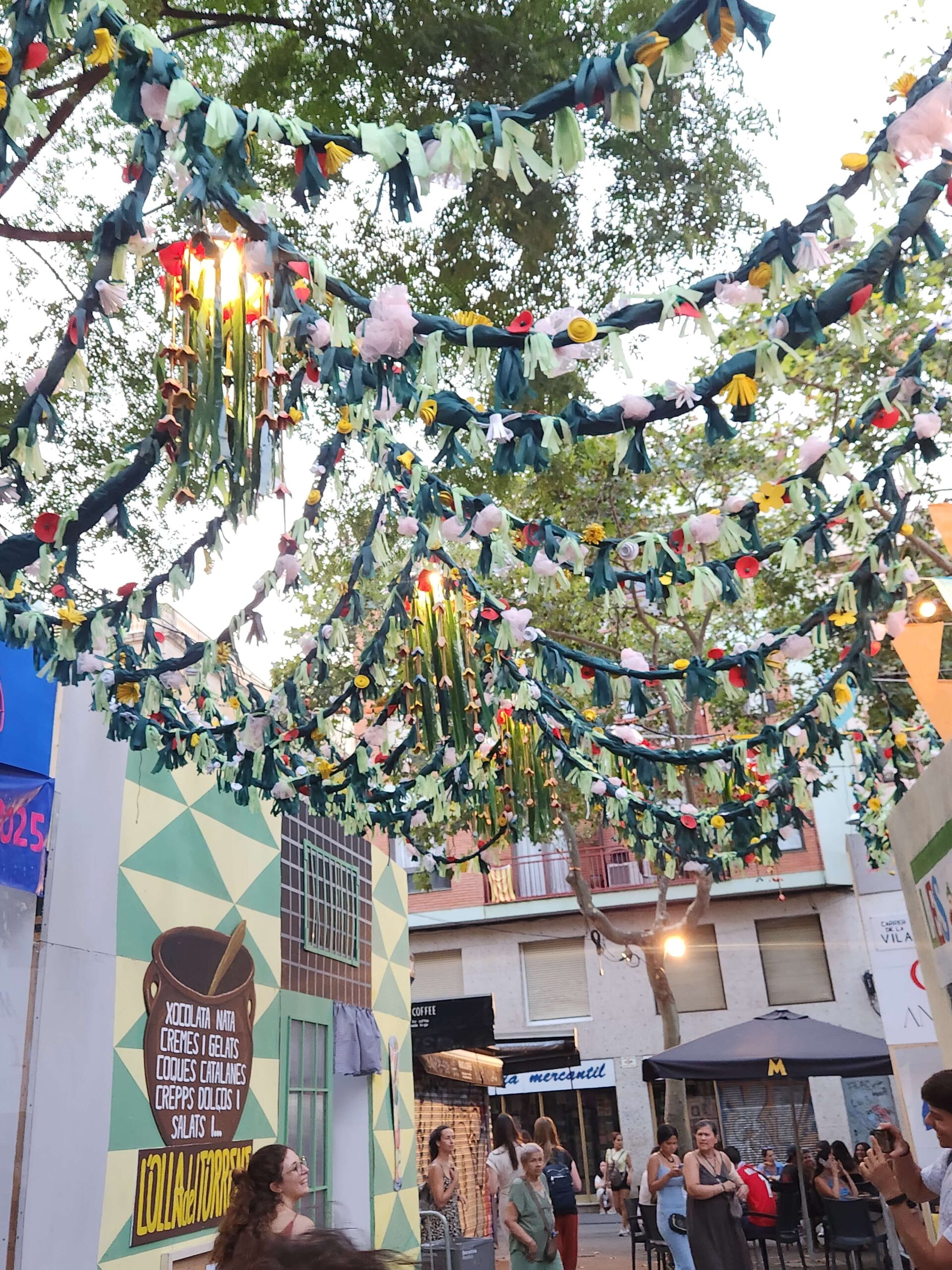
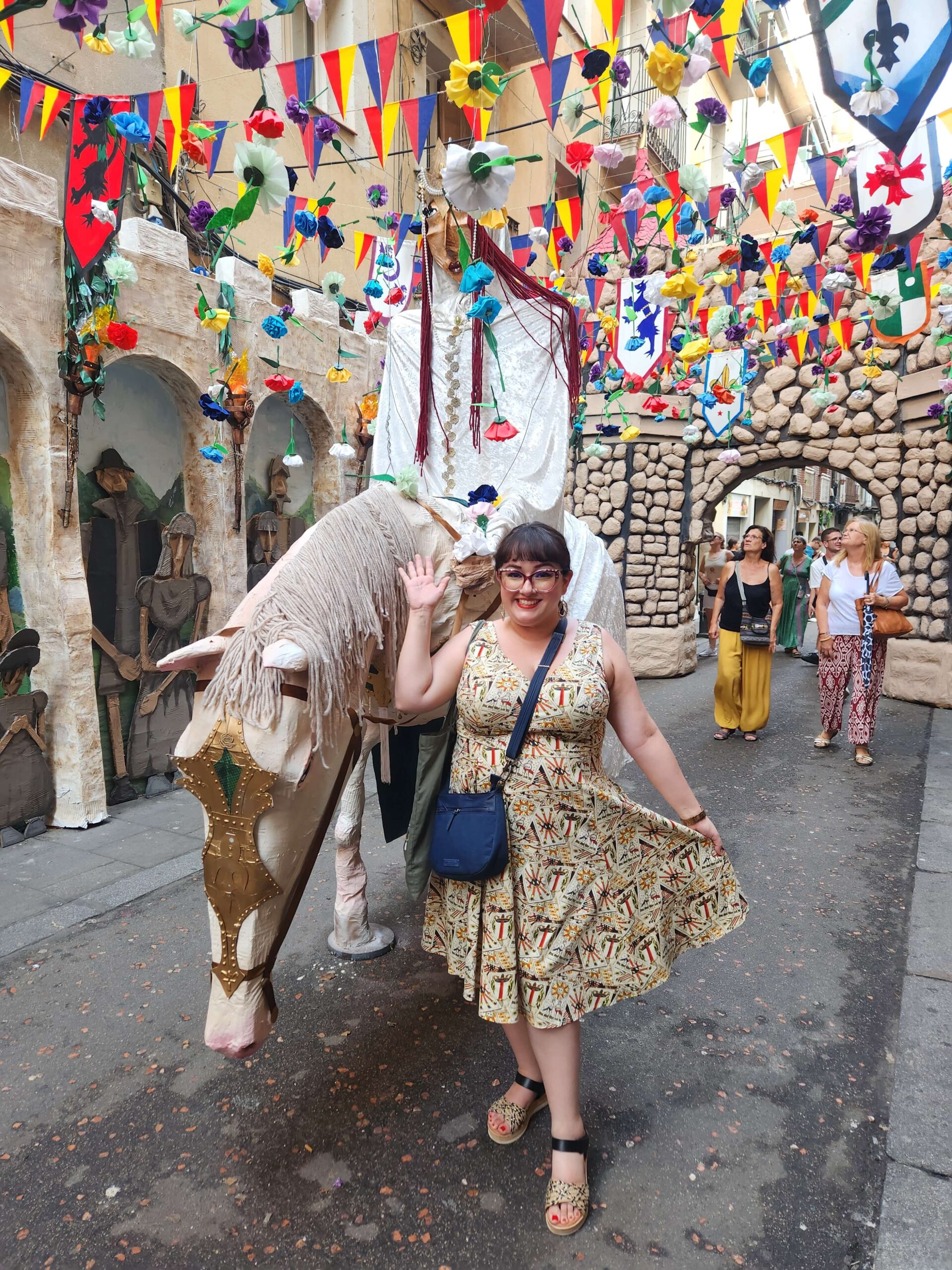
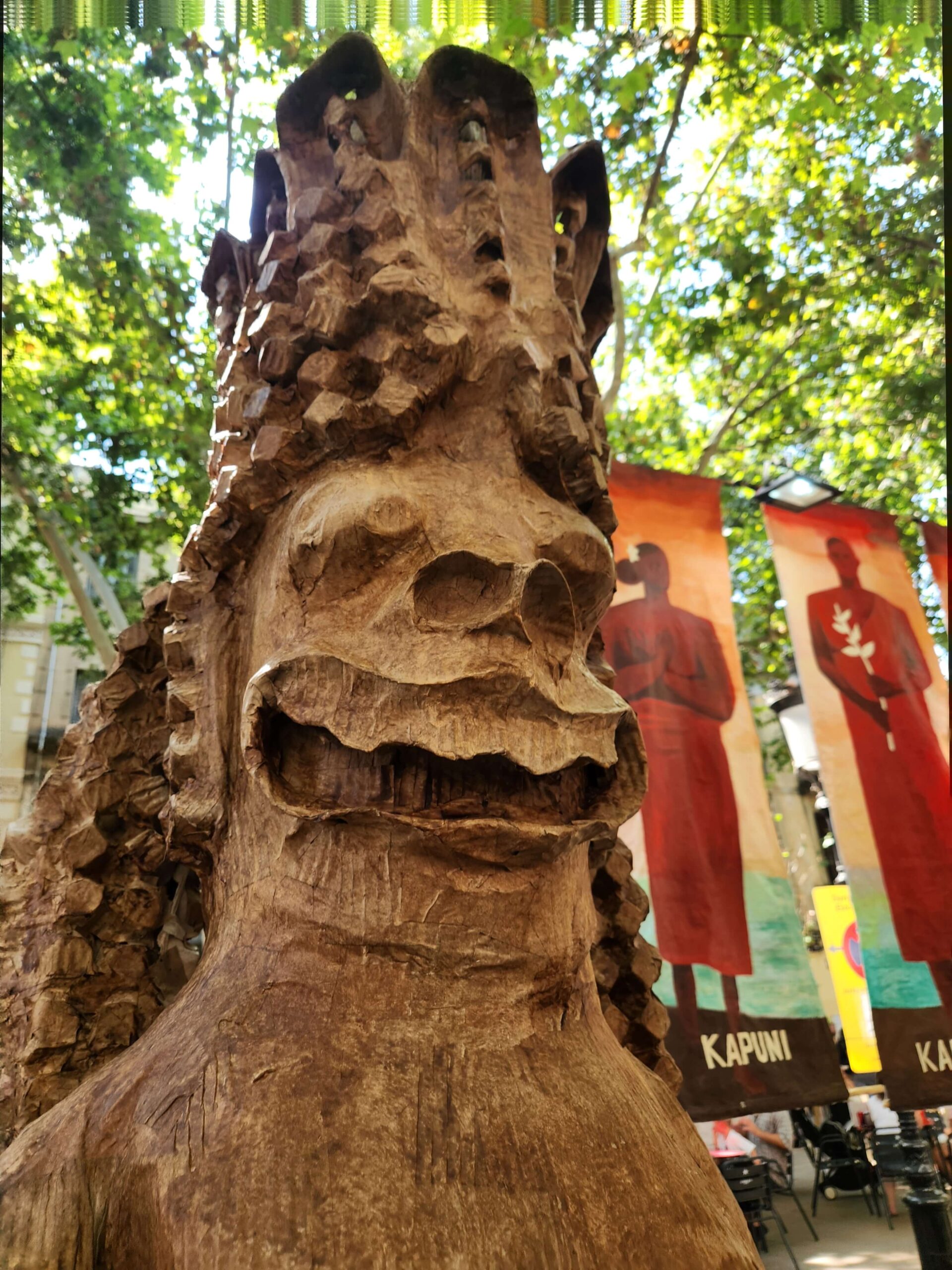
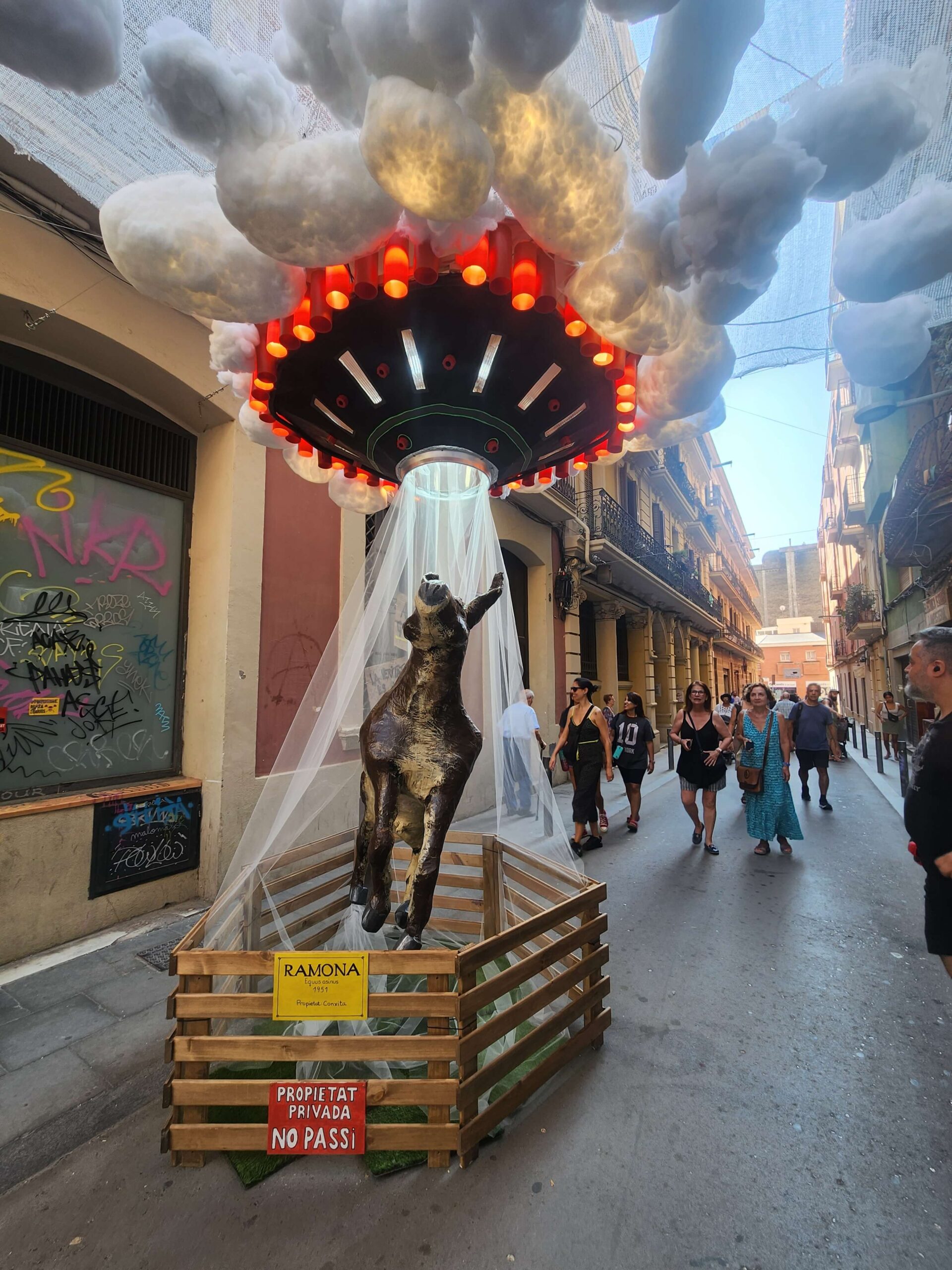
The theme for 2025 was Nostalgia, and under that umbrella each street adopted an individual theme. Carrer Mozart, for example, focused on Sant Jordi, the region’s patron saint, credited with saving Catalonia from a huge, imposing dragon. The community spent months making a beautiful block-long dragon, adorned with papier-mache scales crafted by hand, with expats working side by side with lifelong residents as a show of respect for their new neighborhood.
Each year, the festival aesthetic is based on a mix of carefully chosen, recycled elements that are repurposed in inventive ways, heightening visual impact with incredible depth and texture. From the smallest details to massive street decorations, the community makes everything by hand. Focused on sustainability, materials are reused for several years, with new materials added as needed, all crowd-sourced and collected through a neighborhood app, then dropped off at designated locations. Developed through collaboration and resourcefulness, the festival exemplifies how design can thrive within real-world limitations.
Listening to, learning from, and dining with the community that was generous with its time, I discovered that the most critical aspect of the festival is connection, neighbors sharing ideas, building, painting, and problem-solving together. The initial planning phase sparks imagination; the creation phase invites participation and generates pride in the collective investment of imagination. The festival celebration is when the community sees itself reflected in what it has created. The process builds culture and belonging, transforming not just spaces but the people who share them. Co-creation with art as a magnet drives participation, strengthens tradition, establishes rituals, and inspires joy.
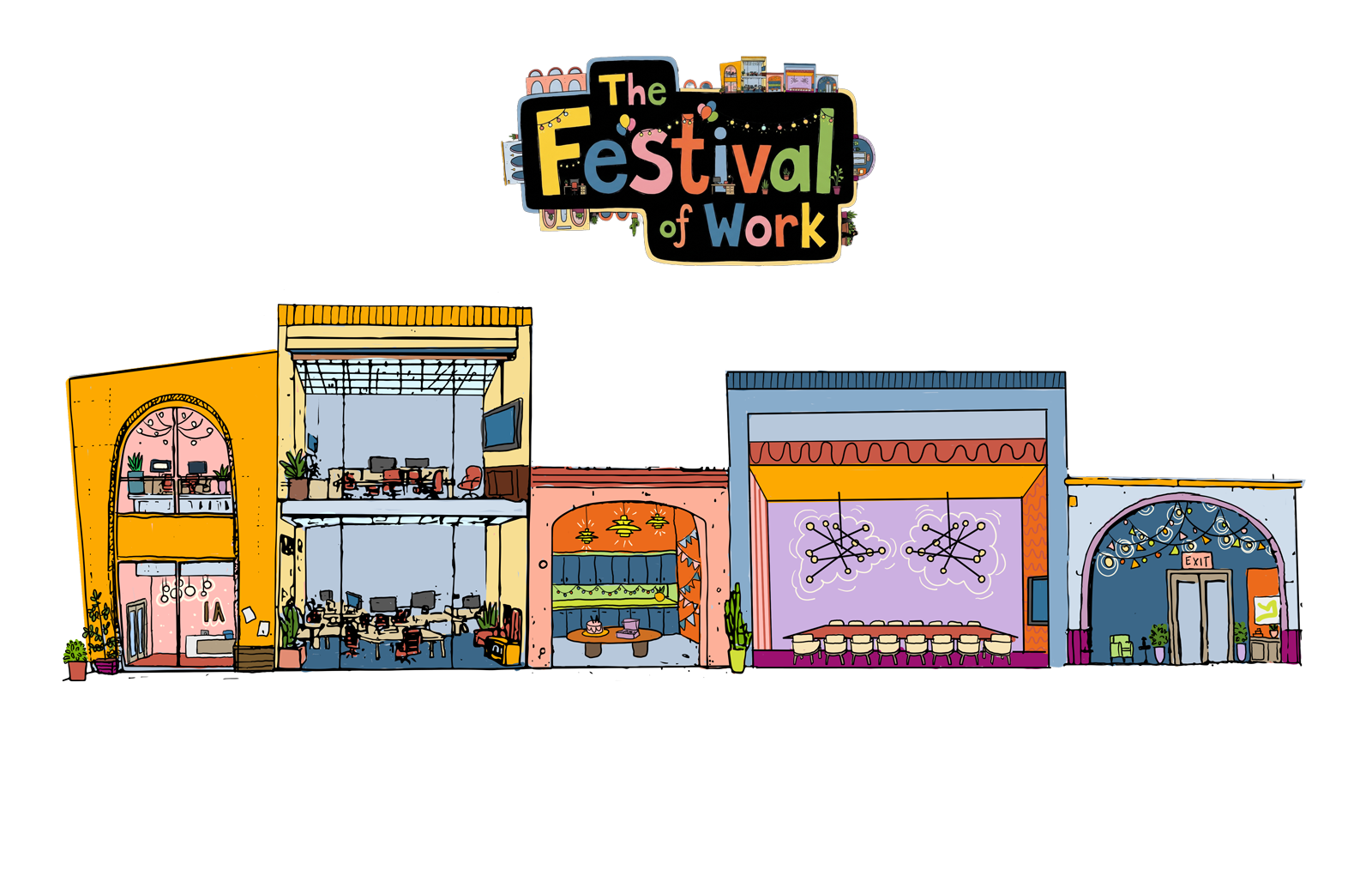
As an avid illustrator, as well as a designer, I could not resist drawing a walkthrough and design dissection of a typical street.
Each street follows a clear spatial rhythm, presenting a complete experience with a distinctive theme, color palette, and mood. The entrance immediately captures visitor attention, a threshold that invites and signals something beyond. Guiding visitors from the ordinary into a world shaped by collective imagination, the entrance is the first beat in the rhythm of storytelling, framing the experience, setting the emotional tone, and sparking curiosity.
From there, visitors move through the main display area and explore opportunities to gather, then come the food stalls (proceeds from sales go towards next year’s installations and entertainment), followed by the entertainment stage. Along the way, they are invited to linger and engage, sharing moments with one another and the community. These deeply social, tactile spaces blur the line between audience and creator, turning passive visitors into active contributors. This is where emotion and memory fuse. The themed story becomes unforgettable, not just witnessed but felt. Spatial storytelling elicits expectations and emotions, allowing visitors to feel the experience.
Ultimately, guests depart through a beautifully detailed exit, a moment for reflection and release. The streets of Gracia bring a new theme to life every year during the festival, and the thrill of that reinvention brings visitors back to the festival year after year.
CLICK MARKERS TO EXPLORE
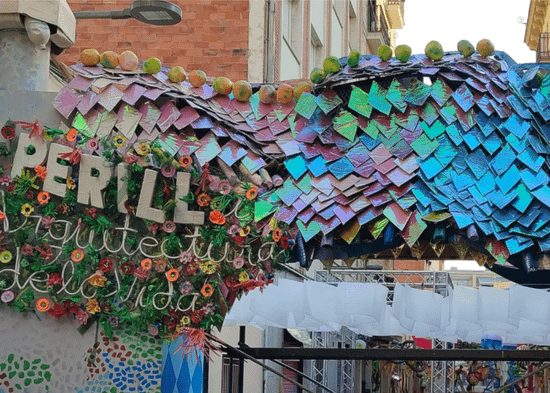
Entrance
Threshold
A moment of arrival that signals transition. The entrance captures attention, frames the theme, and invites visitors from the everyday into a shared, imaginative world shaped by the community.
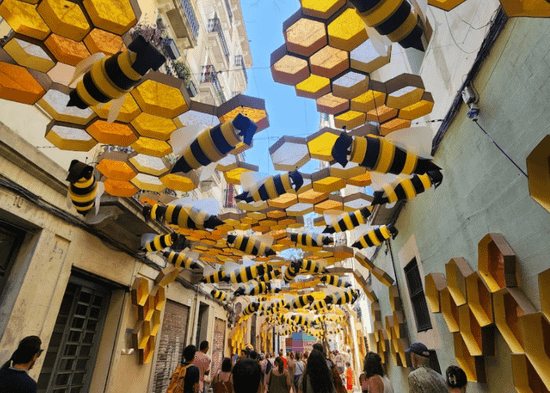
Main Display
Immersive Street
The heart of the experience. Elaborately crafted installations, color, texture, and scale immerse visitors in the story, encouraging exploration, pause, and visual discovery.
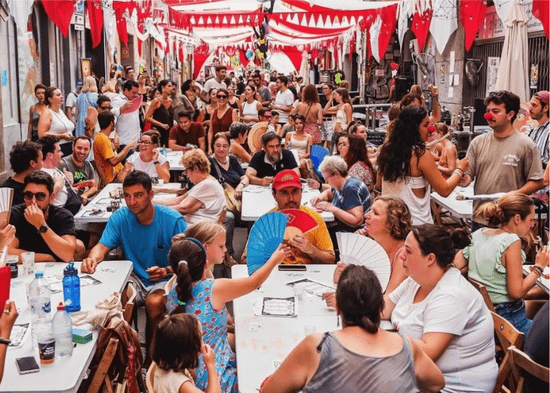
Food & Vendor Stalls
Culture & Community
Functional and social by design. Food stalls support the festival's future while acting as cultural anchors where conversation, tradition, and generosity intersect.
Entertainment Stage
Collective Energy
The focal point of collective attention. Performances, music, and events transform spectators into participants, reinforcing shared energy, celebration, and memory.
Exit
Release & Reflection
A beautifully detailed conclusion. The exit offers a moment to reflect, absorb, and carry the experience forward, reinforcing the desire to return year after year.
Click markers to explore
The Workplace as Festival
Recognizing the Festa Major de Gracia as a means of transforming community and place for over two centuries, I applied the festival model to the workplace. Integrating the festival perspective with workplace design makes it easy to see that the well-planned workspace, like the festival, can bring people together through action, ritual, collaboration, and celebration, creating inclusive, celebratory experiences.
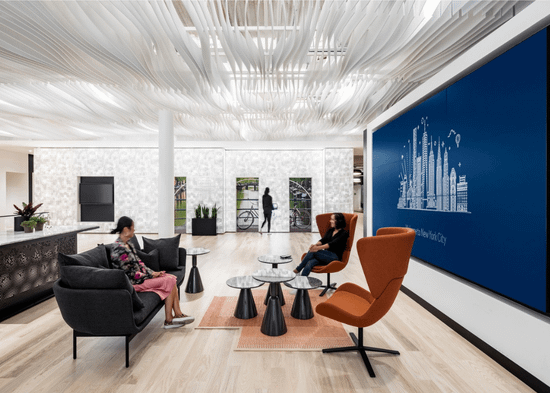
The lobby, as the threshold, sparks anticipation and a sense of connection from the moment of arrival. Passing into the main work area, similar to the heart of a festival street, colors, textures, and movement inspire curiosity, amplifying focus, energy, and emotion, making people want to explore, interact, create, and come together. This is where ideas flow, connections are made, and creativity happens.
Comparable to festival food stalls, the café or break area is the gathering place for recharging, enjoying spontaneous conversation, and sharing stories. As teams cross paths, culture quietly builds.
Then there is the conference room, the stage for presenting transformative strategies with precision and imagination, where big ideas are shared and celebrated with one another and clients, illustrated with mood boards, pinup sketches, slide decks, or even videos. And then back to the lobby, the portal for departing, feeling energized by creativity, connection, and shared experiences that reverberate in awareness.
Arrival / Threshold
Lobby / Reception
The first point of connection. The lobby signals entry into a shared culture, setting expectations and emotional tone while welcoming people into the rhythm of the workplace.
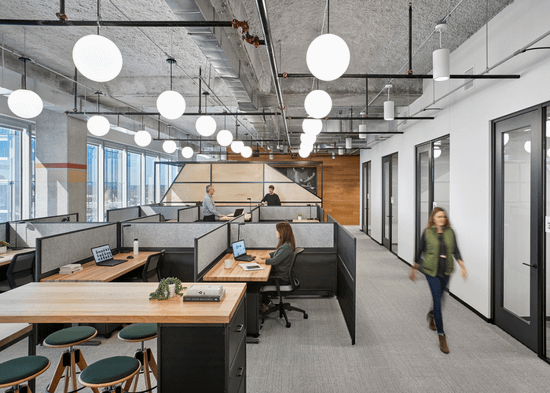
Immersive Core
Main Workspace
The heart of daily activity. Light, color, texture, and movement support focus and curiosity, encouraging exploration, collaboration, and creative momentum.
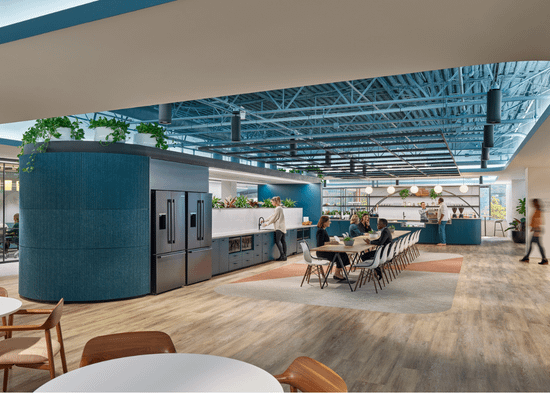
Recharge & Connect
Break Area
A place to refuel and reconnect. These spaces foster spontaneous interaction, storytelling, and cultural continuity throughout the day.
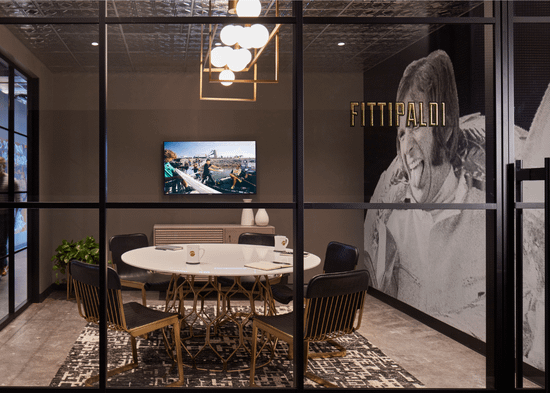
The Stage
Meetings
The setting for shared vision. Here, ideas are presented, debated, and celebrated through storytelling, visuals, and dialogue, transforming strategy into collective understanding.
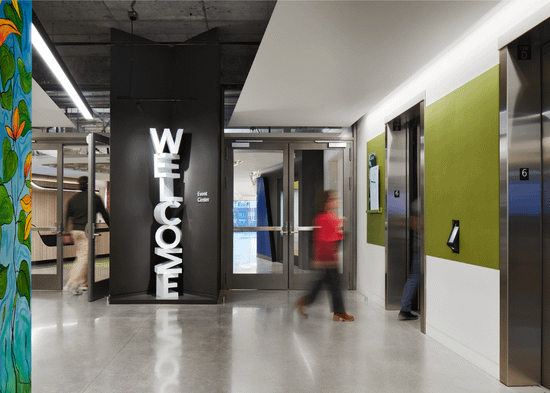
Departure & Renewal
Exit
The point of release. Departing through the lobby reinforces reflection, leaving people energized by creativity, connection, and shared experience that carries beyond the workplace.
Click markers to explore
Conclusion
What we learned from approaching workplace design from a festival perspective can change the nature of work, creating more inclusive, celebratory experiences. The design of space paves the way for meaningful rituals, shaping how people come together and interact, infusing culture with rhythm, and turning the experience of space into a positive memory.
Community and participation are at the heart of meaningful design. Design is meant to be shared, celebrated, and felt. If a festival in Barcelona can achieve those objectives with recycled materials and a vision, imagine what a designer can create with intention and expertise.
All Illustrations and Festival Photography by Lauren Hollaway

Lauren Hollaway
Designer | IA SoCal
In a variety of roles, from Job Captain to Project Manager to Project Designer, spanning over 17 years, Lauren Hollaway has built an impressive resume of industry experience for an array of clients that include retail, commercial, government, historic preservation, and education. An advocate for sustainability and the circular economy, she sits in IA’s Southern California studio. Lauren holds a Bachelor of Architecture from Woodbury University.