
Decarbonization Starts Before
the Lease
Brett Gardner, RID, NCIDQ, LEED AP BD +C
Senior Director of Sustainability, Principal
As organizations accelerate efforts to meet climate commitments, the conversation around decarbonization is increasingly expanding beyond energy procurement and corporate operations. As a result, real estate decisions, lease negotiations, and workplace design strategies have become powerful tools for reducing emissions and supporting long-term ESG objectives. For organizations with Science Based Targets initiative (SBTi) commitments, every real estate decision represents an opportunity to influence operational carbon, embodied carbon, and Scope 3 emissions. Long before occupancy, the most successful decarbonization strategies begin during site selection, lease negotiations, and design planning.
The Built Environment Opportunity
Buildings remain one of the most significant contributors to greenhouse gas emissions. The choice of building, energy systems, and materials can influence emissions for years or decades. Organizations that proactively evaluate building certifications, electrification opportunities, renewable energy availability, and operational efficiency can significantly reduce future impacts while often lowering operating costs and improving resilience.
Green Leasing as a Strategic Climate Tool
A green lease moves beyond traditional legal and financial requirements by establishing environmental expectations and performance objectives between landlord and tenant. Common provisions include energy-use transparency, utility data sharing, waste reporting, water conservation measures, renewable energy opportunities, indoor environmental quality goals, and sustainability-focused capital improvements.
Transparency Creates Shared Value
One of the greatest advantages of green leasing is transparency. Historically, tenants have struggled to obtain energy, waste, refrigerant, and water consumption data from multi-tenant buildings. Green lease provisions establish data-sharing expectations that support greenhouse gas inventories, CDP disclosures, and SBTi tracking. At the same time, landlords gain valuable insight into tenant performance and opportunities to improve building operations. The relationship becomes a partnership focused on performance improvement rather than simply a lease transaction. Both parties benefit through lower operating costs, stronger ESG performance, increased asset value, and reduced emissions.
Prioritize the Biggest Carbon Drivers
The most impactful decarbonization strategies focus first on major sources of emissions. Building electrification, elimination of natural gas for heating, high-efficiency HVAC systems, renewable electricity procurement, and energy-efficient lighting often provide the largest operational carbon reductions. Selecting buildings designed around these principles can lock in lower emissions for the duration of the lease term.
Reuse Before You Replace
Embodied carbon is often overlooked during workplace renovations. Furniture, partitions, ceilings, flooring, and architectural elements contain significant embedded emissions from extraction, manufacturing, and transportation. Reuse and refurbishment strategies frequently provide greater carbon benefits than purchasing new products, even when those products are marketed as sustainable. Circular economy approaches extend material life cycles, reduce waste, and preserve embodied carbon already invested in existing assets.
Learning From Real Projects
IA continues applying these principles to its own operations as well as client projects. Fifty percent of IA studio locations are LEED, BREEM, or Energy Star Certified buildings, offering improved energy efficiency, lower operational costs, and reduced environmental impacts. Our Boston studio, for instance, is in a LEED Gold and Fitwell certified building, and the Atlanta studio remains in a LEED Silver building featuring MASS Timber construction, representing a significant embodied carbon reduction in construction materials. Moreover, use of a green leasing strategy can yield multiple, varied, and unique benefits per location. A few examples from our 19 studios prove the point. At the new Seattle studio, the base building does not use natural gas, eliminating approximately 3.6 metric tons of CO2e Scope 1 emissions.
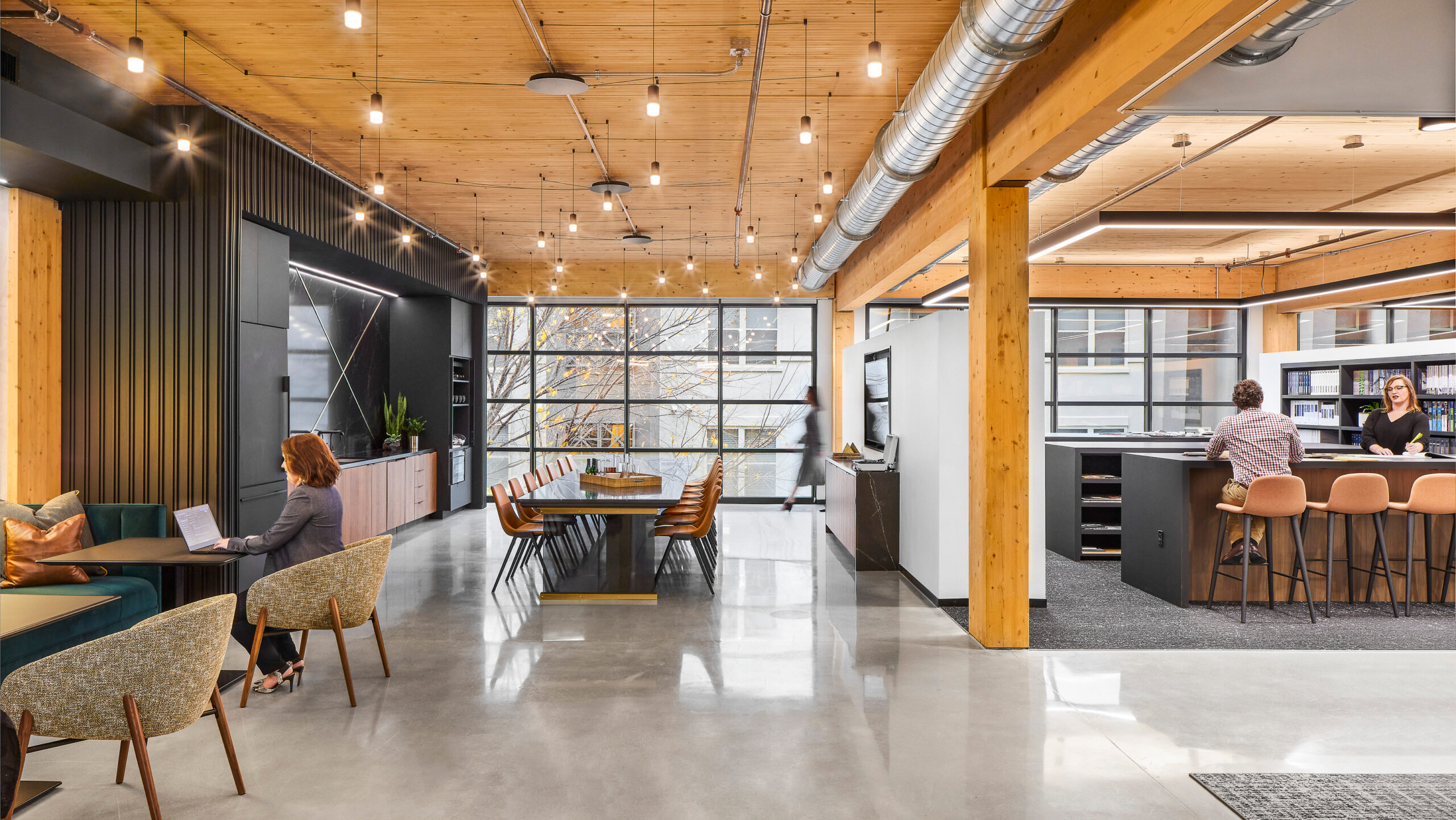
The IA Atlanta studio remains in a LEED Silver building featuring MASS Timber construction
Our Denver studio recently signed a lease for a new location that is LEED Gold Certified. And, the landlord agreed to electrical sub-metering of the IA space, which will allow us to collect more accurate electrical-use data to better adjust energy-efficiency measures during operations over the life of the lease.
When our Chicago studio renewed its lease, negotiations ensured the use of tenant allowance dollars for LED Light fixture upgrades. That simple factor improved energy efficiency by 33%, yielding Scope 2 emissions reductions equivalent to CO2 emissions from electricity use at 3.1 homes for one year—representing an overall 4% reduction of the Scope 2 emissions inventory across IA’s portfolio.
Beyond leasing, the design of our studios and client projects continues to focus on achieving sustainability goals. Our award-winning design of the United Airlines Headquarters demonstrates how reuse and circular economy principles can generate thousands of metric tons of embodied carbon reductions while maintaining exceptional workplace quality. And our new Seattle studio incorporates extensive furniture reuse, electrified systems, improved energy performance, and the use of regenerative materials, including one of the largest commercial installations of 3D-printed furniture in the U.S. These projects prove that climate-positive outcomes can be achieved without compromising design excellence.
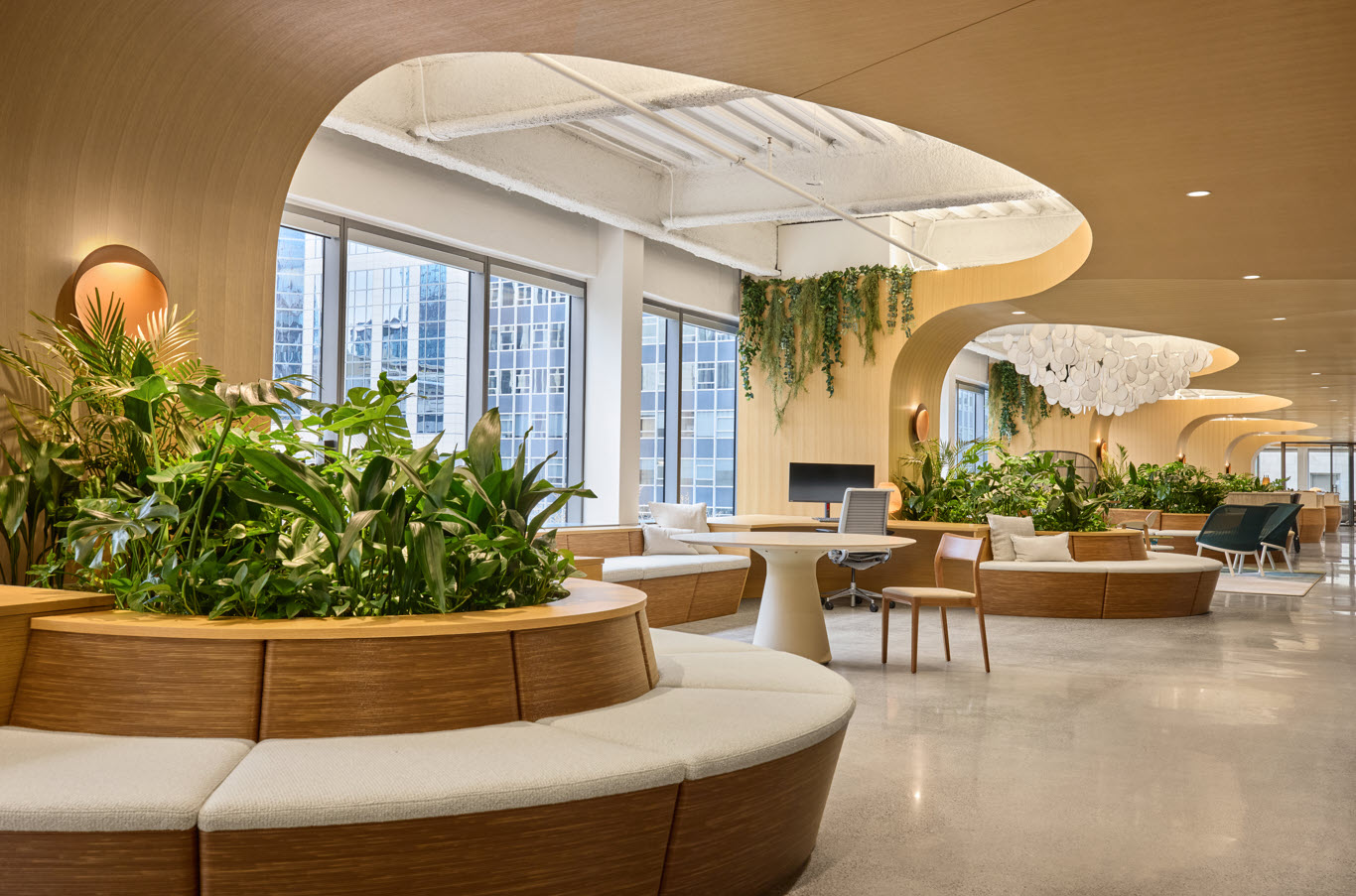
Curving along IA Seattle's street-facing side is a 3D-printed, serpentine banquette (above) fabricated from a renewable bioresin.
The Power of Small Decisions
Meaningful emissions reductions rarely come from a single initiative. Rather, they result from the accumulation of many decisions: efficient fixtures, lighting controls, renewable energy procurement, low-carbon materials, sustainable procurement requirements, construction waste diversion, and employee engagement. Individually, these actions may seem modest. Collectively, they create substantial progress toward climate targets.
Looking Ahead
Organizations increasingly face the expectations of investors, clients, employees, and reporting frameworks to demonstrate climate action. Green leasing provides a mechanism to align landlord and tenant interests, generate environmental transparency, and create measurable reductions. When combined with reuse strategies, electrification, renewable energy, and sustainable design practices, green leasing becomes a practical pathway to decarbonization. The most sustainable square foot is often the one that is reused, and the most effective decarbonization strategy often begins well before the lease is signed.

Brett gardner, RID, NCIDQ, LEED AP BD+C
Senior Director of Sustainability, Principal
Brett Gardner is IA’s Senior Director of Sustainability and a pivotal force in steering the firm’s sustainability initiatives. Over the last six years, IA has set ambitious goals to mitigate the impacts of construction waste on the environment, joined the Mindful Materials framework, created IA's ESG document, and signed on to the AIA 2030 commitment as well as the Science Based Targets initiative program. Gardner’s role was critical in launching IA’s Ecos Studio and is vital to confirming and reinforcing our steadfast commitment to achieving a healthy planet.