
Moving to Austin's Beat
By Haley Nelson, with contributions from Dan Cheetham
Austin's office sector is recalibrating. Vacancy rates remain high, code requirements are evolving, and tenants increasingly expect environments that feel authentic, flexible, and wellness-driven. For building owners, this moment is an opportunity to create high-performing, future-ready environments that sync with the rhythms of Austin life.
The success of a repositioned building begins long before users arrive at their desks. Every step—from highway to street to lobby and individual workspace—shapes how people feel, focus, and perform. Insights from the Leesman Rhythms Report 2025 reinforce the importance of this holistic experience. However, drawing on more than 1.48 million workplace-experience responses across 122 countries and nearly 10,000 offices, research confirms a significant shift: the once-familiar Monday-to-Friday cadence has fractured into hybrid, personalized rhythms of commute, presence, and work.
In this fragmented landscape, nodding to the Leesman metaphor of orchestrating the future for new rhythms of work, design becomes the conductor that brings harmony back to the workday—especially in Austin, the Live Music Capital of the World.
Street-level: The Urban Interface
The workday begins before you arrive at the workplace. In Austin—where frequent hot weather, light, and movement shape daily life—the street-level experience plays a significant role in how people experience work.
The Great Streets Initiative and the Downtown Austin Alliance have laid critical groundwork by elevating pedestrian comfort and encouraging the creation of shade and activation of ground-floor spaces. Repositioned buildings can amplify these efforts by providing shade at arrival, transparent, welcoming façades, and materials that express Austin's distinctive cultural identity. A sense of belonging begins outside the building entrance. While employees and visitors may arrive with different expectations, buildings designed for overlap—those shared moments where a feeling of welcome and connection to place becomes most palpable—are the most successful.
Leesman's data around the commute to work underscores why these welcoming gestures matter:
- Although 52% of employees say the journey improves their quality of life,
- 38% describe their commute as a waste of time and 30% call it stressful.
- Commute satisfaction plunges from 92% for trips under 15 minutes to 35% for over two-hour commutes.
- Active commuters report dramatically better experiences; 89% of cyclists and 88% of walkers rate their commute as positive.
In Austin's car-centric but outdoor-oriented culture, the design mandate is clear: create arrival experiences that counterbalance commute fatigue and apply a hospitality mindset from the parking garage through the building lobby. While streetscapes define first impressions, it is often the journey from parking to elevator access that determines whether showing up feels rewarding, presenting a significant opportunity for building owners to enhance the user experience.
Local real estate leaders echo this fact. Time and again, we hear that the street-to-suite experience has a direct impact on leasing performance. Buildings that invest in elevated transitions are the buildings where people choose to spend time.
Threshold: The Moment of Transition
Between the street and the suite lies the threshold—the lobby, courtyard, or entry sequence where the tempo shifts from public bustle to personal focus. Today's best lobbies are not just pass-through spaces; they are reset moments. Natural airflow and biophilia soften the transition, while acoustics and lighting create a sense of calm. An effective threshold invites pause: a warm greeting, a signature scent, a chance for coffee, art, or conversation before the next moment of the day. Intentional moments between arrival and transition to the workspace should be carefully choreographed to feel intuitive, deeply human, and elevated with the building serving as host.
As an example, the renovated exterior design of 816 Congress, carried through to the new reception, was recently named 2025 Best Project Design by ULI Austin. See what the jurors had to say in this short video.
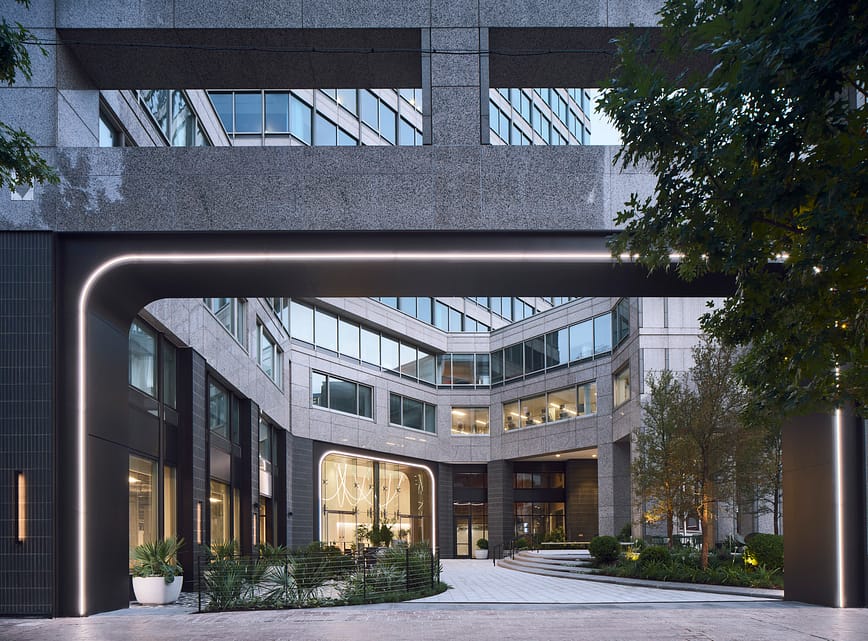
Photography by ©Andrea Calo
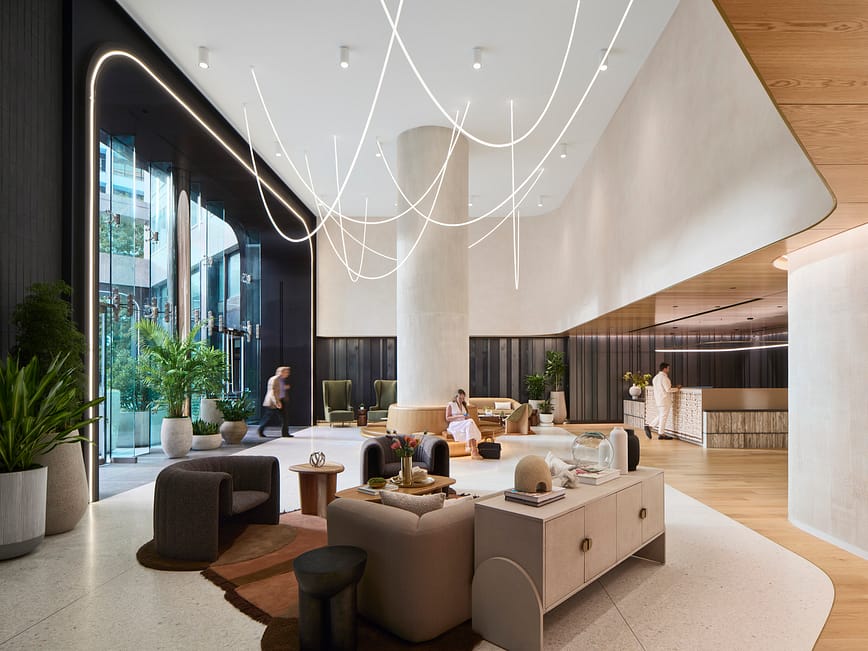
Photography by ©Andrea Calo
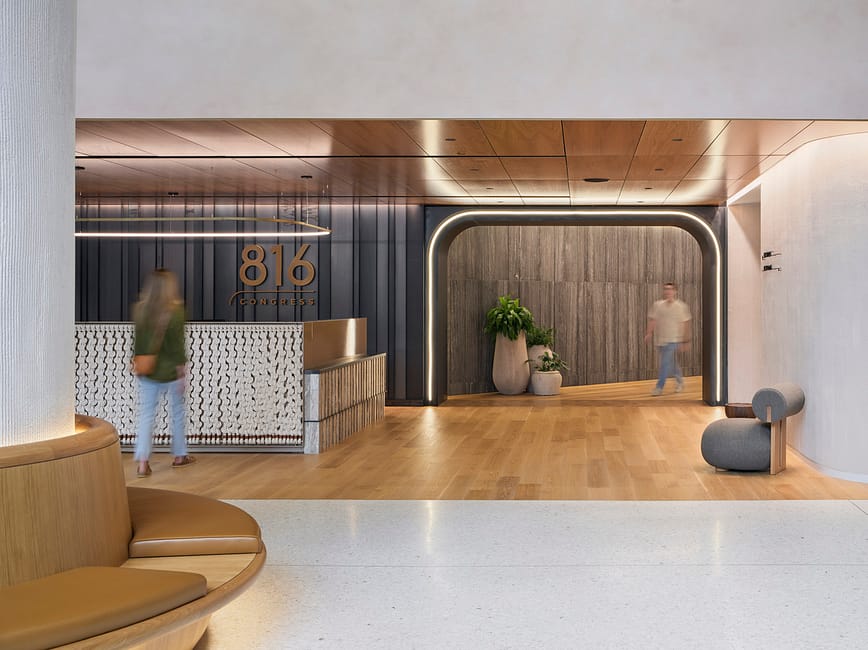
Photography by ©Andrea Calo
Designing for Culture, Connection & Belonging
Not surprisingly, Leesman data shows that younger employees are returning to the office most often: 47% of workers under 25 are on-site three or more days per week, compared with 28% of their older peers. And those satisfied with their commute are 2.5 times more likely to attend five days a week. But what happens when they reach their destination?
If the experience is right—design that amplifies and inspires how work gets done—the payoff is substantial. Offices that support both focus and collaboration achieve Leesman Index (Lmi) scores above 75, compared to mid-60s for misaligned spaces.
The most successful workplaces allow occupants to modulate their energy between solitude and interactive experience. Leesman’s global research reinforces this fact: 89% of employees still prioritize focused work first, although nearly half now value learning from others—a 10-point increase since 2019. But, no two work rhythms are the same. The essence of a repositioned building lies in its ability to flex across diverse tempos of work and life.
While meeting these objectives, the most resonant workplaces in Austin reflect the city’s vibrancy—layered, expressive, and alive. Terraces, cafés, courtyards, and informal gathering spots encourage engagement and interaction. References to local art, music, and maker culture build authenticity. Whether designing for a specific tenant or creating spec suites, the workplace is a customized extension of the building’s overall identity.
And spec suites are especially telling. They broadcast a building’s values. When owners and managers invest as thoughtfully in spec suites as amenities, they send a powerful message about the experience tenants can expect.
The ROI of Experience: ROX
ROX (Return on Experience) measures the value generated by the quality of experience delivered to occupants, tenants, and visitors. It expands traditional ROI by evaluating how design, services, technology, and amenities shape satisfaction, productivity, loyalty, and long-term asset performance.
The quality of experience drives measurable outcomes:
- Superior experiences accelerate the velocity of leasing, creating higher demand and reduced vacancy.
- Enhanced experiences increase retention, lease renewal likelihood, and support increased rental rates, ultimately improving asset value.
- The excellence of experience is a competitive differentiator in a market where many buildings offer comparable specifications.
Comfort assessments, utilization analytics, and post-occupancy surveys connect design intent to quantifiable metrics, demonstrating that the most profitable buildings are not necessarily the most opulent; they are the most attuned to the pulse and proclivities of the tenant community they support.
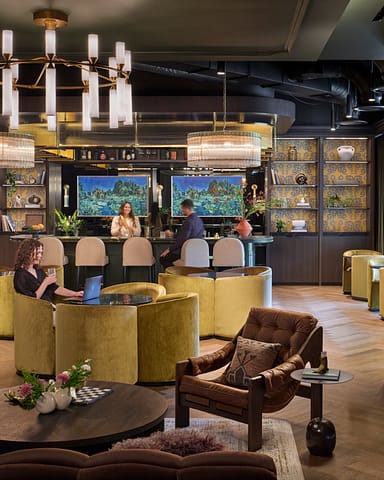
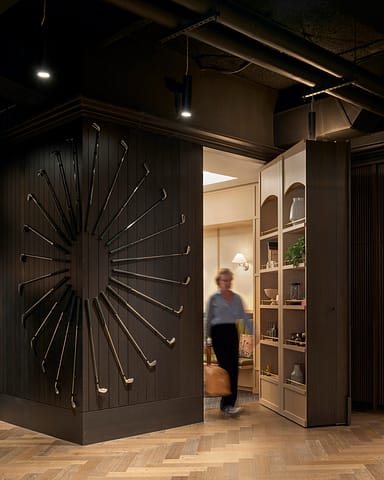
Hartland City Club, a tenant amenity at Hartland Plaza, Austin, provides multiple options for recreation, social interaction, and decompression that reflect its tenants’ interests and lifestyles.
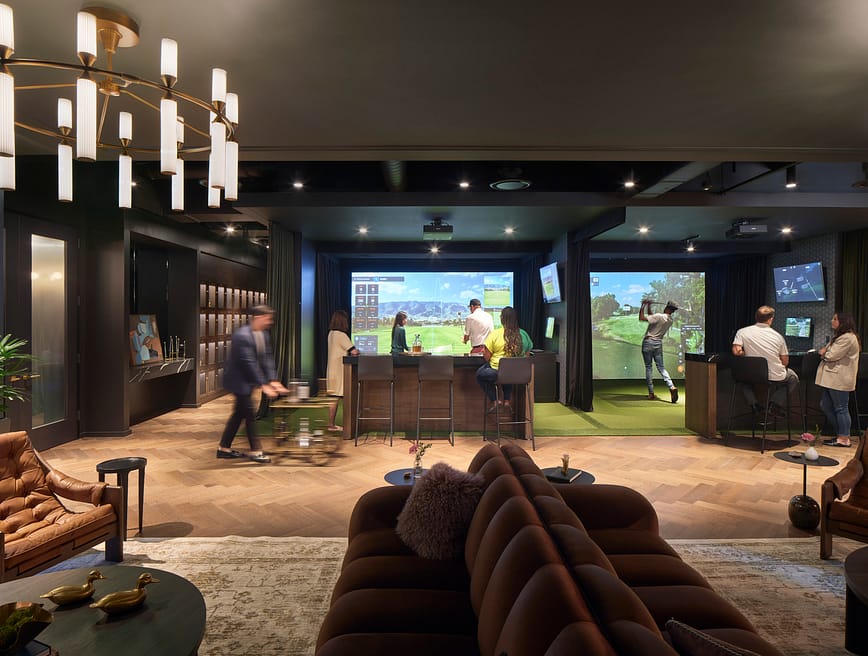
Photography by ©Andrea Calo
Photography by ©Andrea Calo
Photography by ©Andrea Calo
Designing to Austin's Next Rhythm
Austin’s repositioning market is evolving. We call this designing from street to soul, treating the building as a living system—adaptive, empathetic, and expressive. The next generation of high-performing properties will go further, blurring the lines between city and workplace, hospitality and productivity, performance and belonging. Buildings that thrive will move to Austin’s rhythm.
Varied Rhythms
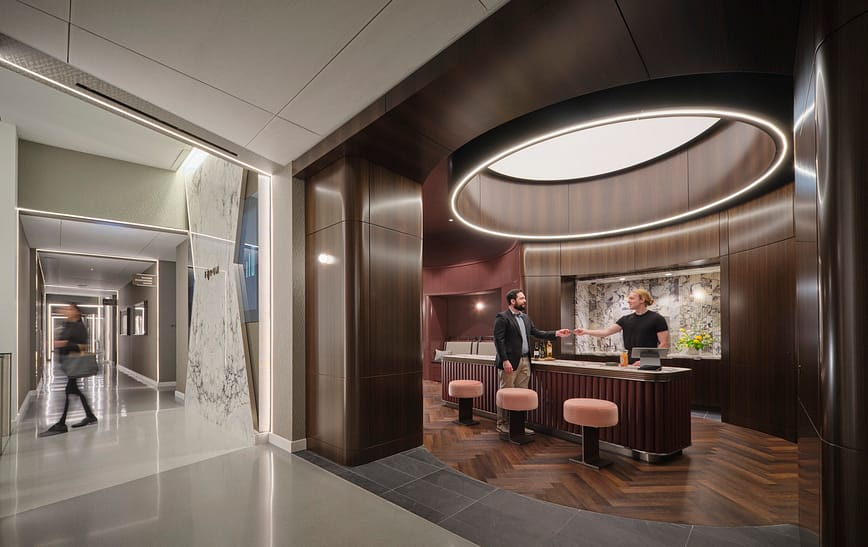
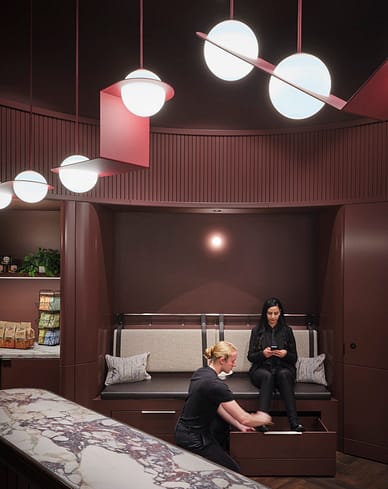
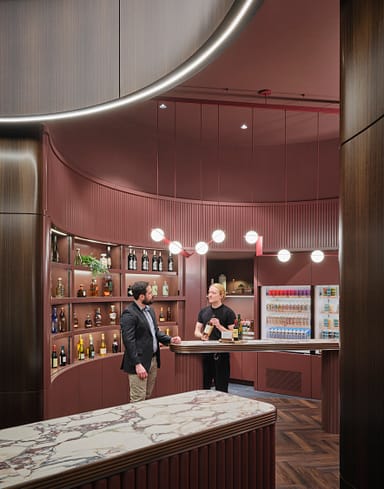
Austin’s story reflects a broader truth: the future of the office is not about returning to old patterns but about designing new patterns that respond to the varied rhythms of contemporary life. Designing for a different rhythm is aptly represented by the Austin studio’s design, with participation from IA’s Chicago studio, of a bodega amenity for the sophisticated tenants of an upscale Chicago high-rise. As a convenience, the new venue, located off reception, focuses on hospitality and retail. Tenants can purchase everything from wine to caviar to snacks, order flowers, enjoy a cup of coffee with a friend, or even have their shoes shined.
Photography by ©Tom Harris
Photography by ©Tom Harris
Photography by ©Tom Harris
Austin's and the National Market
Austin offers a compelling lens on a national transformation in office real estate. Across the country, real estate markets are facing similar pressures—hybrid attendance patterns, rising tenant expectations, tightening code requirements, and a growing emphasis on wellness and community. What sets Austin apart is how visibly these forces intersect with lifestyle and culture. The city’s blend of creativity, informality, and outdoor living makes it an ideal laboratory for repositioning strategies rooted in experience.
What can other markets learn from Austin?
- Lead with authenticity: Places that express local culture and craft resonate more deeply with tenants.
- Blur indoors and out. Climate permitting, leveraging natural light, terraces, and fresh air becomes a differentiator.
- Design for creative collision. Austin’s entrepreneurial ecosystem underscores the value of spaces that spark connection and mentorship.
What can Austin learn from national markets?
- Scalability and density strategies practiced in markets like New York, Chicago, or San Francisco can help Austin prepare for its rapid growth.
- Transit-integrated arrival experiences at cities with robust public transportation can inspire improvements in Austin’s car-centric environment.
- Sustainability leadership from coastal markets can offer pathways to higher-performing, lower-impact buildings.
What is shared nationwide?
Coast-to-coast, there is recognition that office buildings must shift from passive workplace containers to active agents of experience. Whether in Austin or New York, across the US or beyond, the fundamentals are the same:
- People gravitate toward environments that feel intentional, warm, and human.
- They need spaces that support both focus and connection.
- They want commutes that are reasonable.
Conclusion
Markets that understand these realities, as Austin does, will lead in building repositioning, inspiring the next generation of high-performing, highly resonant workspaces that understand and speak to the rhythms and expectations of the workplace cultures they support.

Haley Nelson, Design Director, ASID, LEED AP, WELL AP
Design Director | IA Austin
Haley Nelson is an award-winning designer and strategist whose inspiring designs shape positive behaviors, promote well-being, and support sustainability. LEED and WELL accredited, her work and expertise honed over 18 years have been featured in notable national publications. Recognized as a visionary leader, Haley holds a Bachelor of Design, Interior Design, from the University of Florida and a certificate in Healthier Materials and Sustainable Building from The New School, Art & Design with Parsons.
Dan Cheetham, AIA, NCARB, LEED AP BD+C
Managing Principal | FYOOG
With over 30 years of architecture experience, Dan Cheetham is the Founder and Managing Principal of FYOOG, an IA Company, and is known for his unlikely creative process that weaves architectural concepts and artistic influences. His vision for FYOOG is a result of his coveted industry experience, his passion as a musician, and his collaborations with artists and artisans. Dan has led firms, projects and teams across the world on highly visible projects that have taken many forms, including large urban districts and plans, commercial and institutional projects, educational buildings and settings, as well as outdoor spaces, temporary installations, and sculptures. He is a an AIA, NCARB, LEED AP BD+C accredited professional with a BA in Architecture and Music Performance.