
IA Seattle
Seattle, WA | 11,300 SF
IA's move to a new all-electric tower in downtown Seattle — its first relocation in 10 years, and to a building chosen for its ambitious sustainability standards — positions the studio as a proving ground for the next generation of climate-positive workplaces. By embedding circularity and regenerative design into the core design concept of the project, the firm accelerated the build-out, minimized carbon footprints, and substantially lowered landfill burden. Those same strategies also helped realize an agile, flexible workplace that supports and can adapt to the changing needs of IA's dynamic, hybrid culture.
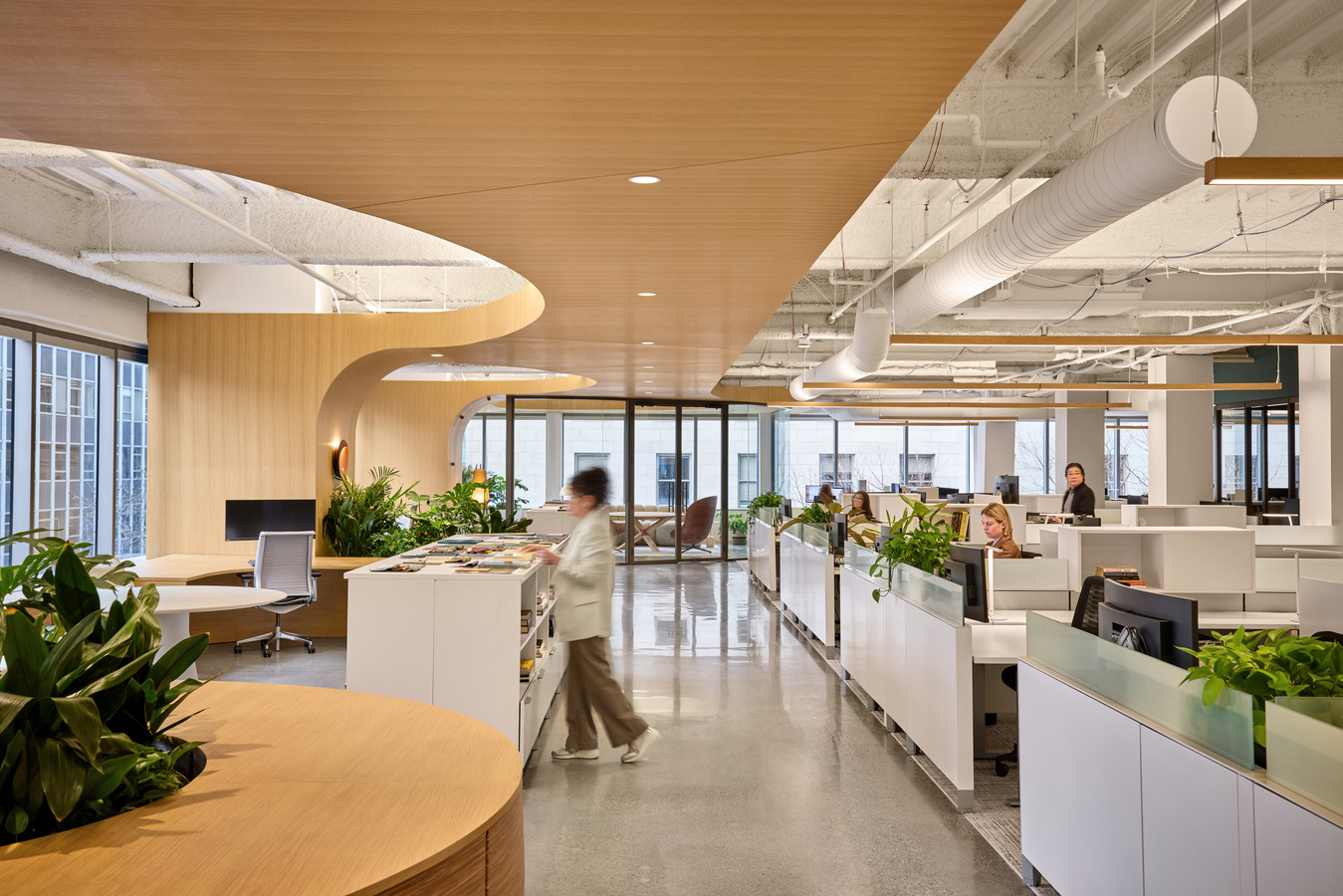
Rather than treating sustainability as an overlay, IA positioned circularity as the primary design and business driver from day one. The result is an 11,300-square-foot studio projected to reduce energy, water, and waste by 20–25% annually compared to the firm's previous location, while advancing large-scale applications of 3D-printed regenerative materials and additive manufacturing.
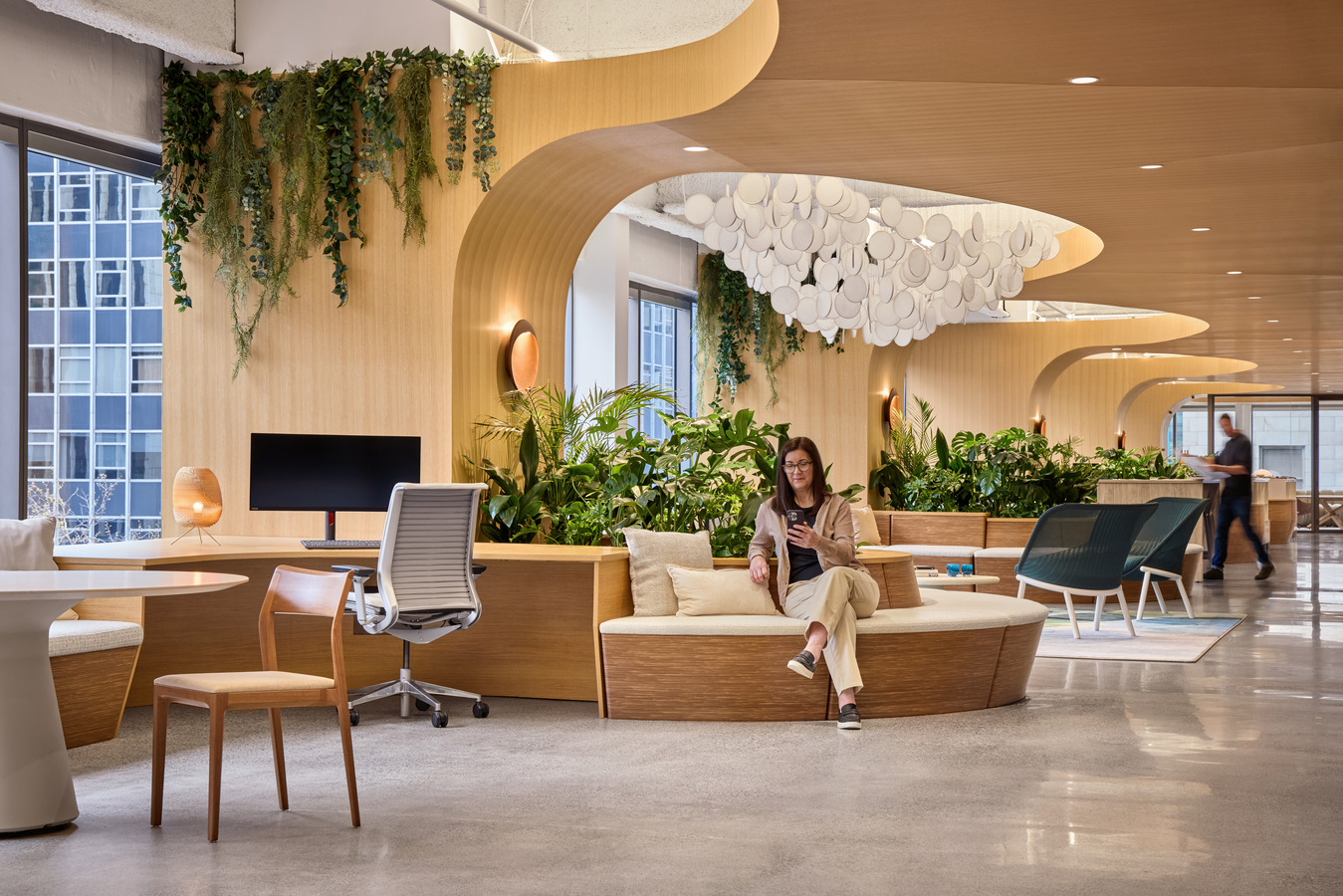
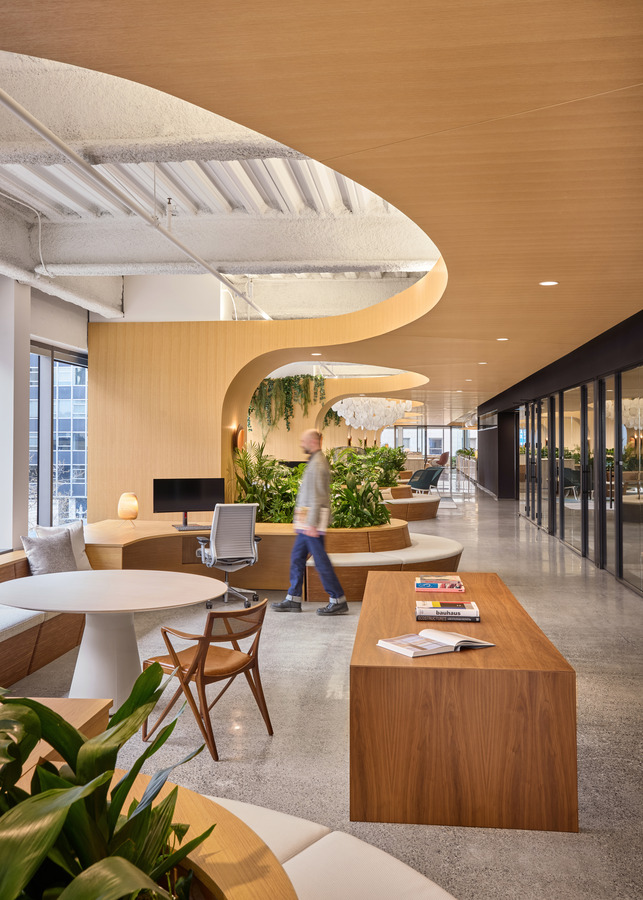
Located on the third floor, the studio occupies an unusually long, narrow footprint that stretches an entire city block along a continuous window wall. IA responded to this condition with a 2,650-square-foot serpentine banquette, conceived as an interior "main street" that channels the kinetic energy of the urban streetscape below. Among the largest existing interior applications of 3D-printed furniture, the installation is fabricated from plant-based bio-resin, a regenerative material with 80% less greenhouse gas emissions than traditional millwork.
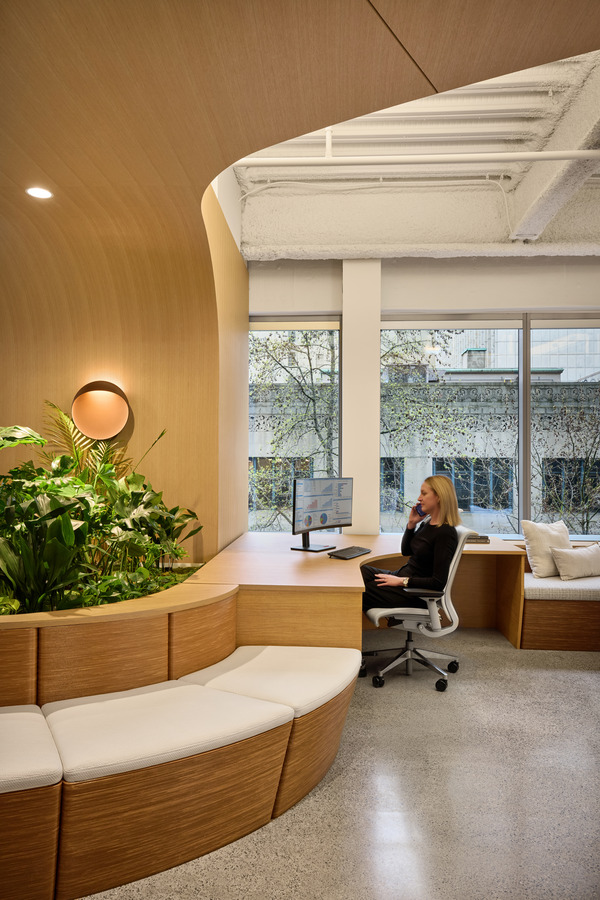
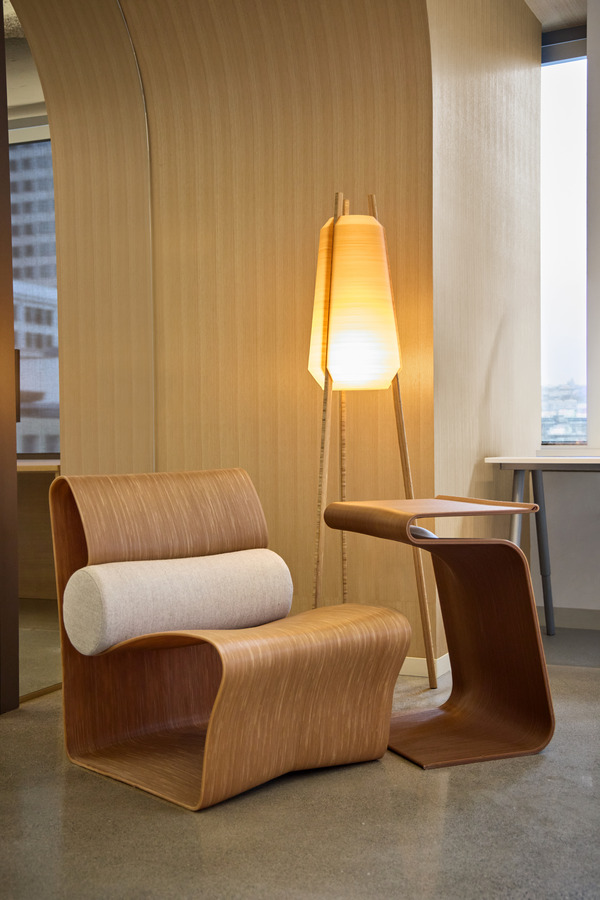
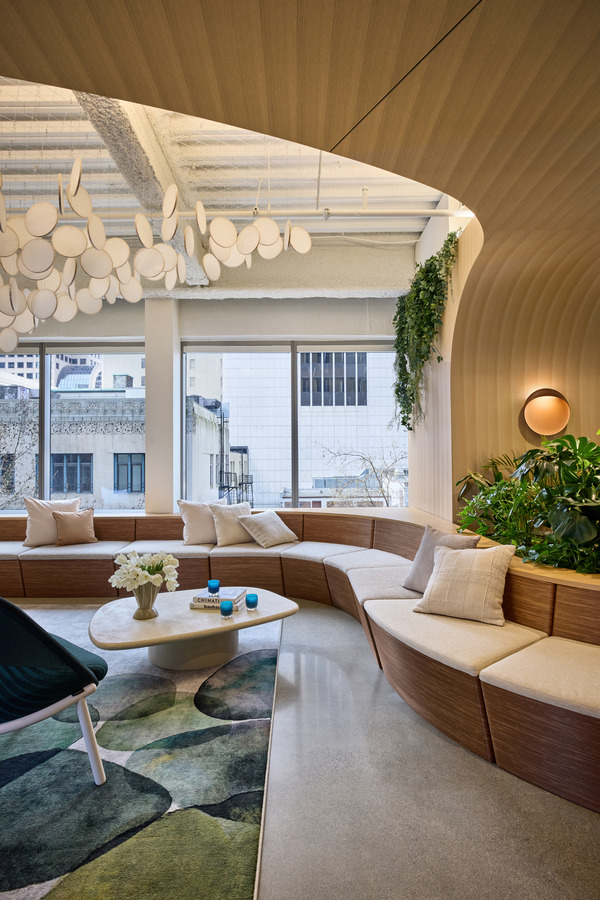
The banquette is one of several custom elements — from lanterns to planters to wallcoverings — fabricated from the novel material, which can be melted down and recast without mechanical degradation. After a full-scale mockup of the seating was completed, the material was reclaimed and reprinted into its final form, eliminating construction waste for this particular feature.
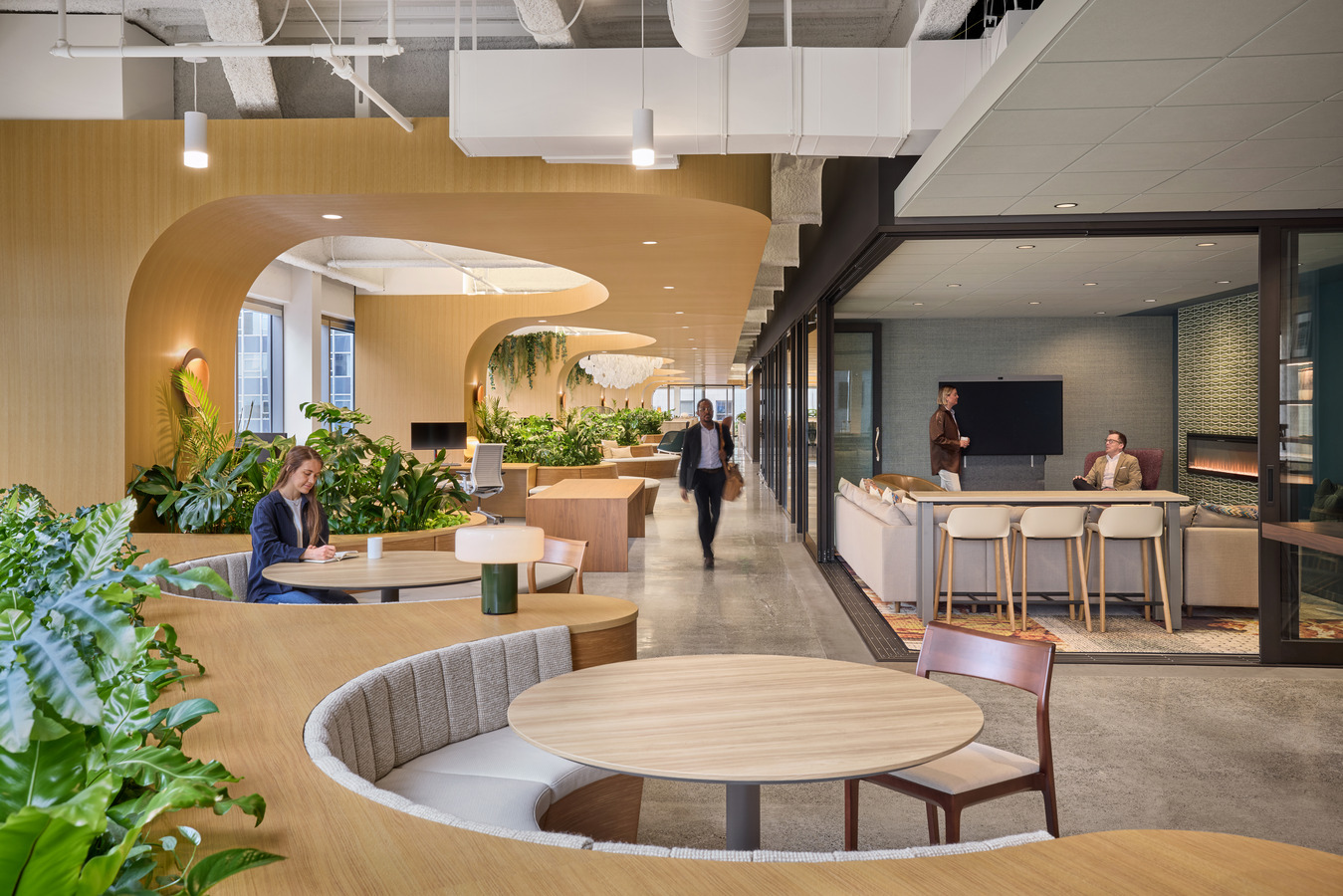
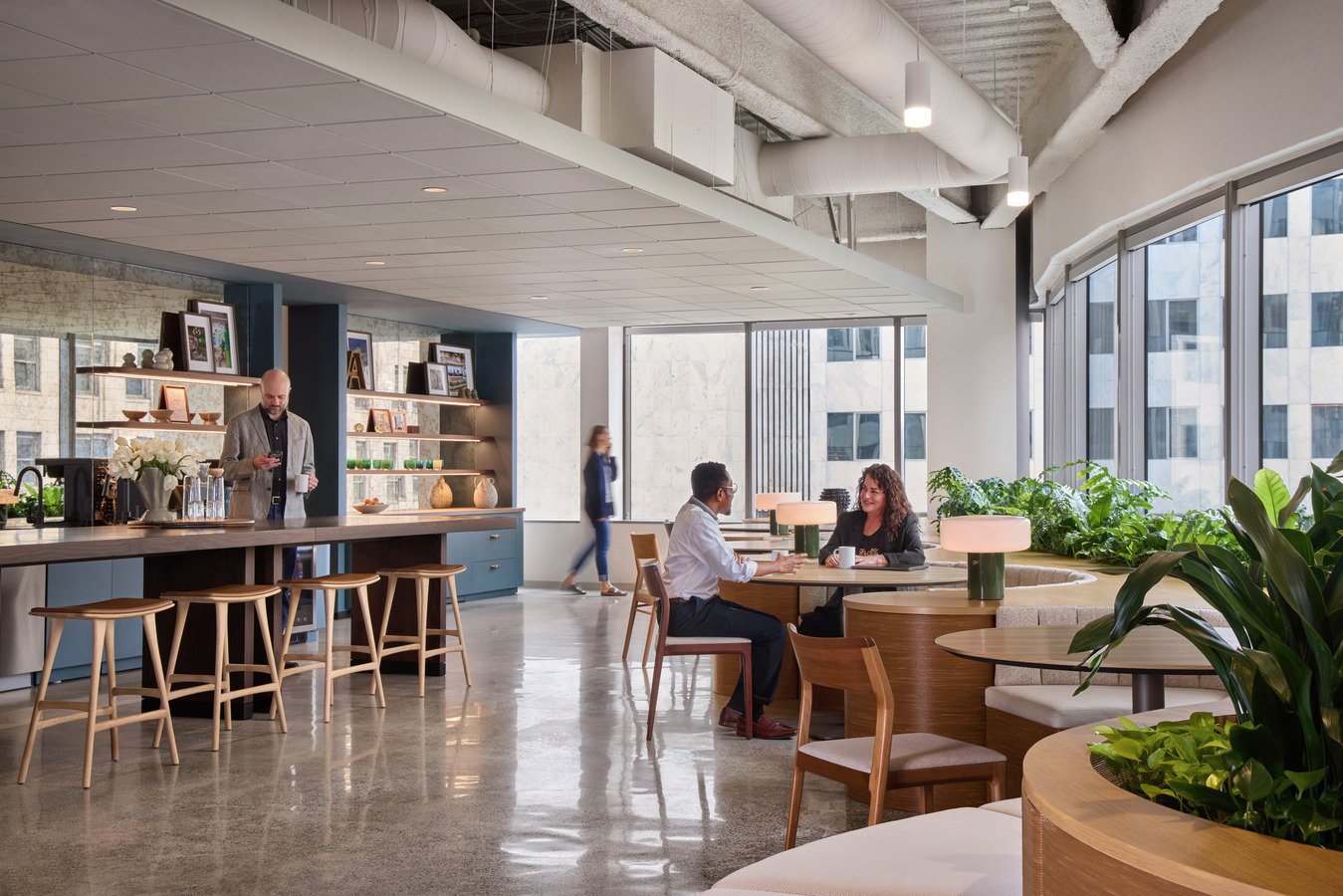
This linear "boulevard" doubles as a destination and a circulation spine, connecting staff to a sequence of thoughtfully designed amenity spaces geared towards an active, evolving studio: a daylit wellness room, a living-room-style lounge with fireplace, a mother's room, a café and dining area, collaboration areas, project rooms where teams can leave materials until their project is complete, and meeting spaces, some tailored to virtual confabs.
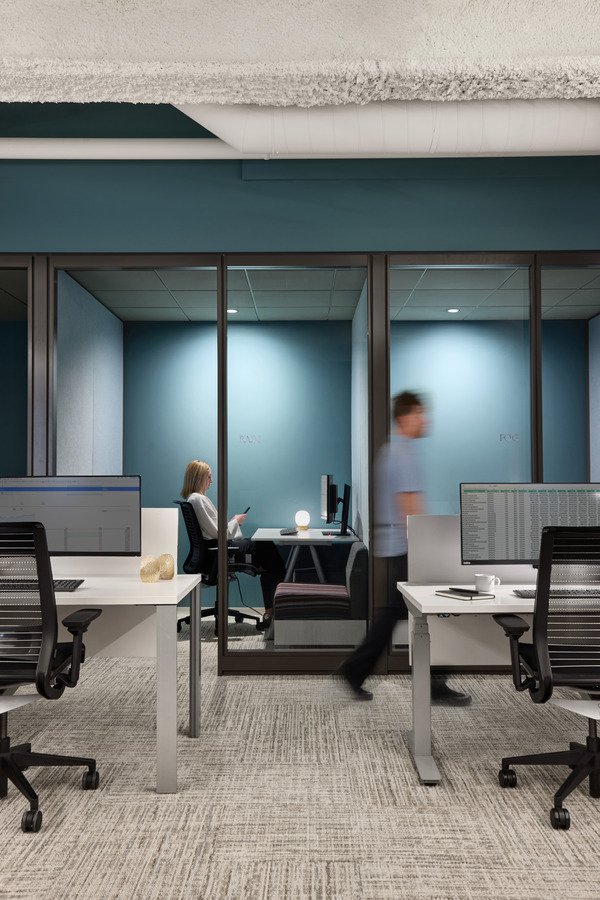
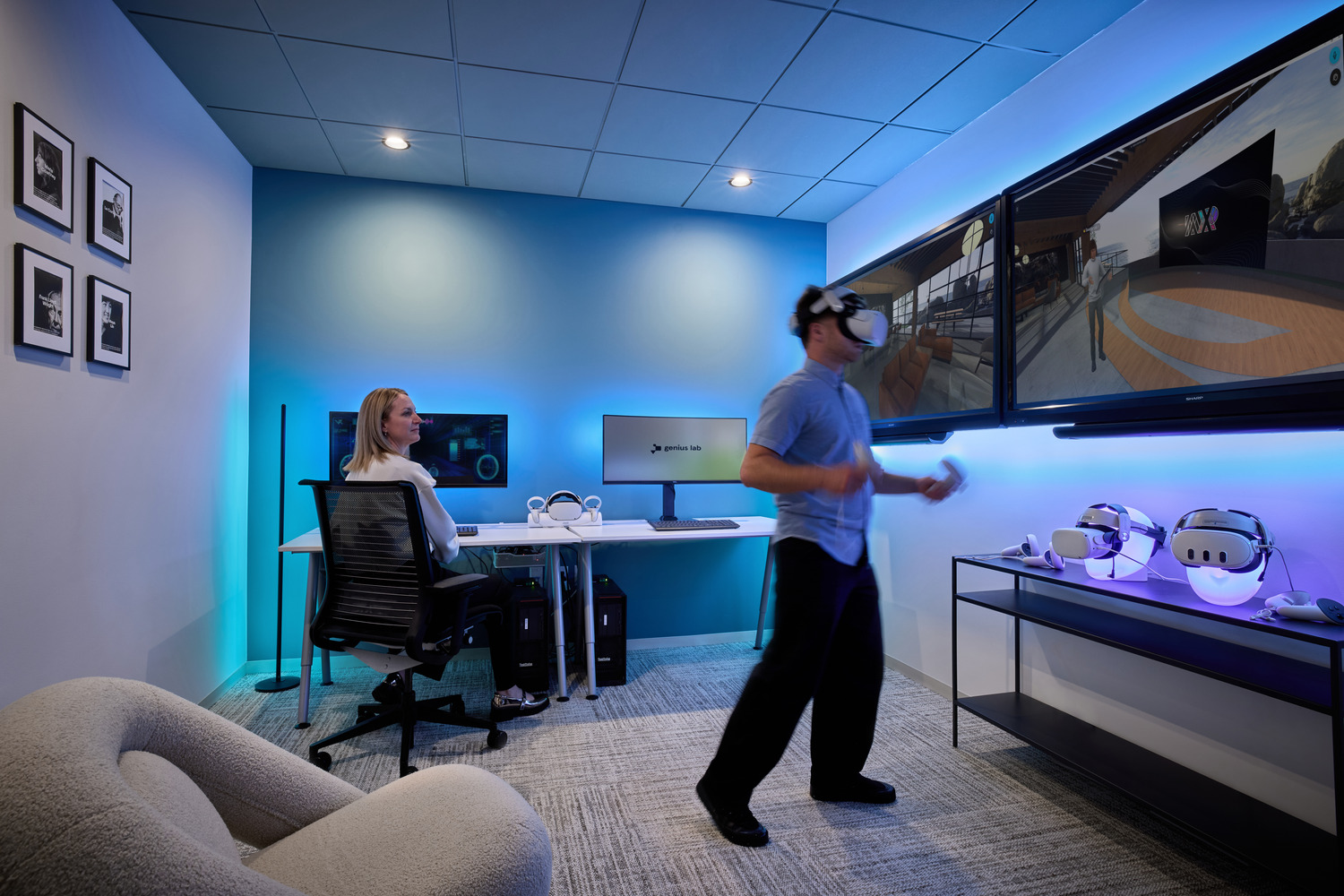
A separate "Genius Lab" provides an immersive, user-friendly space for staff and clients to experiment, showcase, and collaborate in-studio with relevant technologies like XR, AI-driven experiences, and 3D printing.
Sustainable manufacturers were particularly drawn to the opportunity to prototype innovative features alongside IA. In collaboration with forward thinking partners, the studio is exploring a new mechanical ductwork system designed to reduce waste, installation cost, and production time. The concept uses tapered tubular ductwork paired with laminar airflow technology to support even air distribution. As an alternative to conventional exposed metal ductwork, the system offers the potential to reduce embodied carbon while creating a cleaner, more sculptural architectural expression.
Circularity also extends beyond custom fabrication. Some 85% of the studio’s furniture was repurposed from the previous location, much of it refurbished, diverting roughly 25,000 pounds from landfill, while demountable walls represent an additional reduction in solid waste.
As a built expression of IA's Harmonic Principles framework, the new Seattle studio operates as a proving ground for scalable circular strategies, demonstrating how adaptive reuse and regenerative materials can shift from niche experimentation to viable industry practice. From day one, the traditional notion of the "end user" is redefined as the "beginning user," embedding circular thinking into the project lifecycle from starting point to finish line, and back again.
Photography by Garrett Rowland