
Millennium Premier Times Square
New York, NY | 124 Keys
In a city defined by movement, volume, and visual competition, Millennium Premier offers a quieter expression of luxury, one shaped around pause, comfort, and retreat. Set in Times Square, the hotel is conceived as an urban refuge, transformed not through grand gestures but through a series of deliberate recalibrations.
Working within the existing building, the design favors editing over erasure. Layers are removed, proportions clarified, and familiar materials recast in a richer, more contemporary register. The result feels composed rather than constructed, as though the interior has gradually settled into its most natural form.
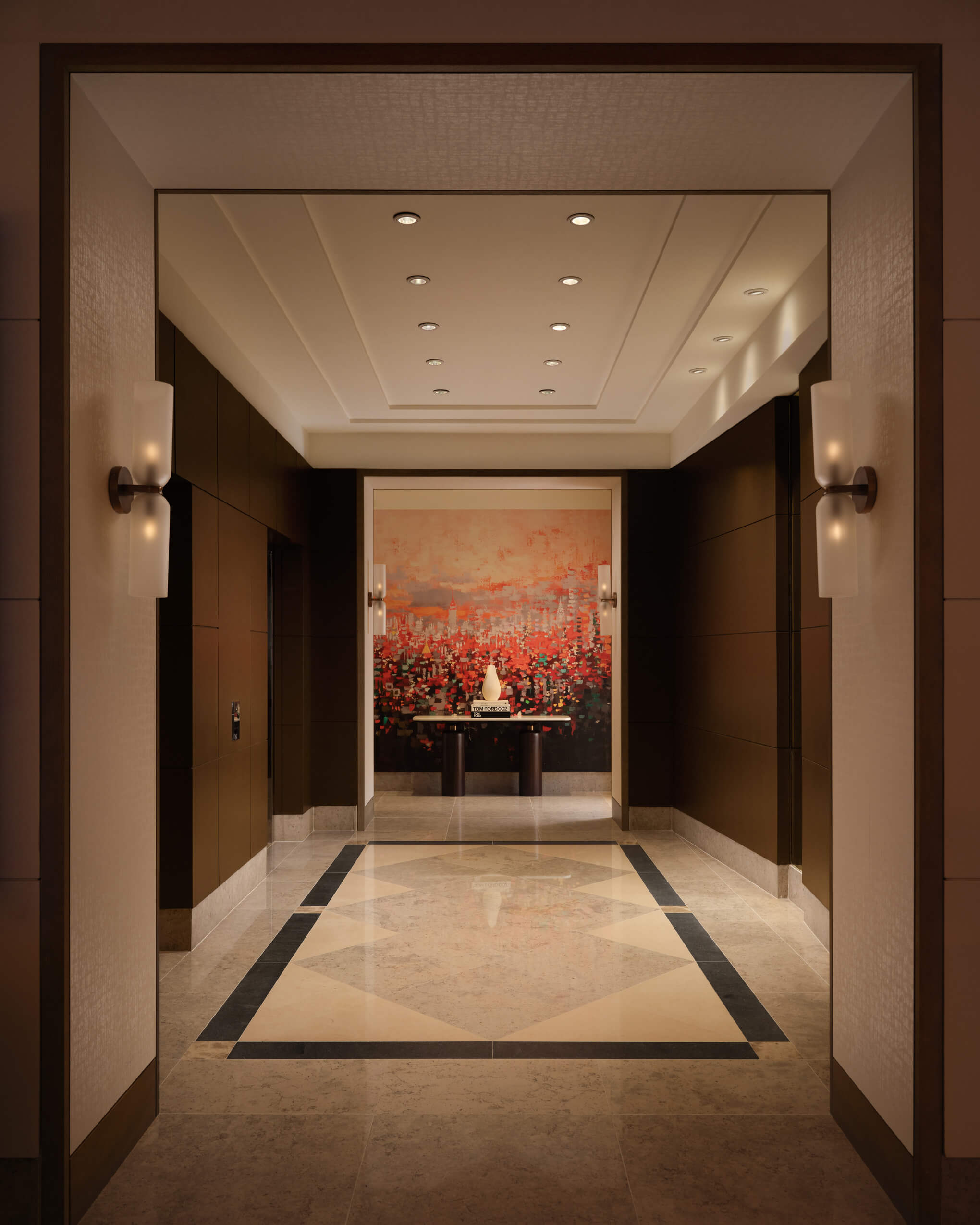
Throughout the hotel, light operates as both material and mood. Ceilings are opened to recover volume, while illumination is lowered, layered, and concealed. Deepened wood tones, softened reflections, and areas of shadow temper the energy of the city beyond. The interior does not reveal itself all at once; it unfolds gradually through shifts in texture, perspective, and atmosphere.
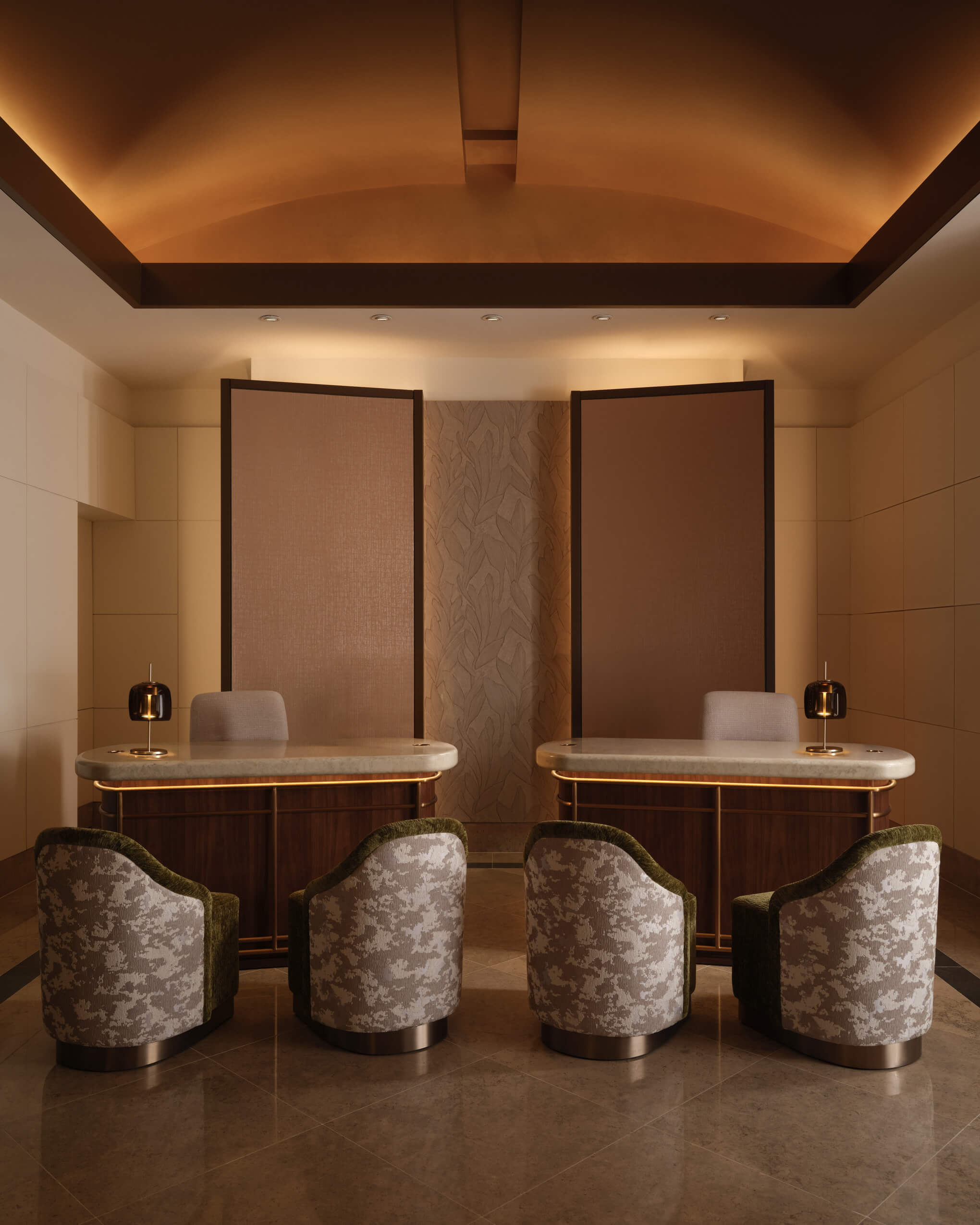
This sensibility begins at arrival, where one of hospitality's most familiar rituals is reconsidered. In place of a conventional front desk, guests are welcomed through a seated exchange. Check-in is absorbed into the room, becoming part of the experience rather than a barrier within it. The gesture is subtle, but the effect is fundamental: arrival feels hosted rather than processed.
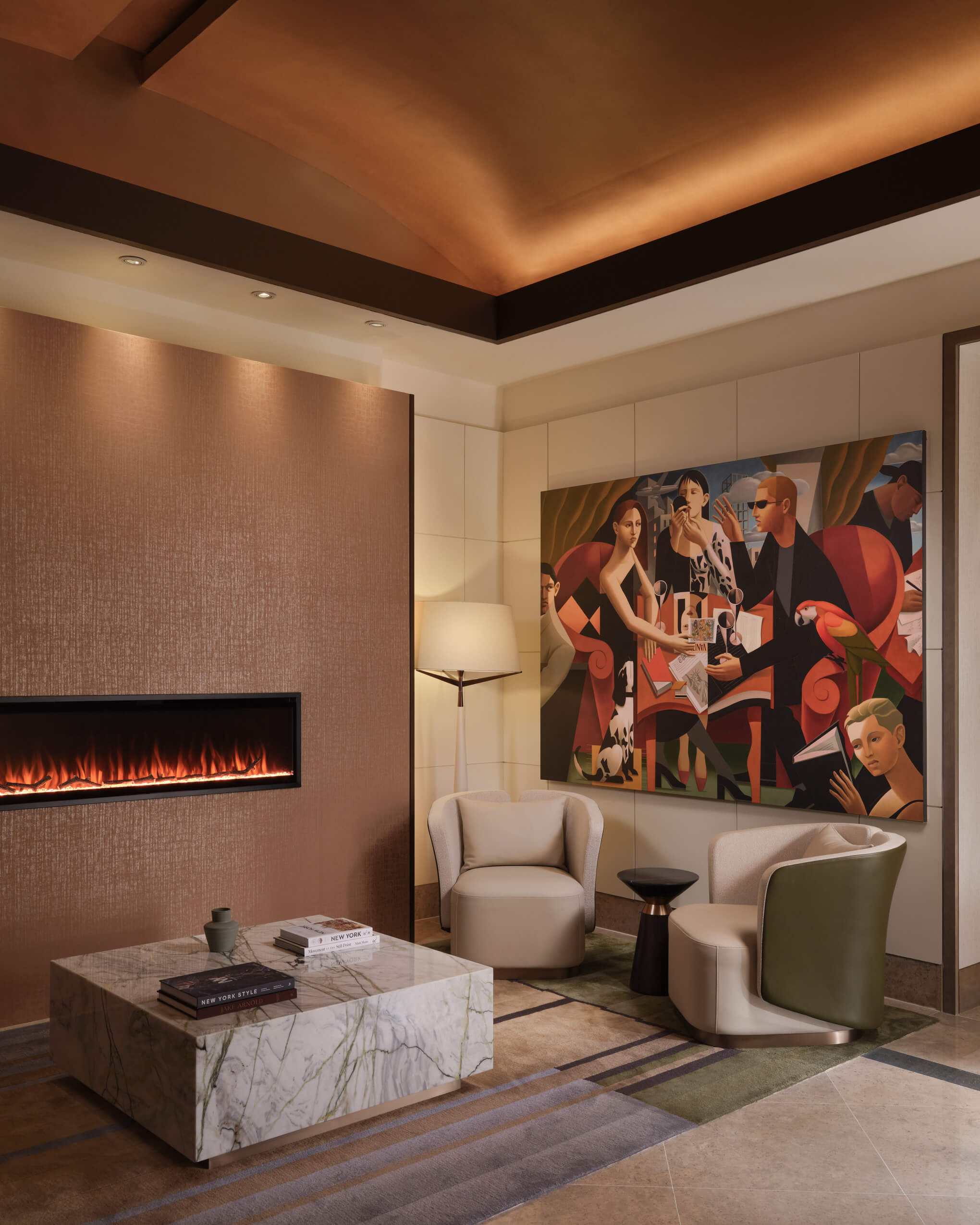
A hearth forms the emotional center of the lobby, drawing on the instinctive comfort of gathering around warmth. Angled architectural planes pull the perimeter inward, creating a sense of protection from the pace of Midtown. Rather than staging a dramatic entrance, the lobby offers a moment of transition — a place to settle, reorient, and move gradually from the energy of the city into the atmosphere of the hotel.
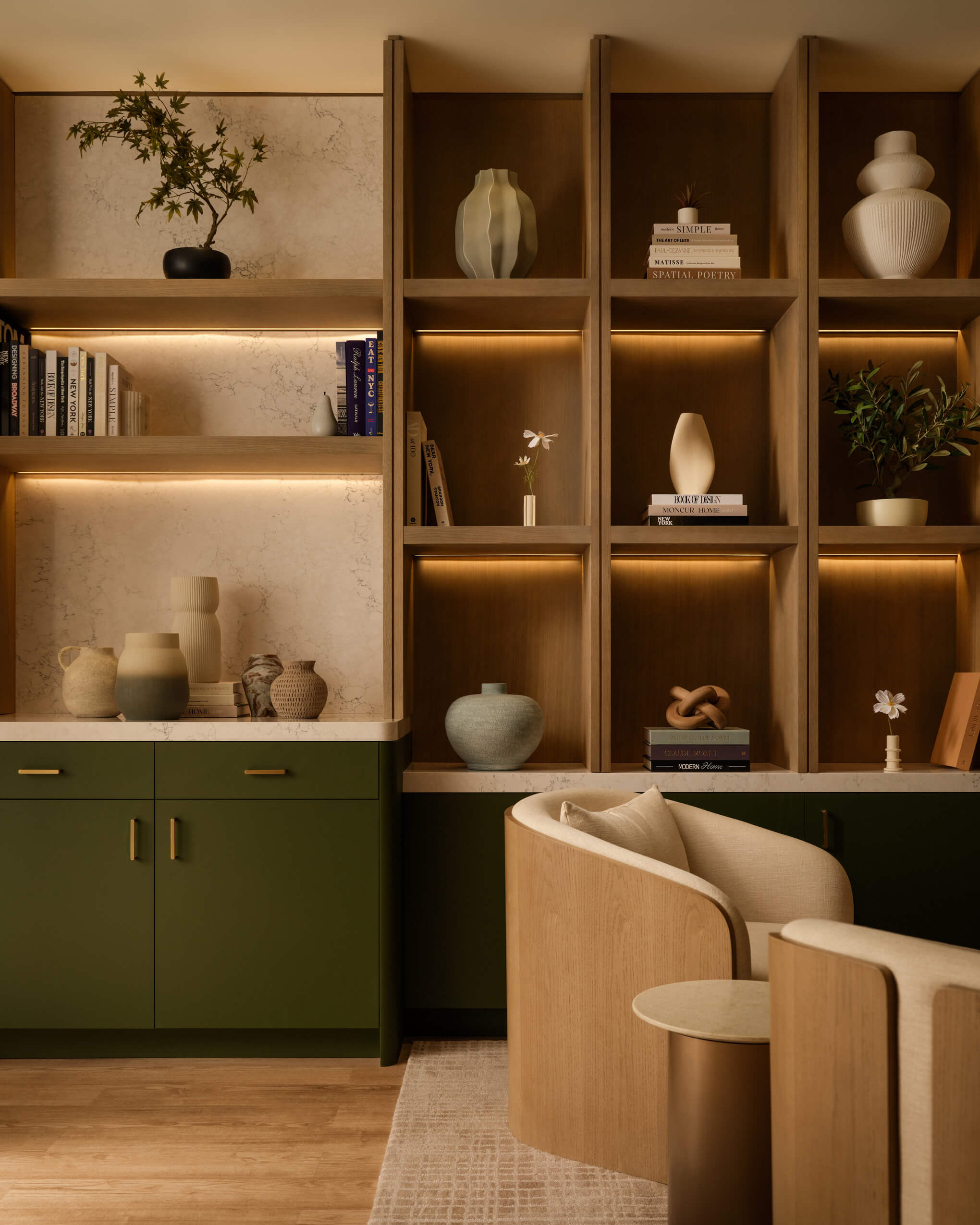
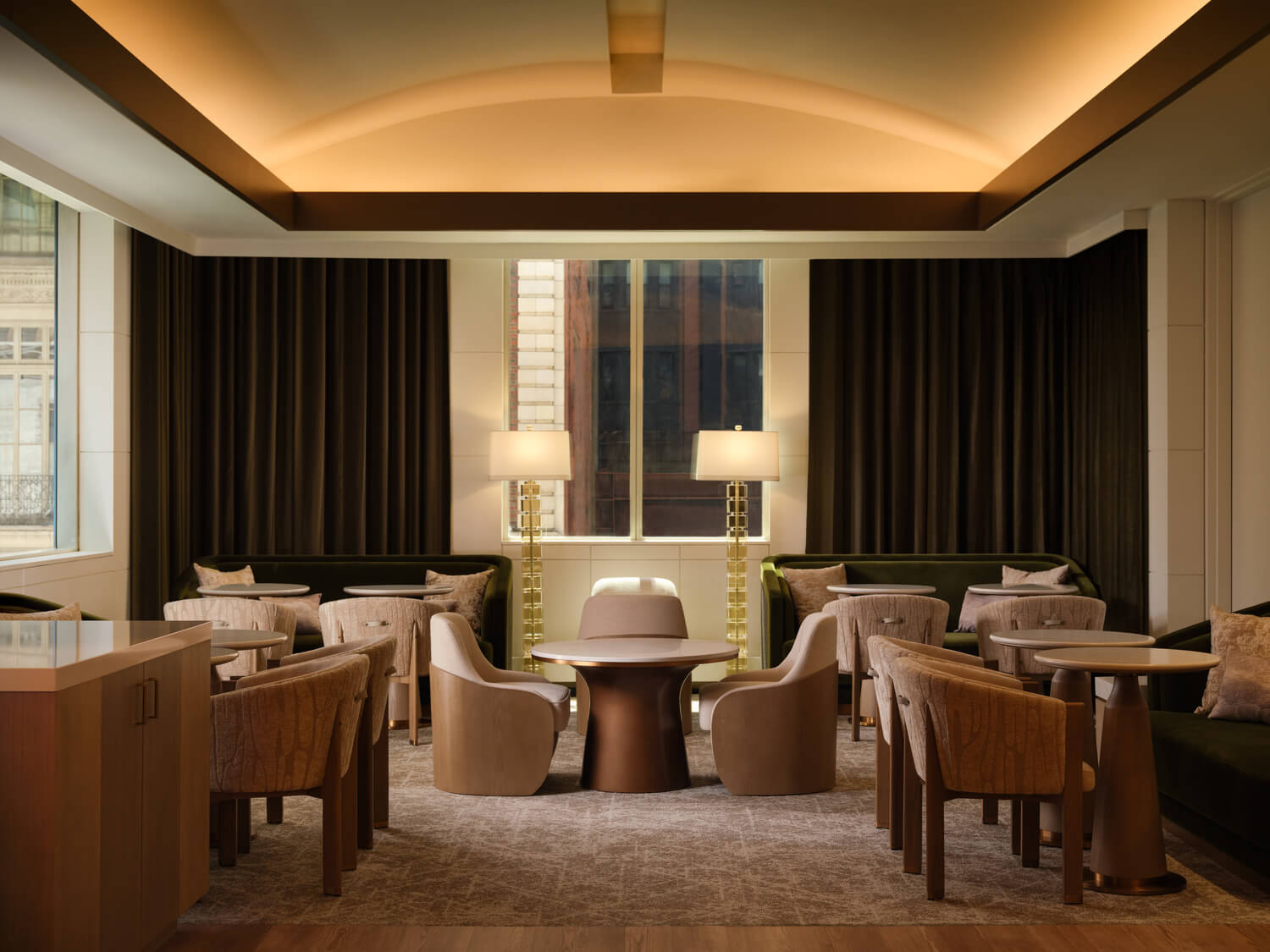
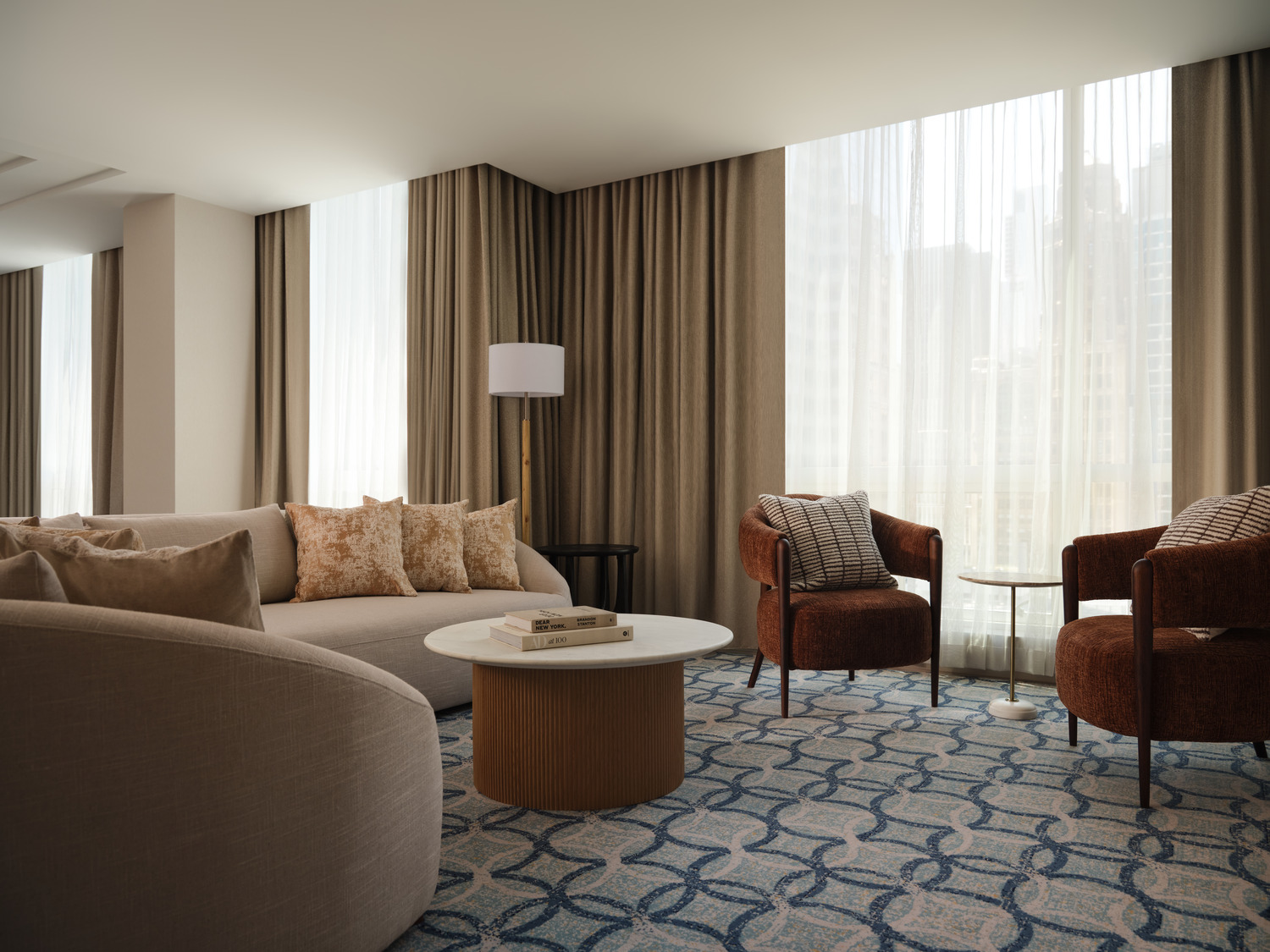
With a deliberately focused public program, the Executive Lounge takes on an expanded role as the hotel's social center. Part private library, part residential salon, and part flexible workspace, it is designed to accommodate the changing rhythms of the day.
The sequence begins at a compressed threshold with the familiarity of a domestic kitchen before opening into a looser landscape of rooms and seating areas. Guests can choose how they inhabit the space: gathering around a shared table, settling into a protected corner, working independently, or lingering in conversation. The lounge supports these different modes without imposing a single way of using it.
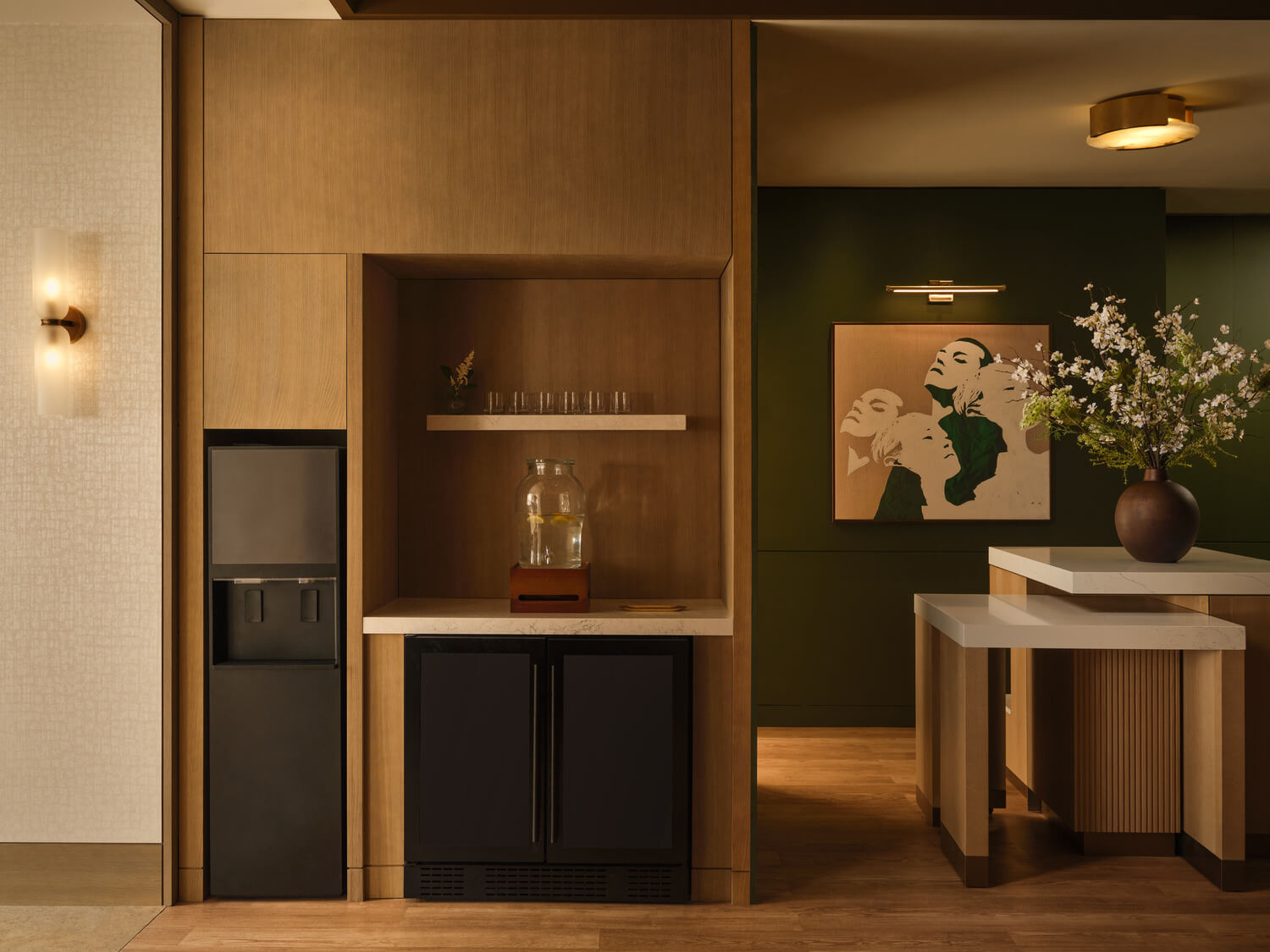
Toward the perimeter, the space opens to daylight and views, creating a gradual release from enclosure. Millwork, mirrored panels, lighting, and media are integrated into the architecture rather than treated as individual features. Each element contributes to the atmosphere and function of the room while remaining visually recessive. The experience is layered, but never overstated.
Guest rooms extend the same approach at a more intimate scale. Conceived as compact refuges, they move easily between rest, work, and restoration. The palette is tactile and restrained, balancing depth of tone with softness and warmth. Details are precise without feeling precious, intended to reveal themselves through use rather than announce themselves as decoration.
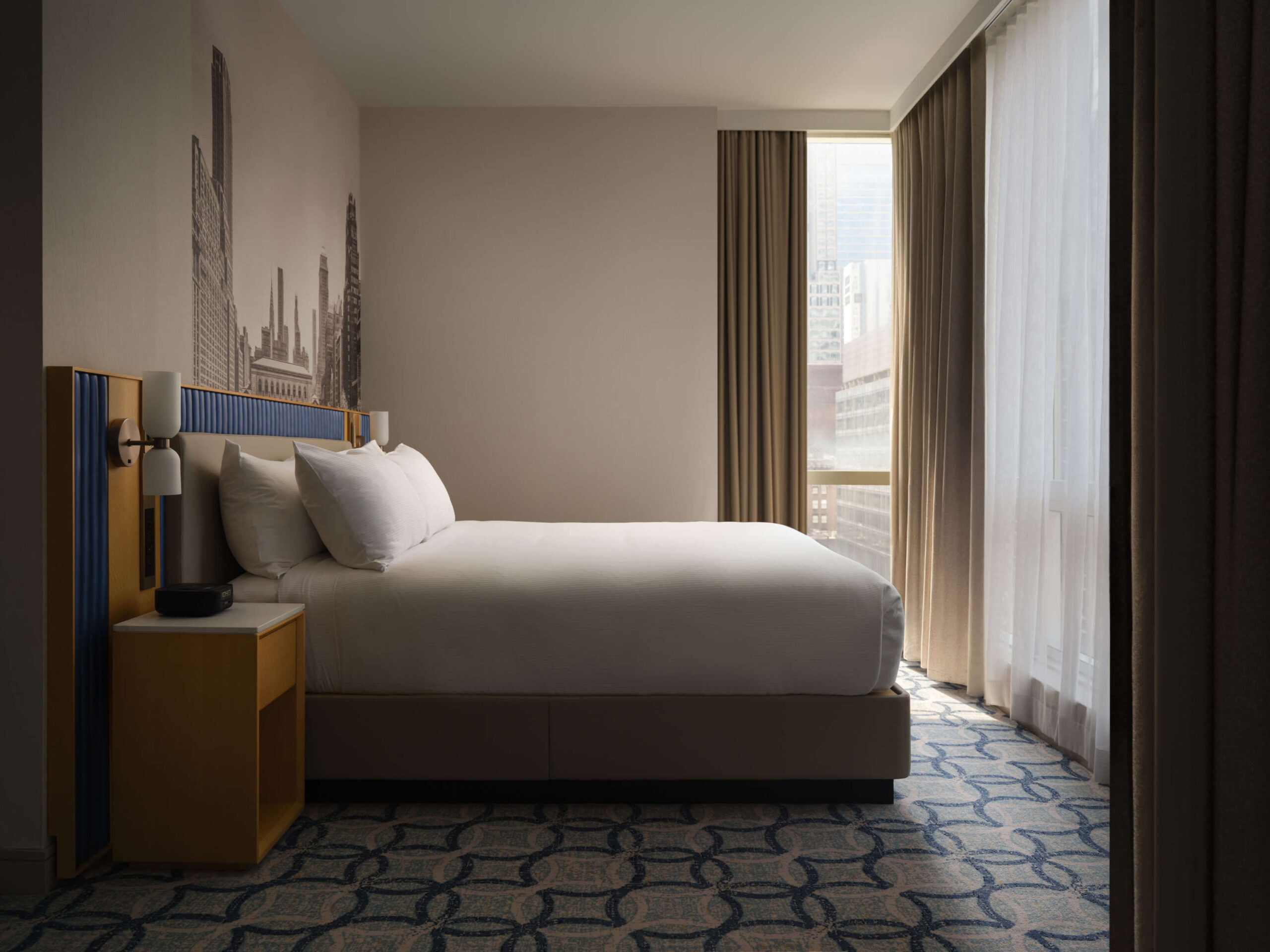
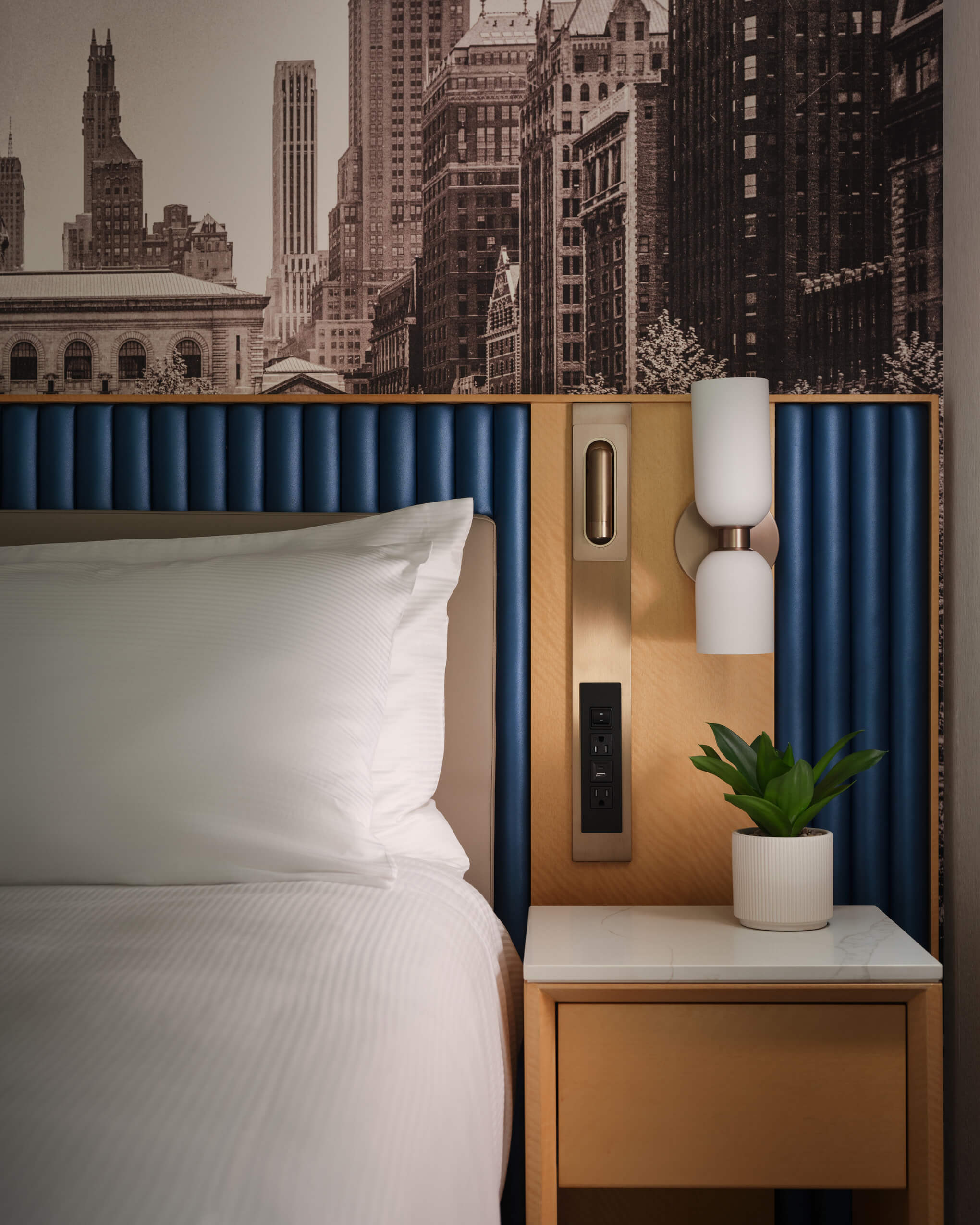
Storage, lighting, work surfaces, and moments of comfort are arranged as an intuitive sequence. Nothing dominates the room. Character emerges instead through the relationship between material, proportion, and light, and through the ease with which the space supports the changing rituals of a stay.
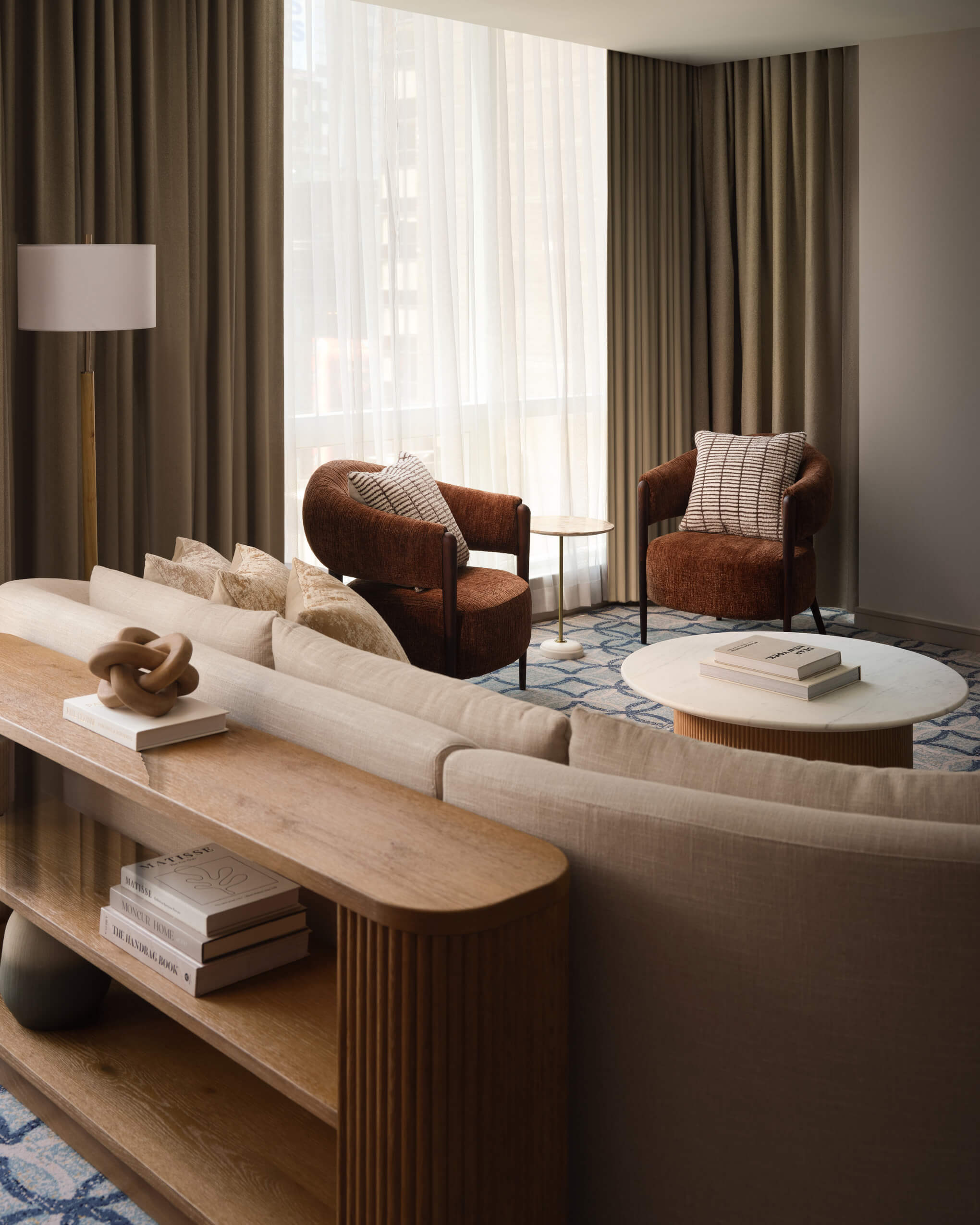
Millennium Premier presents contemporary luxury as a quality of experience rather than display. Its identity is built cumulatively: through the warmth of a seated welcome, the draw of the hearth, the choice of a protected corner, and the gradual movement from shadow into light.
By reducing friction and allowing the guest experience to shape the architecture, the hotel becomes a measured counterpoint to the city — not removed from its energy, but carefully balanced against it. It does not compete for attention. It earns it over time.
©Photography by Joe Kramm