
Confidential Tech Campus
Redmond, WA
This campus modernization project redefines signage as a tool for inclusion and environmental storytelling, transforming wayfinding into an experience that prioritizes accessibility, sustainability, and human connection. Set within a 75-acre site, the signage system was conceived not only to guide movement, but to create a welcoming, intuitive environment that reflects a broader commitment to equity and responsible design. Inclusivity was a primary driver from the outset, shaping both the strategy and the physical design of the signage system.
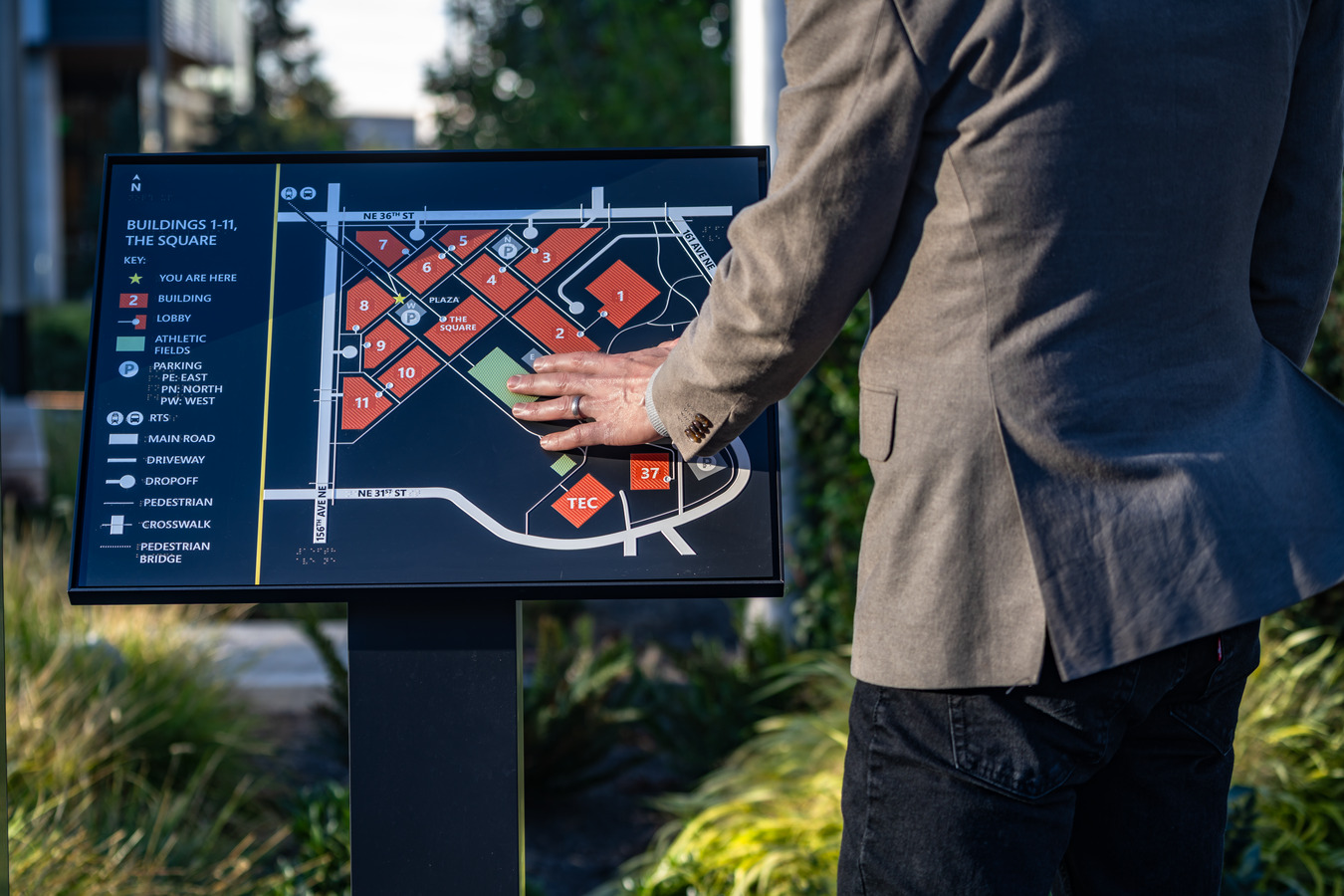
The campus accommodates a wide range of users, including those with visual, physical, auditory, and cognitive differences, as well as those with varying levels of site familiarity. Rather than treating accessibility as a requirement, the design elevates it as a core experience principle.
Tactile paving guides users directly to key information points, enabling independent navigation across the large and complex site. Tactile maps, Braille, and raised lettering extend access to critical information, while clear visual hierarchies and intuitive map orientations contribute to comprehension.
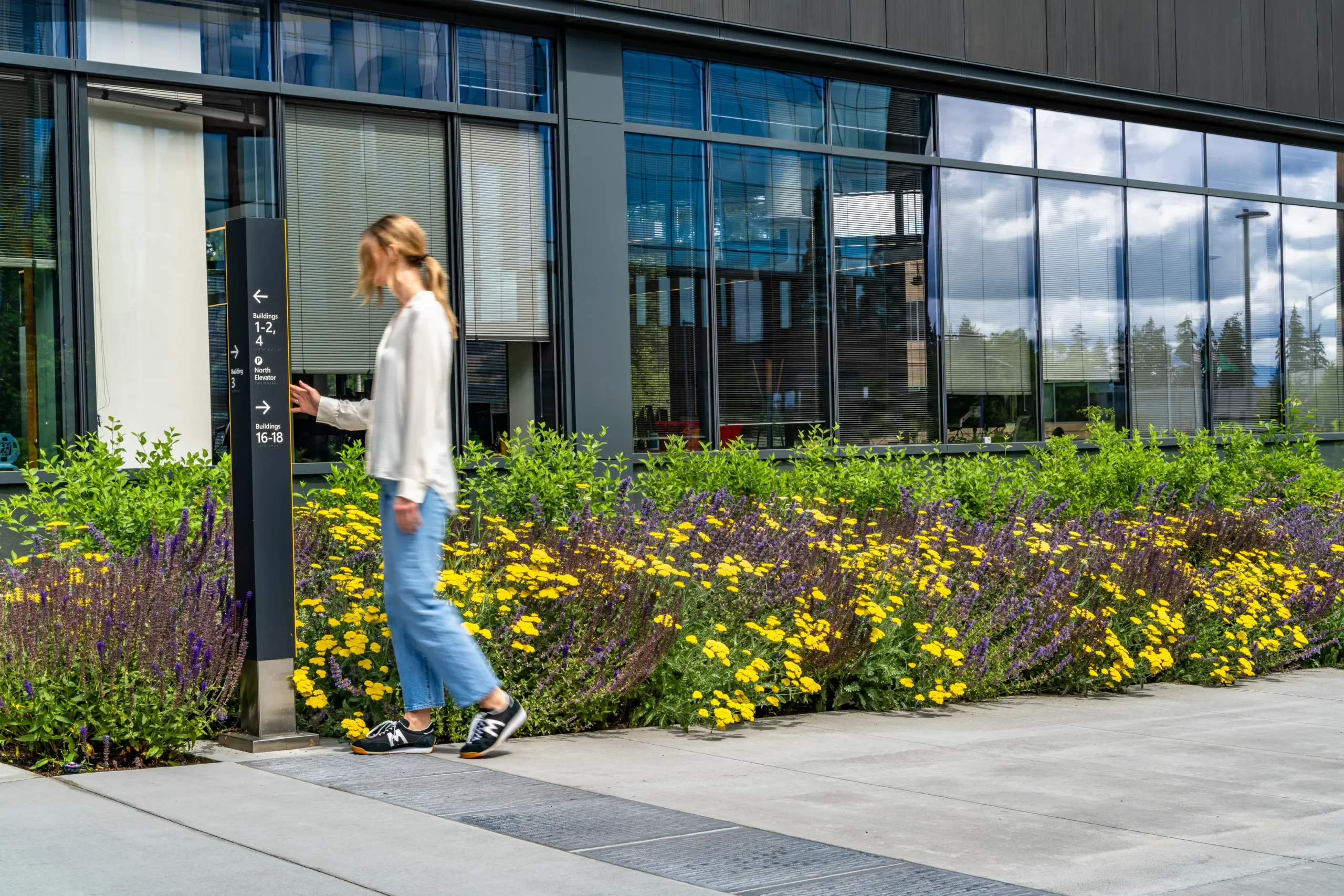
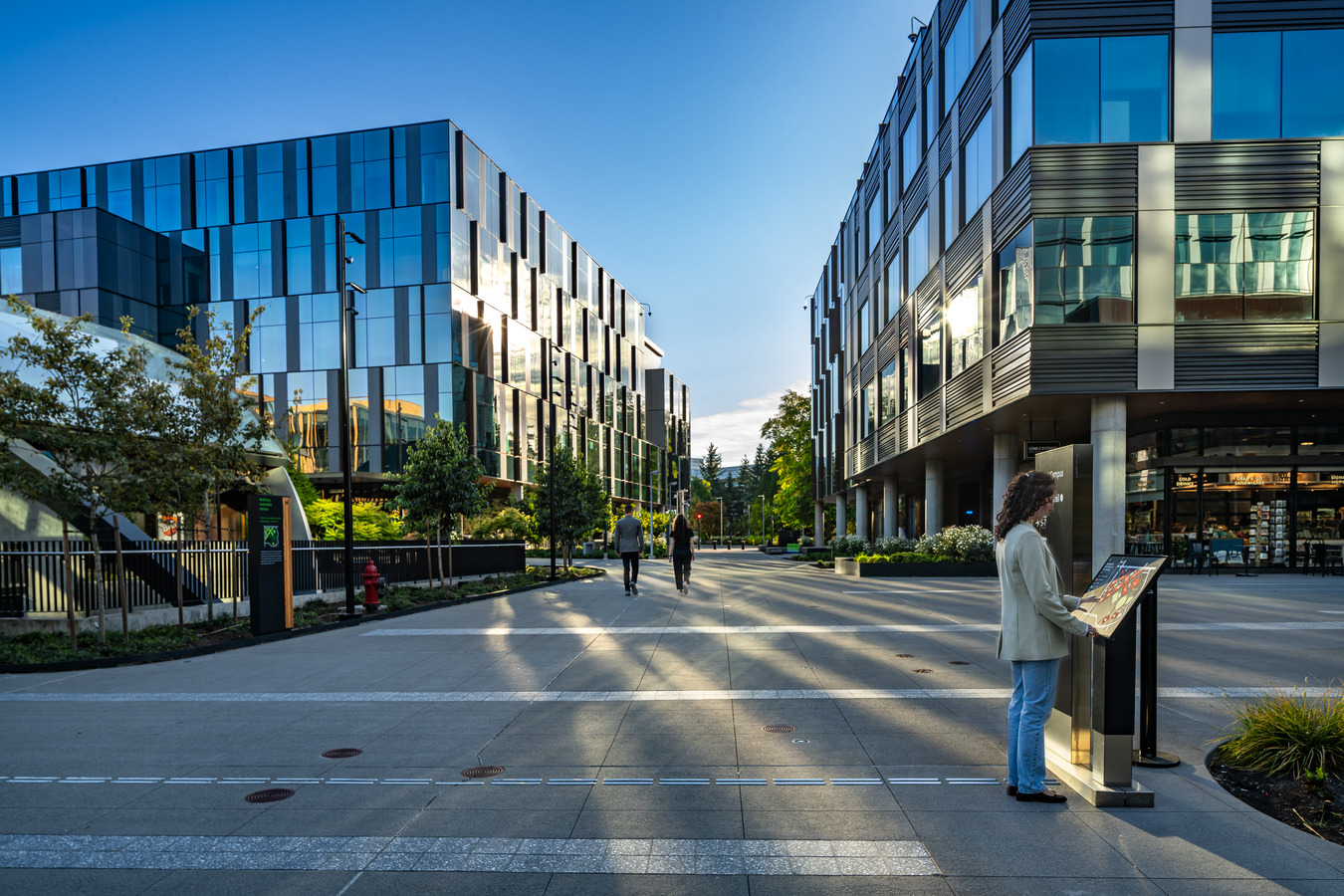
The emphasis on inclusivity is reinforced through a layered wayfinding approach that supports different modes of movement and levels of familiarity. Clear, consistent signage at decision points provides immediate orientation, while environmental cues and landmarks help users build confidence and spatial awareness over time.
By combining physical and sensory guidance, the system reduces reliance on any single mode of navigation, ensuring a diverse range of users can engage with the campus comfortably and independently.
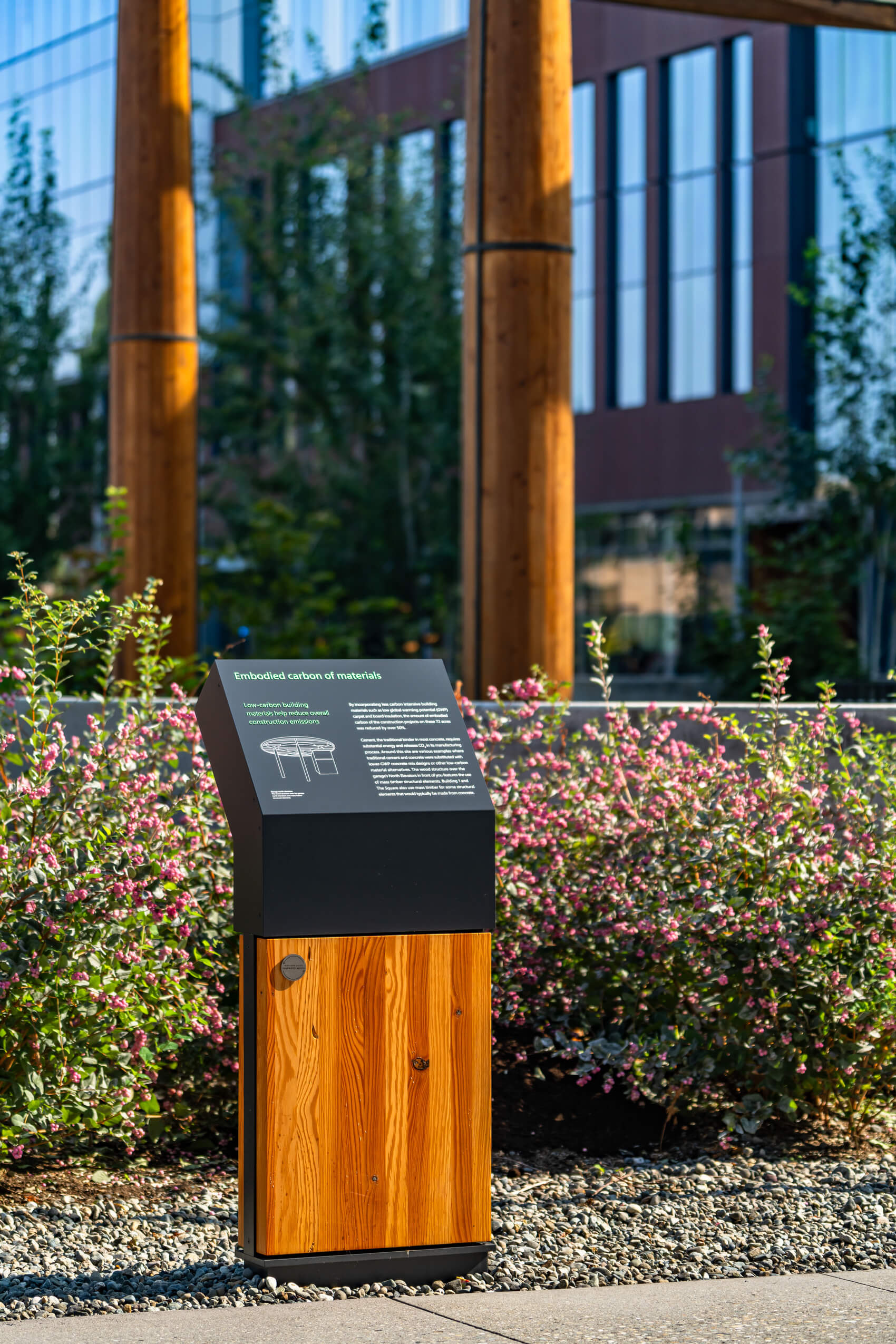
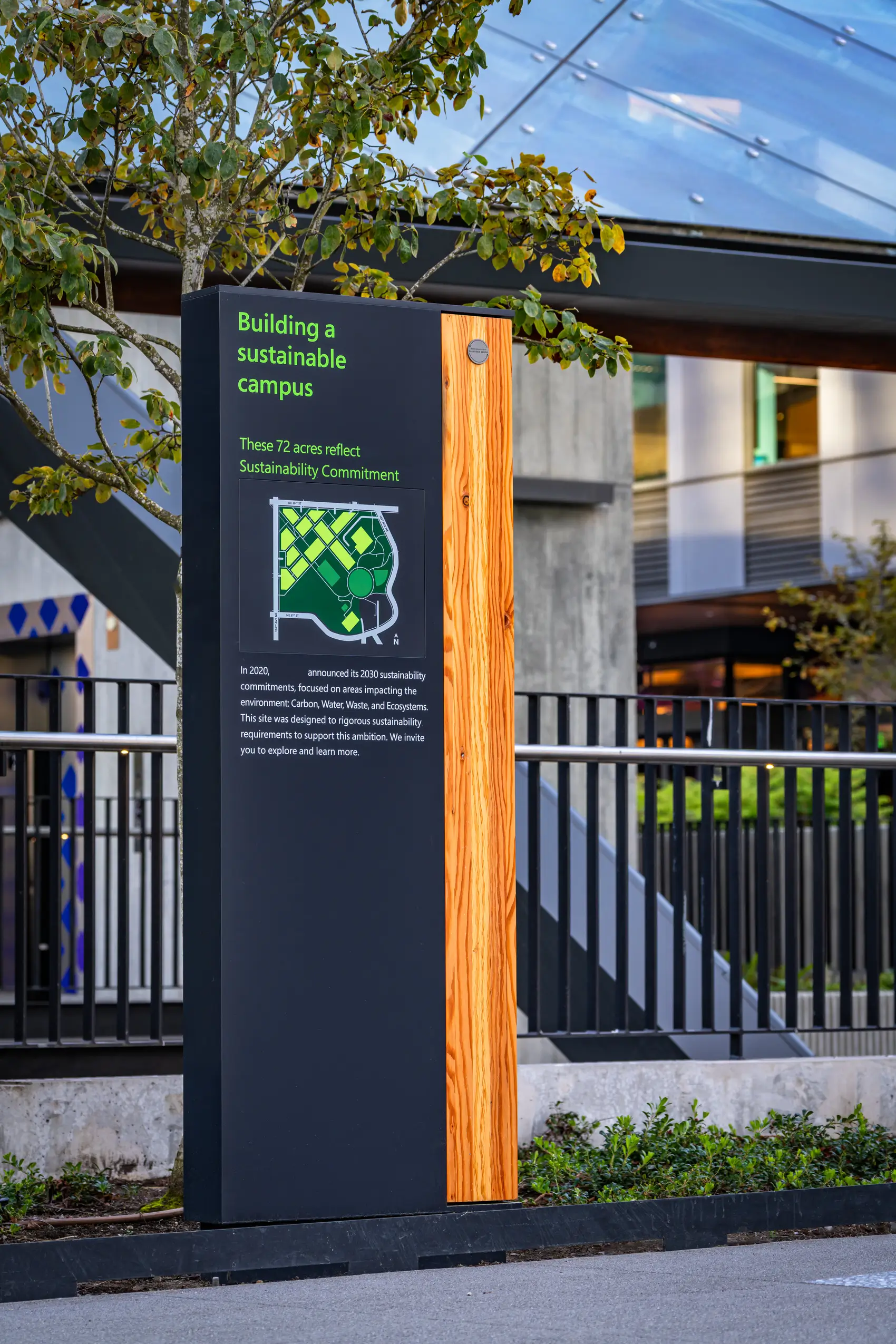
Sustainability is equally central to the project, expressed in material choices and stories embedded throughout the site. A dedicated signage program highlights environmental initiatives, turning the landscape itself into an educational and interpretive experience.
Wood sourced from the campus' Douglas Firs is utilized in signage elements, reducing waste and creating a direct connection between the built environment and its ecological context. The use of salvaged wood introduces warmth and texture, a visible reminder of resource stewardship.
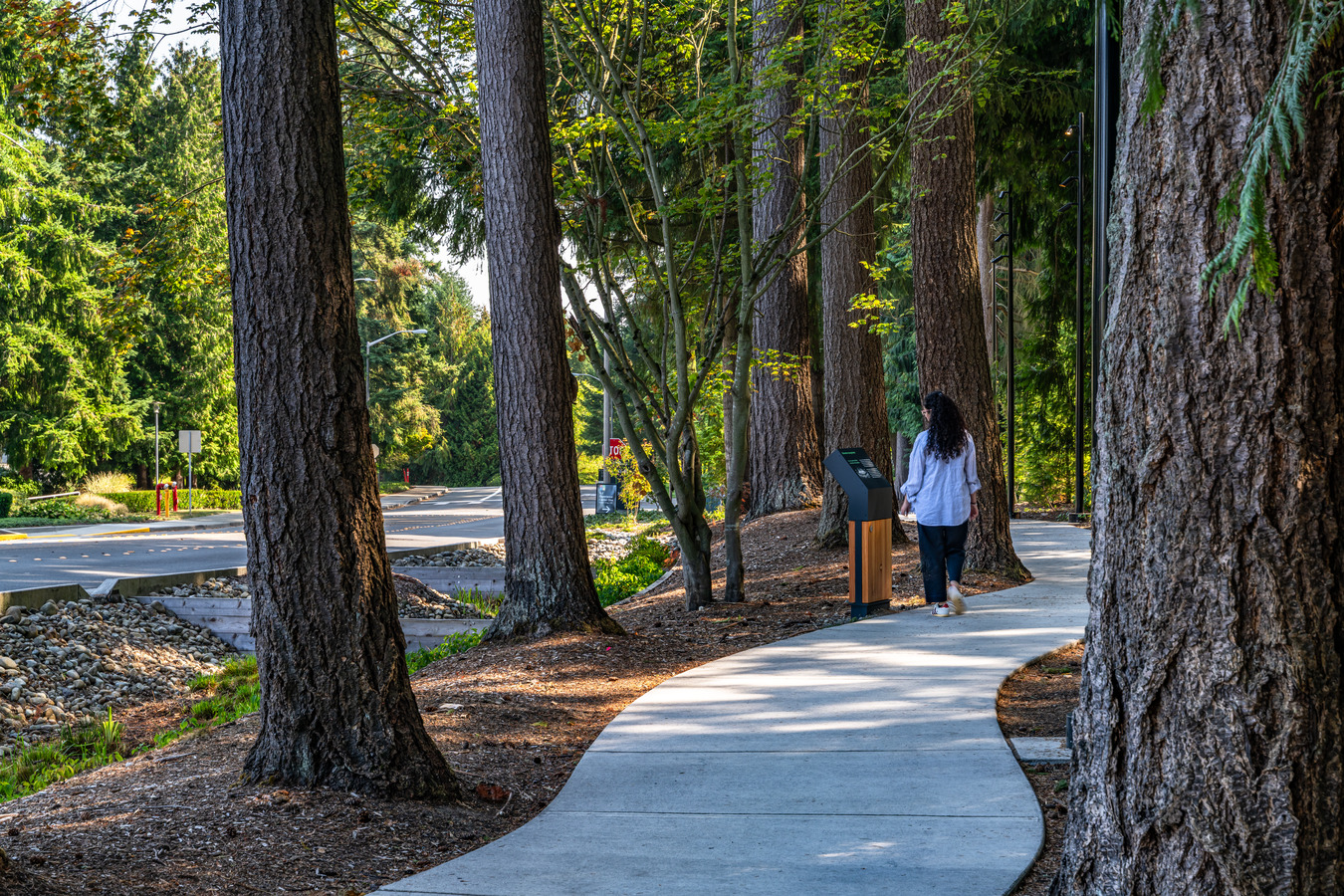
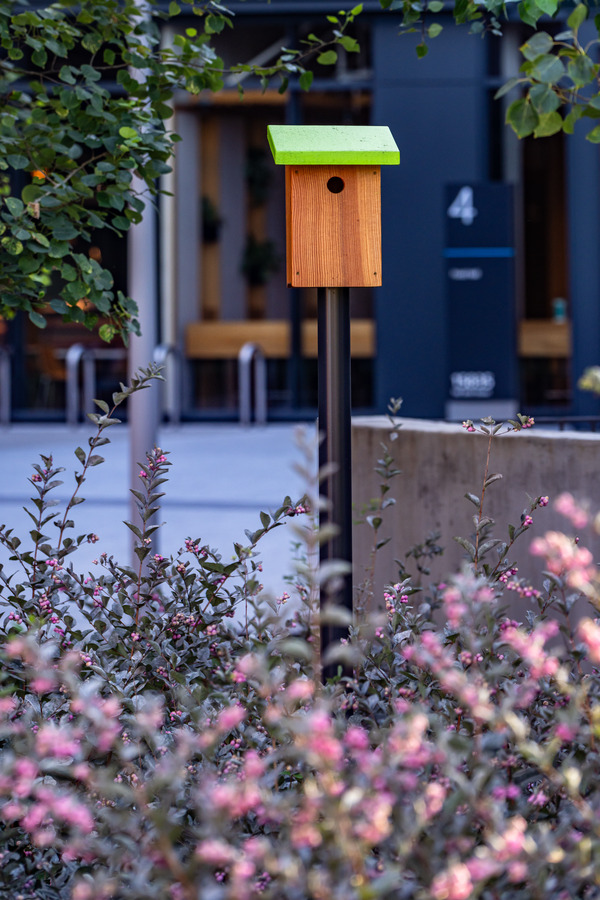
Designed to weather and evolve over time, these materials reinforce the campus as a living system, responsive to both environmental conditions and long-term use. The campus transitions from a more urban experience to a natural, organic environment, anchored by a continuous green corridor that connects key destinations.
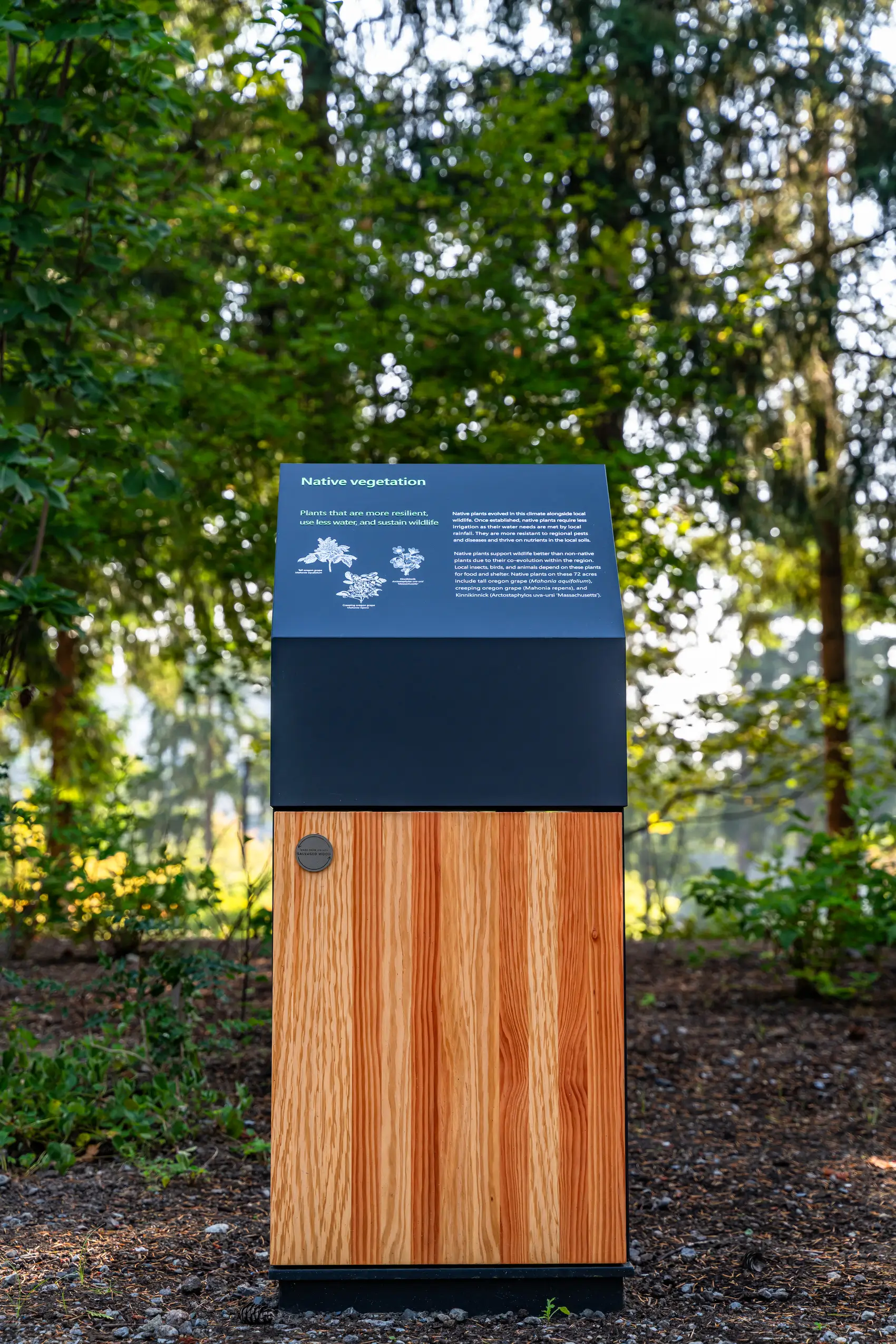
Signage and environmental features work together to highlight native planting, habitat restoration, and water management strategies, encouraging users to engage more deeply with the site. These moments of storytelling transform everyday movement into an opportunity for learning and reflection.
While rooted in accessibility and sustainability, the system also supports clarity and ease of navigation at every scale. A cohesive framework of identification and directional signage ensures users can orient themselves quickly, whether arriving by vehicle, transit, or on foot.
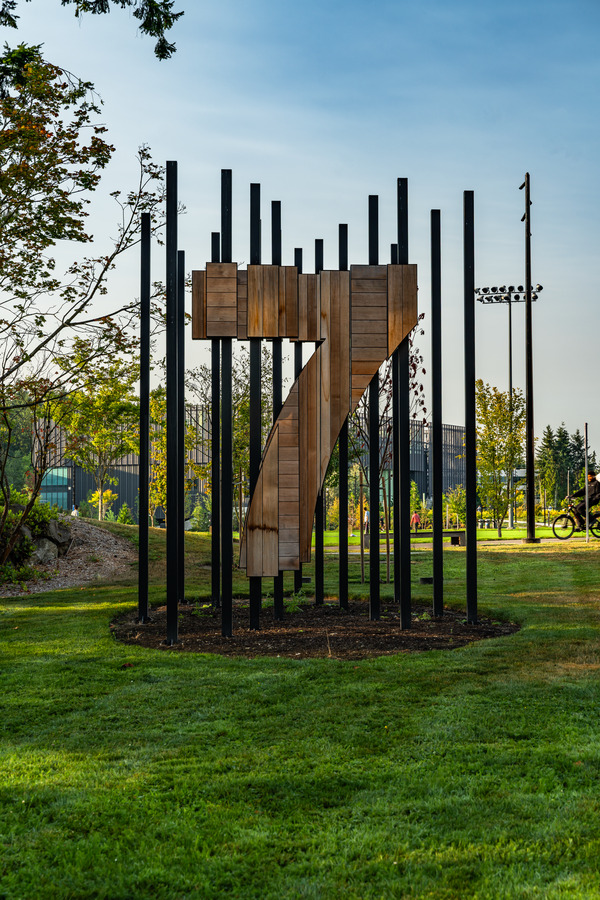
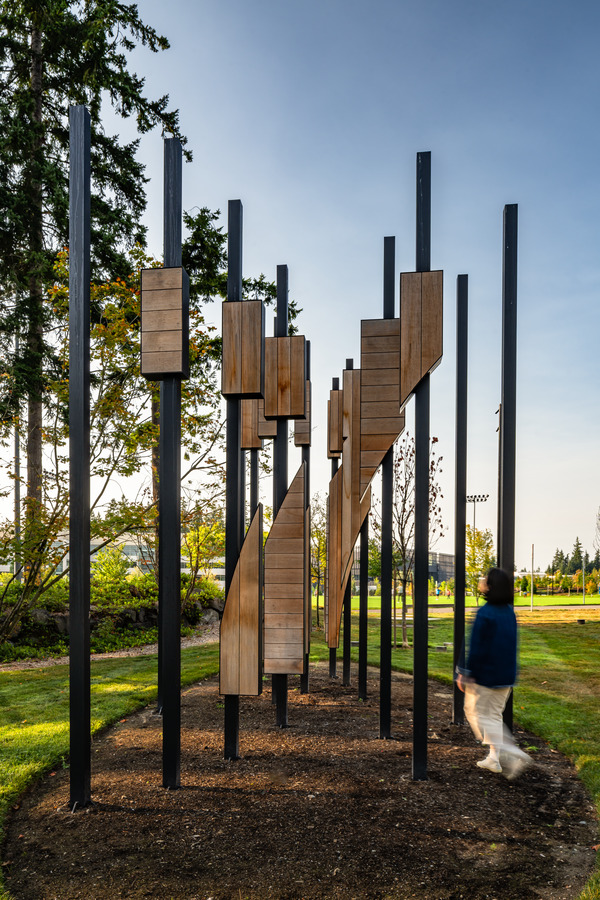
Landmarks and sculptural elements provide additional layers of recognition, helping users form lasting mental maps of the campus. A sculptural "7" installation — referencing a long-standing campus story about a once-missing building — reveals itself only from certain viewpoints, transforming wayfinding into an interactive experience rooted in perspective and exploration.
Together, these strategies create a seamless experience that balances function with meaning.
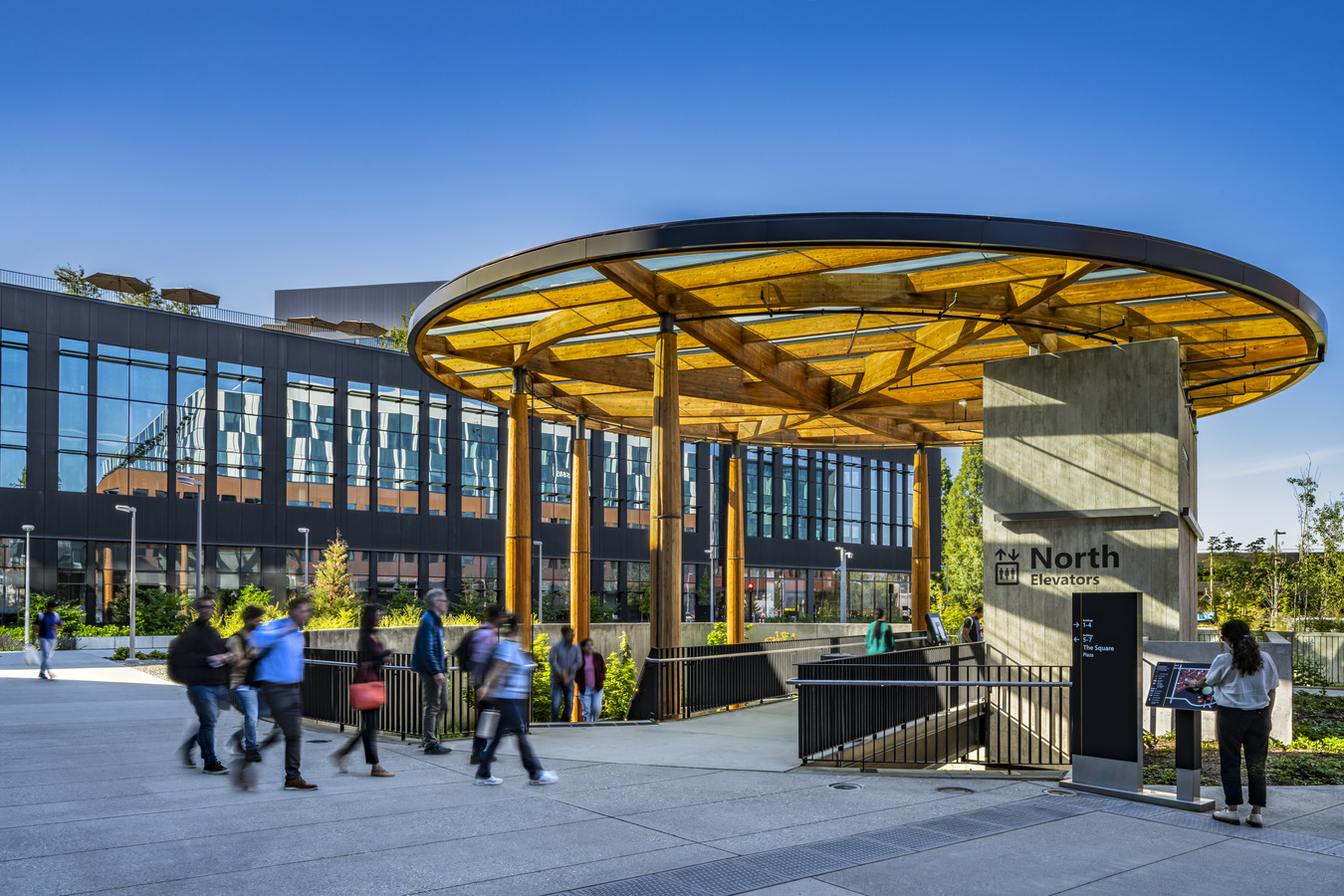
The result is a signage system that extends far beyond traditional wayfinding. By emphasizing inclusivity and sustainability, it creates an environment where every user can navigate with confidence and where the built landscape actively communicates its environmental values. The project demonstrates how thoughtful design can foster both accessibility and stewardship, shaping not only how people move through an environment, but how they connect to it.
©Photography by Meghan Montgomery