The Circular Economy:
Tenant Improvements
By Brett Gardner | Senior Director of Sustainability
Traditionally, we tend to think of Tenant Improvement (TI) design as individual projects with a life cycle defined by a lease agreement. But as leases expire and tenants renew or leave and new tenants take their place, a succession of such life cycles ensues. Thinking that through, the idea of a TI approach that reuses architectural elements, design features, and furnishings based on a Circular Economy (CE) model makes sense financially and for sustainability. Yet a general recognition of the need for a circular TI design model and the policies, strategies, and logistics to implement a defined framework are lagging.
Still, economic pressures and the current trend towards shorter leases are an impetus to establishing circularity and designing for deconstruction. Tighter budgets, the constraints of lead times, and supply volatility make reuse a practical and economic solution, as well as a boon for the environment. Economic and pragmatic realities are inadvertently recasting the concept of sustainability as a common-sense approach to materials sourcing. And the timing is right; manufacturers are investing in renewable, durable materials and establishing take-back programs, as owners consider salvage audits and reuse strategies.
Multiple considerations will contribute to a customized, tailored circular strategy for a property and its tenant projects, which will evolve and advance as new leases are signed. Assessments applicable to the property and projects will be required. An array of questions will need to be answered:
- Overall, what aspects of the building’s architecture and interiors can/should be reused for projects going forward?
- What existing sustainable materials, as well as those specified for new projects, can be reused and fully customized without compromise to aesthetic quality or goals?
- Which manufacturers and suppliers are certified to provide appropriate materials for reuse and have a take-back program?
- What should be salvaged and, if not immediately needed, where will it be stored?
- What consistent processes will be used to evaluate and integrate available salvage into new project design?
- What are the costs associated with this overall approach now and for the future?
- What strategies will have the best impacts for reducing embodied carbon?
The responses to these questions and other discoveries can set the foundation for a CE feasibility assessment, indicating what may be possible for a project or even a real estate approach. After additional analysis and prioritization (based on environmental or economic impact) and a cross-discipline stakeholder and delivery team impact assessment, overarching CE goals can be established. The design team can then translate those goals into the project’s scope and requirements, informing stakeholders, property managers, contractors, and manufacturers, while coordinating the appropriate actions. The team will monitor specifications with a clear understanding of the impact on reuse, circularity, carbon emissions, health objectives, and cost.
Depending on the size and nature of the property or project (or multiple locations across a RE portfolio of leased or owned assets), a Circular Project Manager, a new project-team member, might be designated to develop strategies, identify gaps in roles/responsibilities, understand schedule impacts, and oversee all projects at one or more buildings. In addition, the manager could coordinate any new specifications to align with project goals and circular concepts, especially for future life cycles.
To get ahead of the CE curve and understand its impacts and opportunities compared to traditional design/delivery/operations models, project owners/teams should consider starting this process much earlier in the pre-design/planning phase, or even as an independent strategies development exercise, with outcomes applicable to future projects. This will help identify and plan for schedule impacts, earlier team engagement, reuse optimization, development of waste-minimization scenarios, budgeting, and mockups. The use of innovative alternatives (such as 3D-printed components) can be coupled with deeper planning to optimize flexibility for future use without major construction.
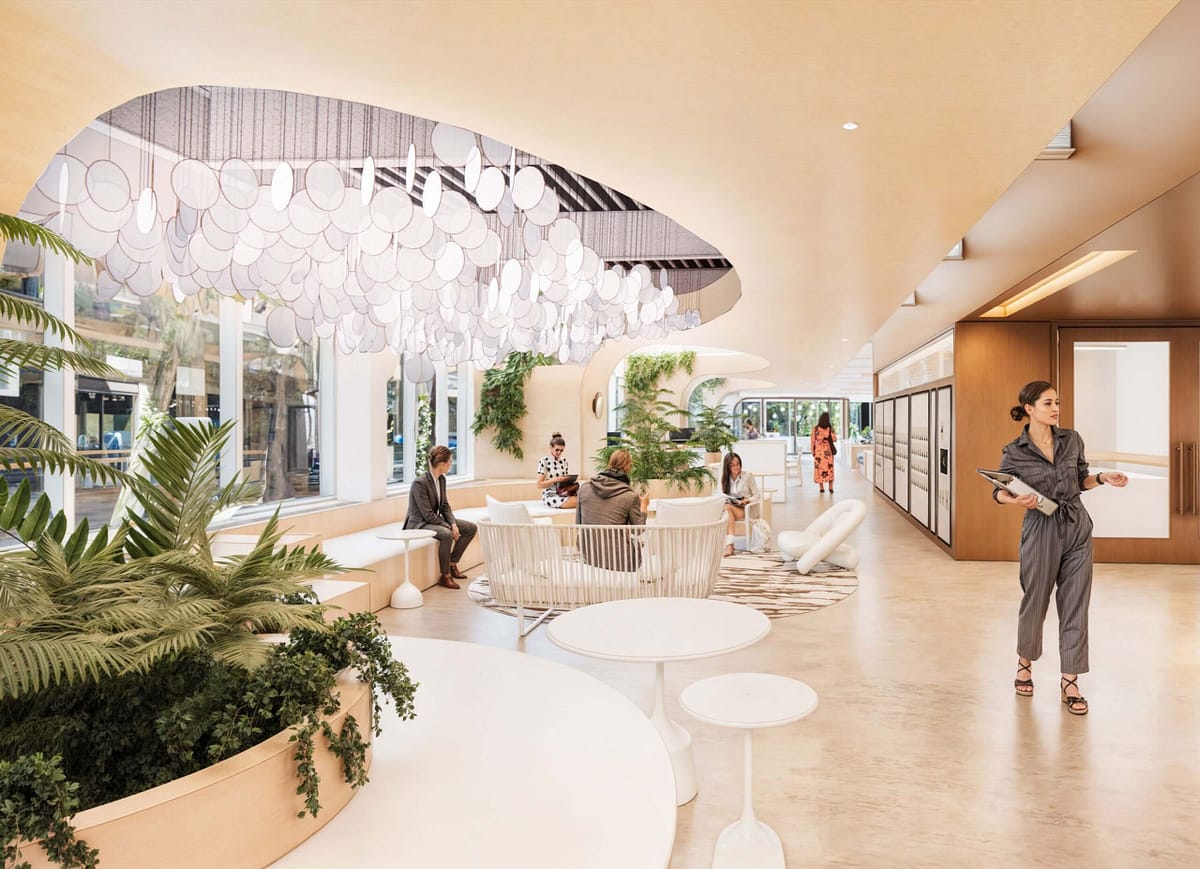
Multiple design elements, including banquettes and planters, in IA's new Seattle studio are 3D-printed.
Similar to other sustainability frameworks, identifying the Quick Wins and Low-Risk options that deliver on desired impacts is a great place to start and build momentum. Properties that implement a framework for circularity and take the appropriate steps to ensure its success will realize the best economic performance and value for their TI projects, but also advance their organization’s environmental goals, leading to positive impacts on climate change that will benefit the planet.
CLICK MARKERS TO EXPLORE

Brett Gardner
Senior Director of Sustainability
Brett Gardner is IA’s Senior Director of Sustainability and a pivotal force in steering the firm’s sustainability initiatives. Over the last six years, IA has set ambitious goals to mitigate the impacts of construction waste on the environment, joined the Mindful Materials framework, created IA's ESG document, and signed on to the AIA 2030 commitment as well as the Science Based Targets Initiative program. Gardner’s role was critical in launching IA’s Ecos Studio and is vital to confirming and reinforcing our steadfast commitment to achieving a healthy planet.