
The SCIF: Balancing Security and Wellbeing
by Laura Vierling | Principal, Managing Director
While delivering the highest level of protection against cyber infiltration, espionage, and physical compromise, the next generation of SCIFs must also deliver a superlative user experience. Why and how? This post explores those questions, but first, a brief look at the SCIF and its mission.
What is a SCIF?
According to the US Department of Energy, a SCIF (Sensitive Compartmented Information Facility) is “an accredited area, room, group of rooms, or installation where Sensitive Compartmented Information may be stored, used, discussed, and/or electronically processed.” SCIFS are designed to counter layered threats at the intersection of digital, physical, and human vulnerabilities. Standard office environments cannot reliably mitigate signal interception, covert surveillance, insider misuse, and high-grade cyber-physical attacks. The SCIF ensures a controlled, inspectable, and certifiable environment that reduces those risks to an acceptable level. Such requirements impose a set of constraints that fundamentally reshape workplace design, operations, and the user experience, focusing on security-driven technical aspects of the infrastructure and its physical design rather than the quality of the human experience.
Although associated with government, defense, and intelligence agencies, SCIFs are increasingly common in the private sector. The threat model is similar, but in private settings often centers on intellectual property theft, economic espionage, and regulatory compliance rather than formal classification.
Still, it is critical that the next generation of SCIFs provide an elevated user experience, while delivering the highest level of protection against the world’s most sophisticated adversaries—balancing ICD 705 and TEMPEST compliance with hospitality-forward design that provides for cognitive relief, controlled decompression, focus without isolation, optimum performance, and overall user well-being.
Why Well-being?
Simply put, well-being affects performance. In a SCIF environment, the combination of task criticality, typically involving high-stakes information processing under strict controls, the consequence of possible error, and the impact of environmental constraints, makes work extremely challenging. These sensitive tasks in a secure, siloed environment can trigger stress and a sense of isolation, leading to cognitive fatigue. Lack of daylight, time cues, and external connection, including disconnection to phones and wearables during work periods, affects focus and circadian rhythms. Performance may be impacted, as well as recruitment and retention, especially for younger professionals accustomed to hybrid or remote work and significant social connectivity.
Various types of work typical of a SCIF environment can trigger different stress drivers. For example:
- Intelligence analysis, including the review of classified reports, satellite imagery, or intelligence, may cause cognitive overload in response to large data volumes and the consequence of misinterpretation.
- Real-time monitoring and operations, including cybersecurity centers that monitor active threats requiring continuous vigilance for long periods of sustained attention, rapid decision-making, or 24/7 shift work, can disturb sleep cycles.
- Research and development of classified programs typically in the arenas of advanced defense, aerospace, AI, or cybersecurity R&D, requiring innovation under constraint (limited tools, no open internet), secrecy limiting collaboration, or external validation with long project cycles and high scrutiny, can be highly stressful.
- And there are environmental stress amplifiers related to security design requirements specific to SCIF work, as opposed to non-SCIF knowledge work. These include feeling disconnected from outside life during working hours, triggered by time distortion, lack of access to personal devices, and fatigue in the absence of daylight or external cues, along with a sense of isolation due to silence or controlled acoustics. This combination of layered constraints can add up, creating an elevated stress profile.
Are There Solutions?
Yes, there are. Confronted by these types of challenges, not just for SCIFS but for all designed environments, we established a science-informed framework that meticulously cites and deep dives into specific strategies and actions grounded in neuroscience, environmental psychology, biophilia, and sociology. They focus on the human connection to place and its community, with the intention of reducing stress, sharpening focus, and elevating mood—factors that directly influence productivity. Developed by IA Strategy Director, Valerie Jardon and third-party reviewed by a leading environmental psychologist, this evidence-based approach, rooted in decades of peer-reviewed research, presents nine principles within three categories—spatial, experiential, and relational—describing precise approaches and actions within each category to connect emotional well-being, cognitive performance, and cultural alignment with measurable outcomes in mental clarity, focus, engagement, productivity, and employee retention. In 2025 we trademarked this approach as the Harmonic Principles™.
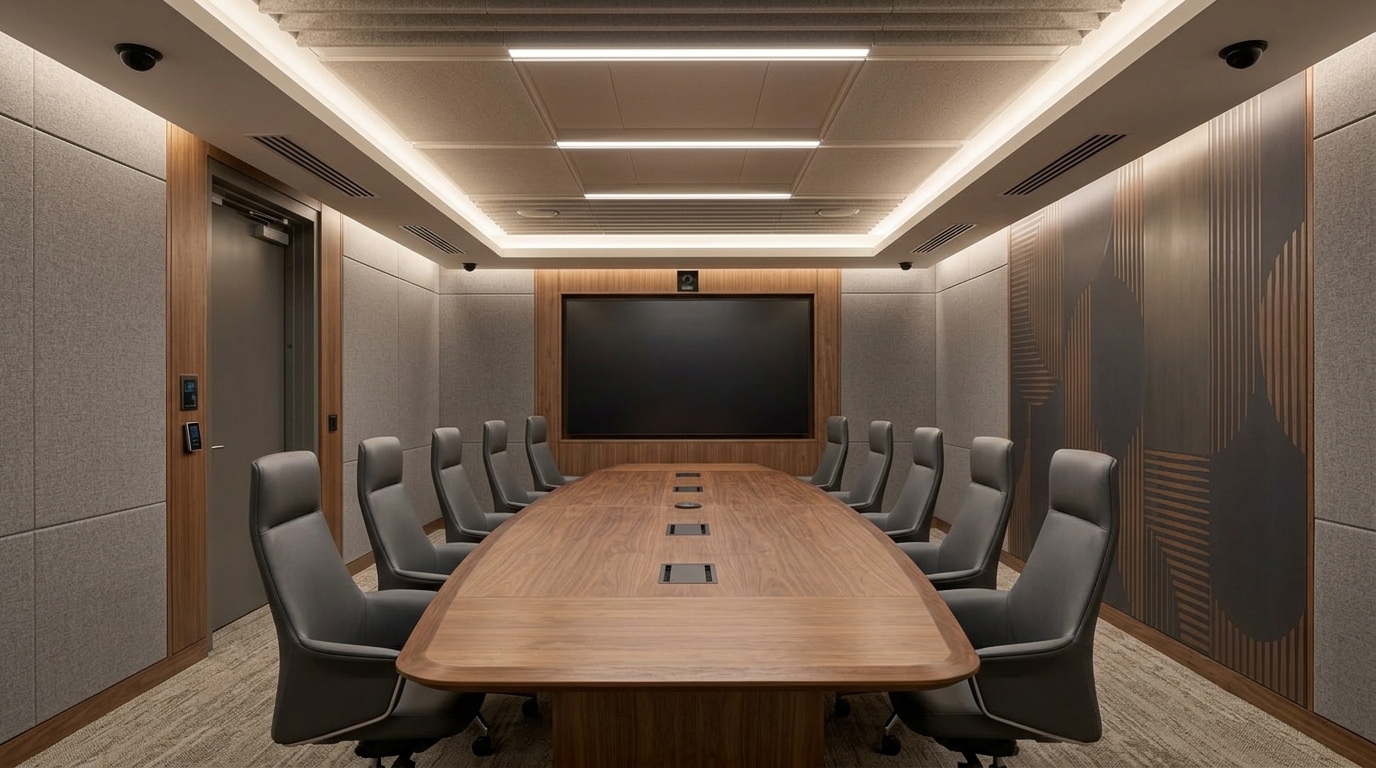
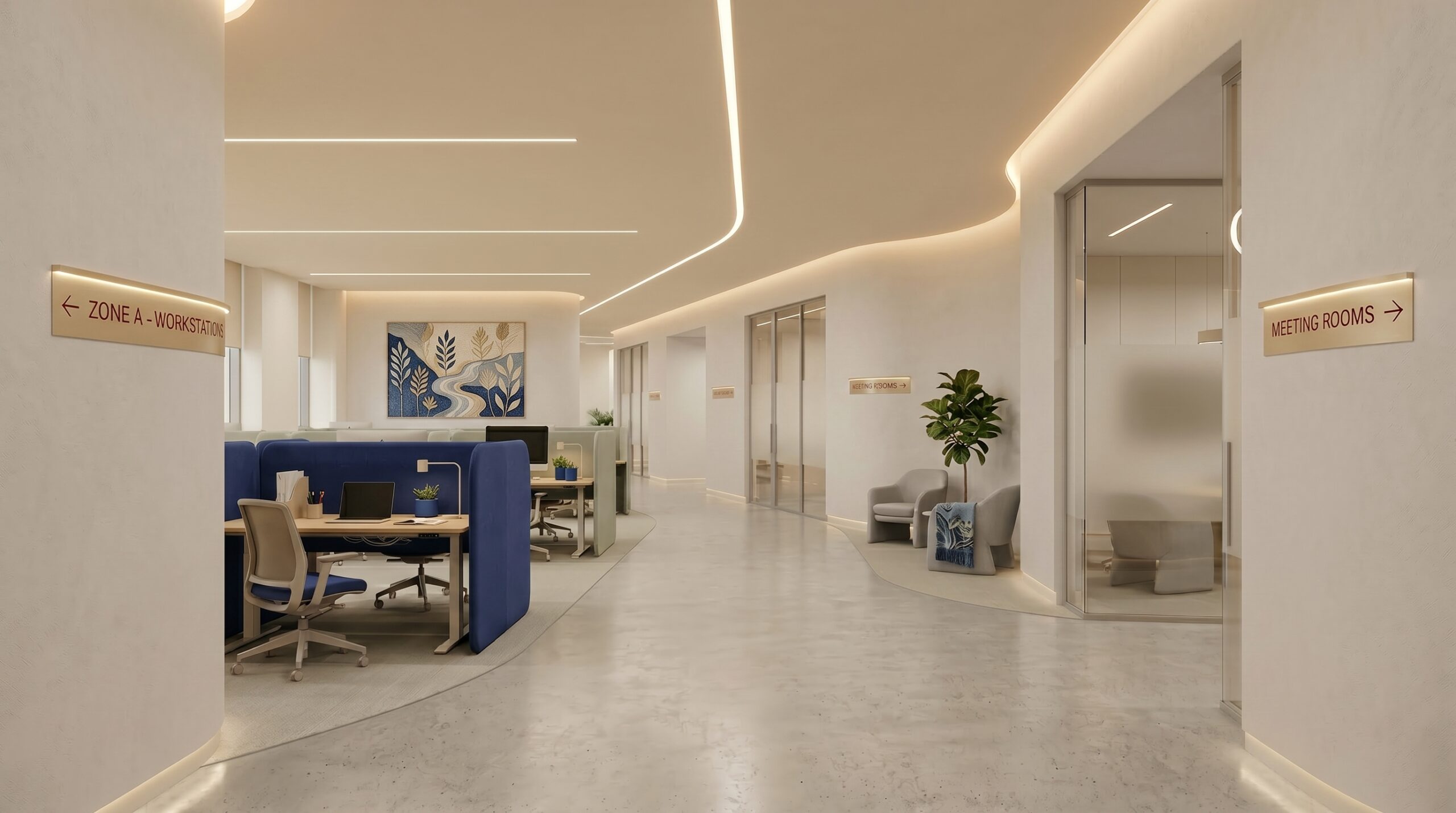
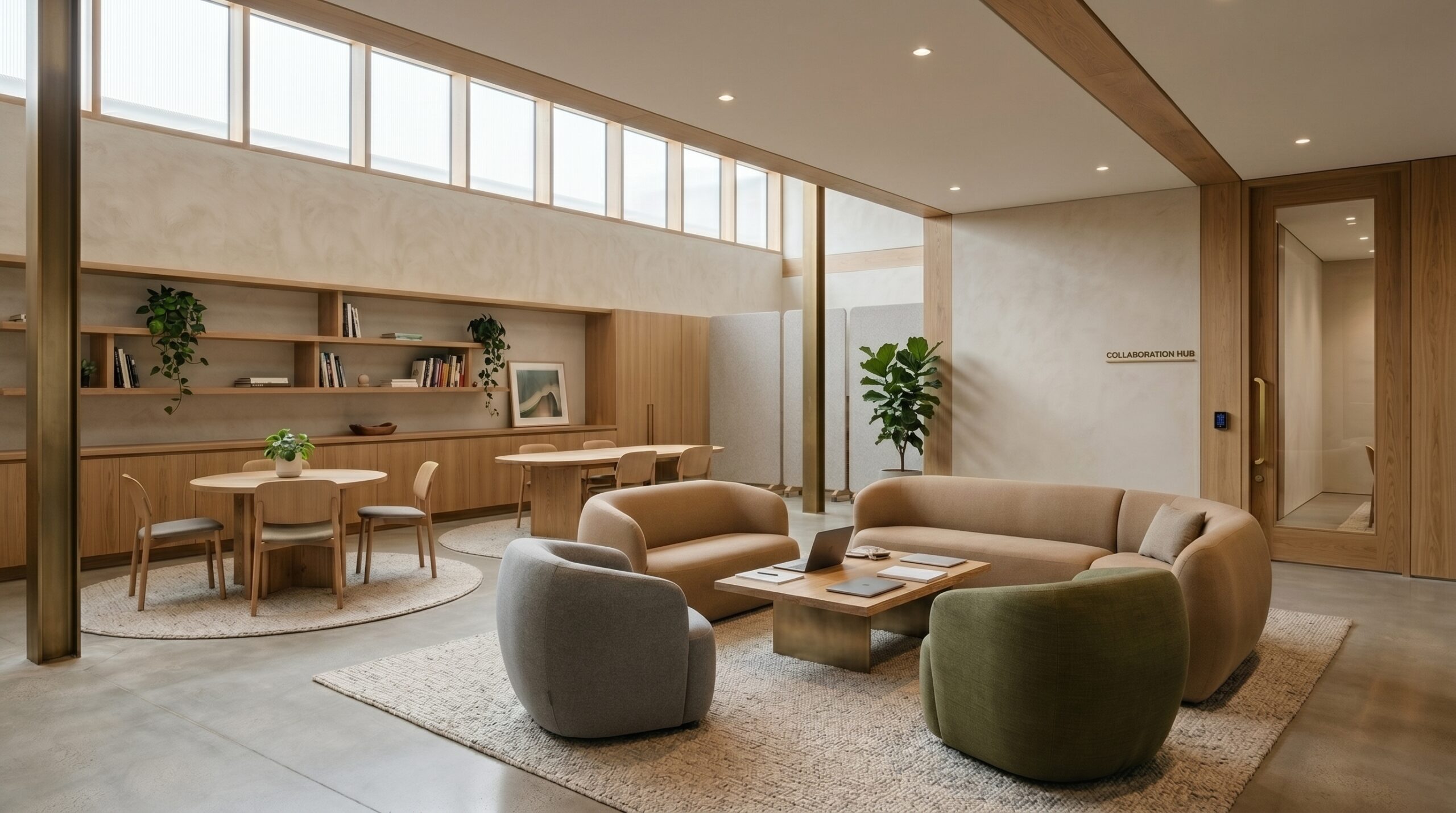
Applying the Harmonic Principles™ to a hypothetical SCIF design illustrates their use and benefits.
Conclusion
As we continue to research the evolving SCIF environment, use of the Harmonic Principles™ as a lens to inspire innovative design strategies and mitigate typical SCIF-environment challenges gives us a dynamic perspective and actionable means to create the next generation of SCIFs for better focus, engagement, productivity, well-being, and a heightened human experience.