
Unexpected Outcomes: Building Reuse
Reuse and repurpose are key concepts in the quest for sustainability. Applying those concepts to the recycling of existing buildings across different market sectors—often adapting them for purposes inconsistent with their original use—significantly benefits the environment. Typically, a repurposing reuses most of the carbon-intensive parts of a building: the foundation, structure, and building envelope, avoiding 50% to 75% of the embodied carbon that new construction of the same building would generate. The transition of a building's function and identity is often startling, introducing elements of surprise and evolved architectural innovation that inspire intrigue from those aware of the transformation.
In our portfolio, there are myriad examples of repurposed buildings—some massive complexes, others smaller, distinctively contained properties. All are highly defined, customized for a specific purpose very different from the structure's initial intent, and extremely effective in achieving client goals. Selected examples demonstrate the wide range of reuse.
Tecovas
In Franklin, TN, the historic F. W. Truett Bank Building, built in 1901, is now a Tecovas flagship store. Located on iconic Public Square—known for a mix of vintage architecture, boutique retailers, and civic celebrations—the store features Western boots and apparel, an updated Old West ambiance, and signature Tecovas hospitality, offering clients a shot of whisky or other beverage from the bar, a design feature at most Tecovas locations. Elements retained from the original bank architecture, including the fireplace, arched windows, and vault, add character and authenticity to the design.
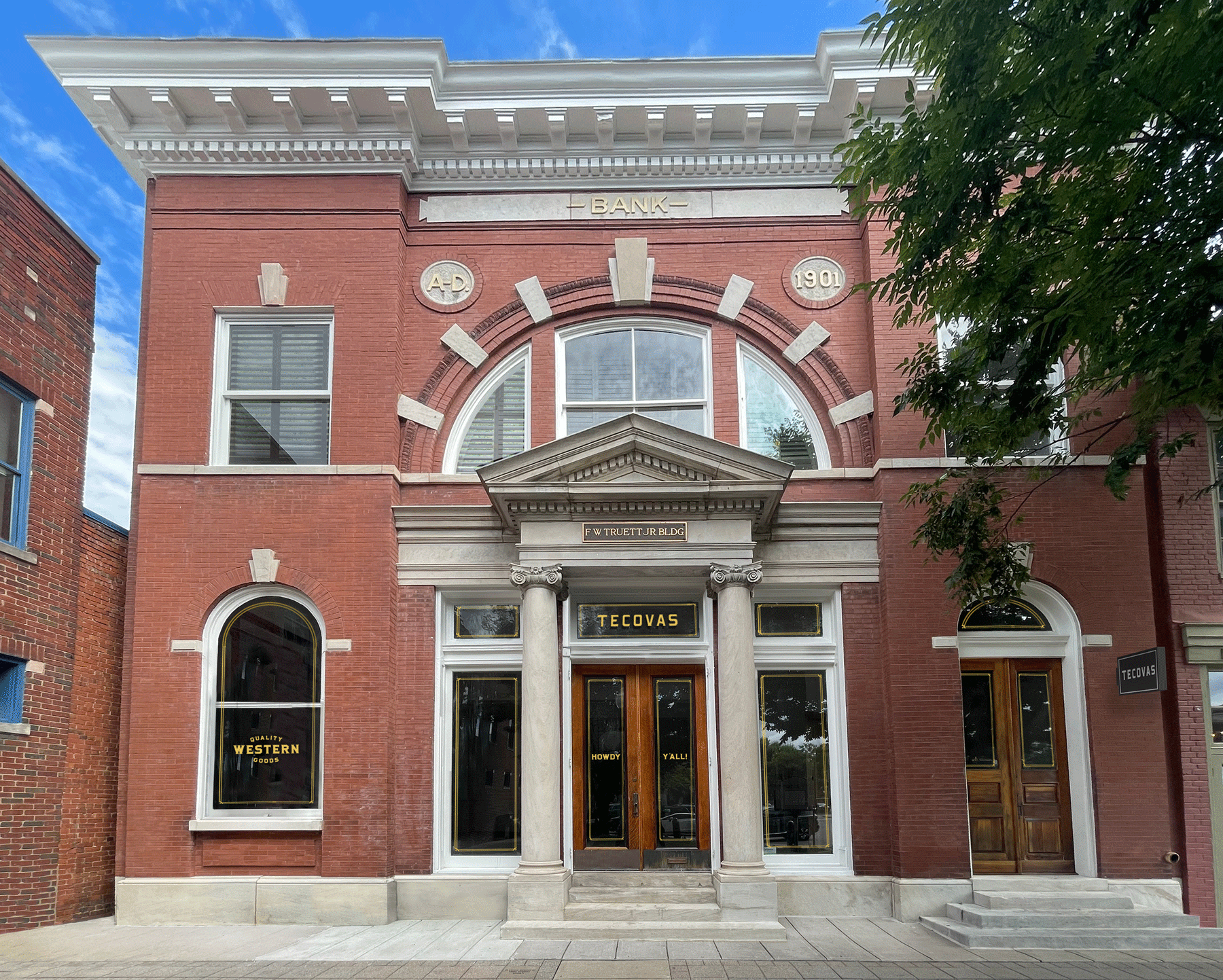
Tecovas, Franklin | Photography by Cadan Creative
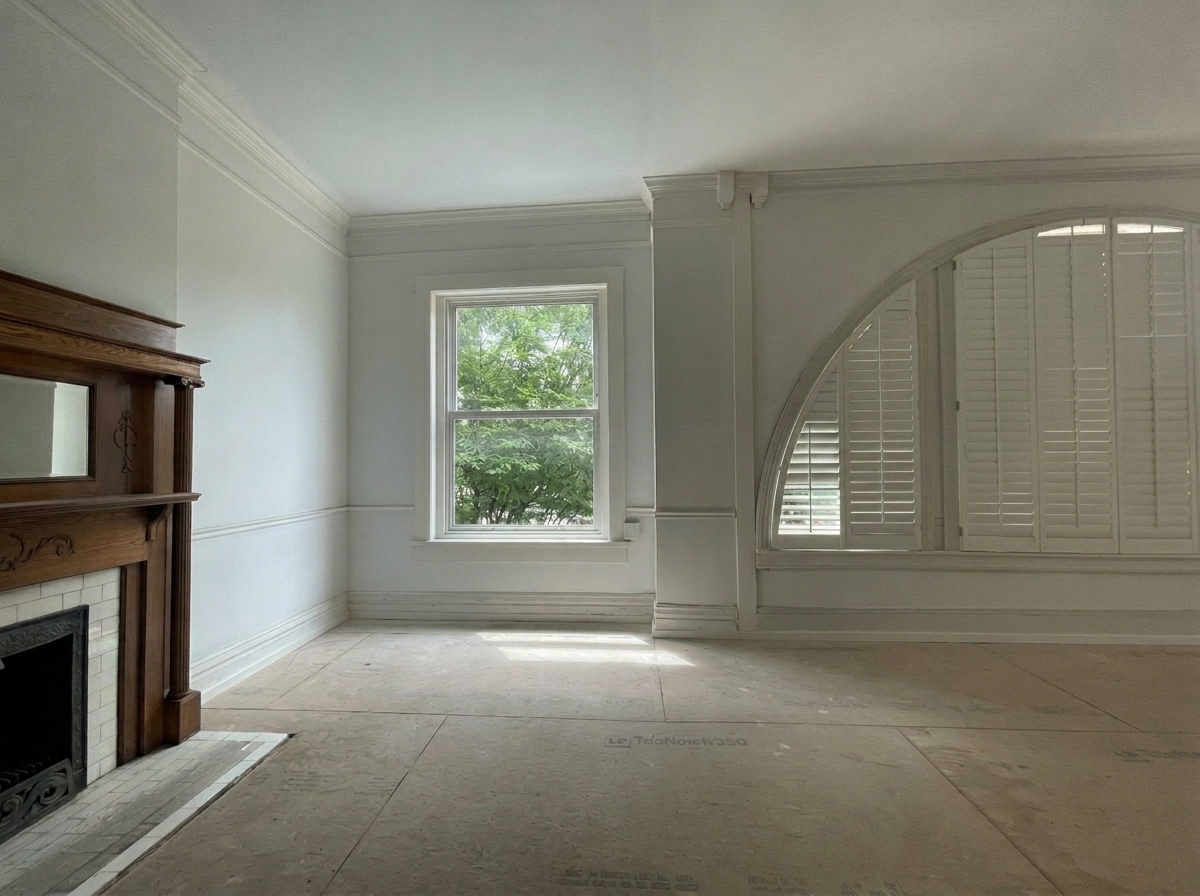
Before
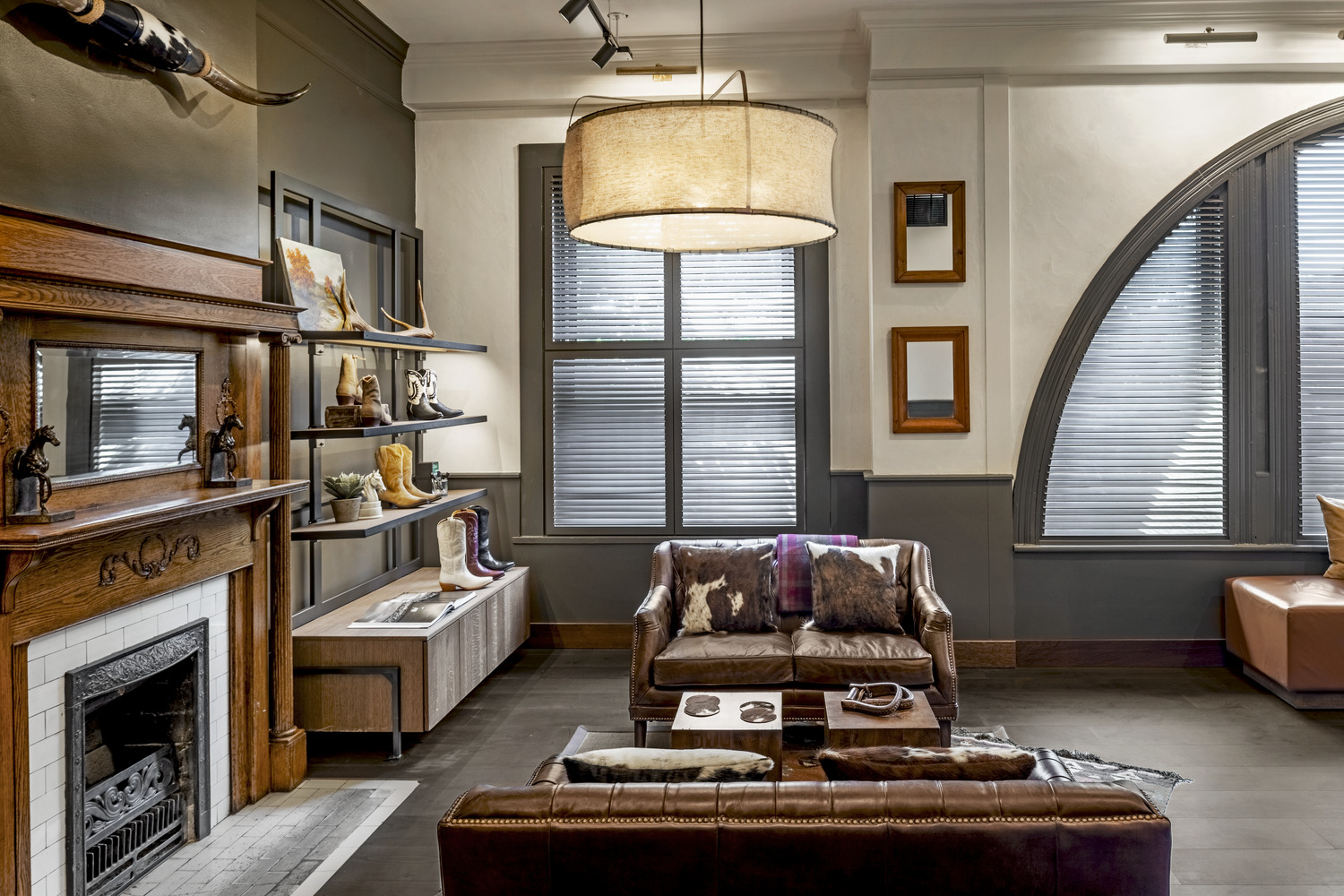
Tecovas, Franklin, TN | Photography by Cadan Creative
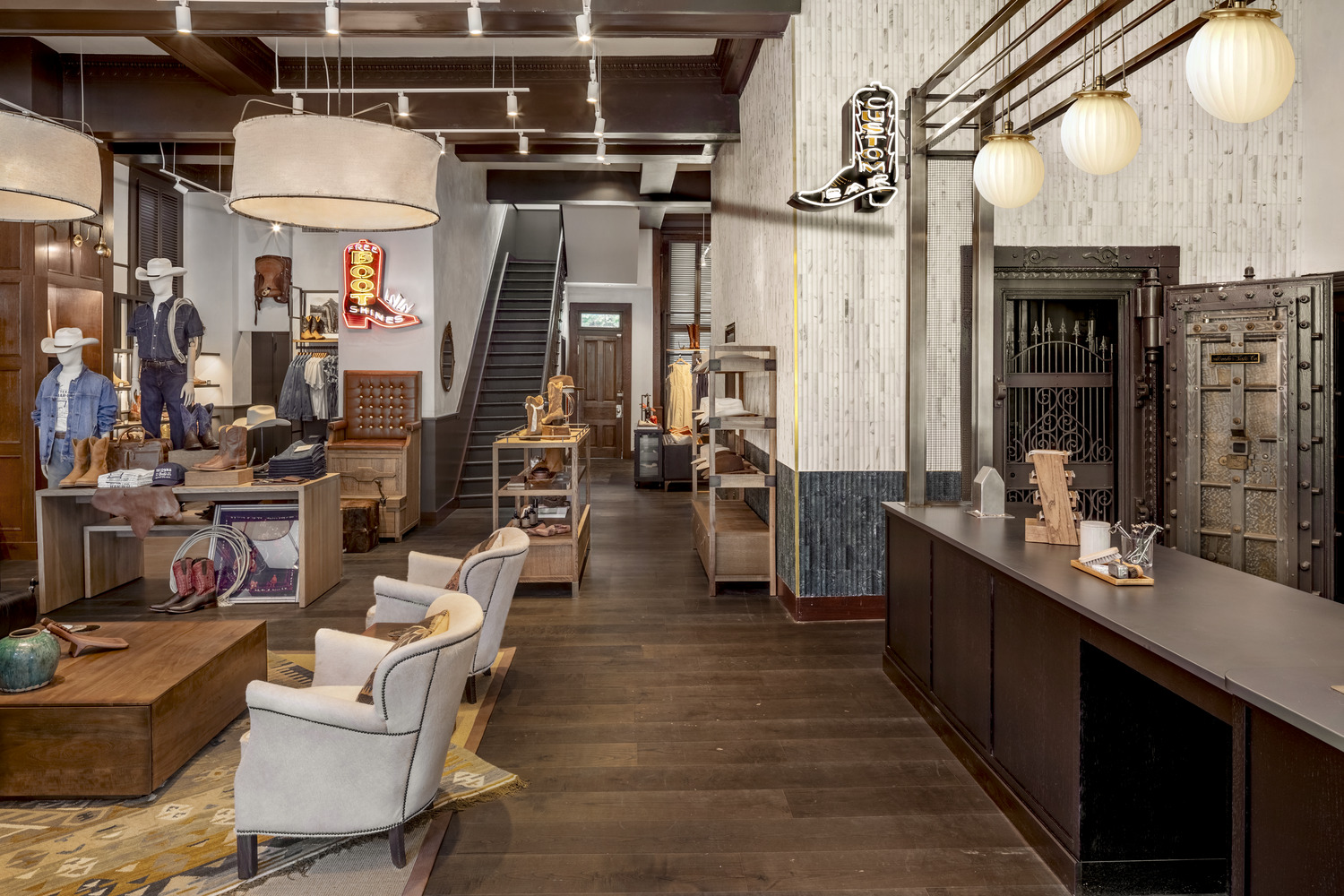
Tecovas, Franklin, TN | Photography by Cadan Creative
Williams-Sonoma, Inc.
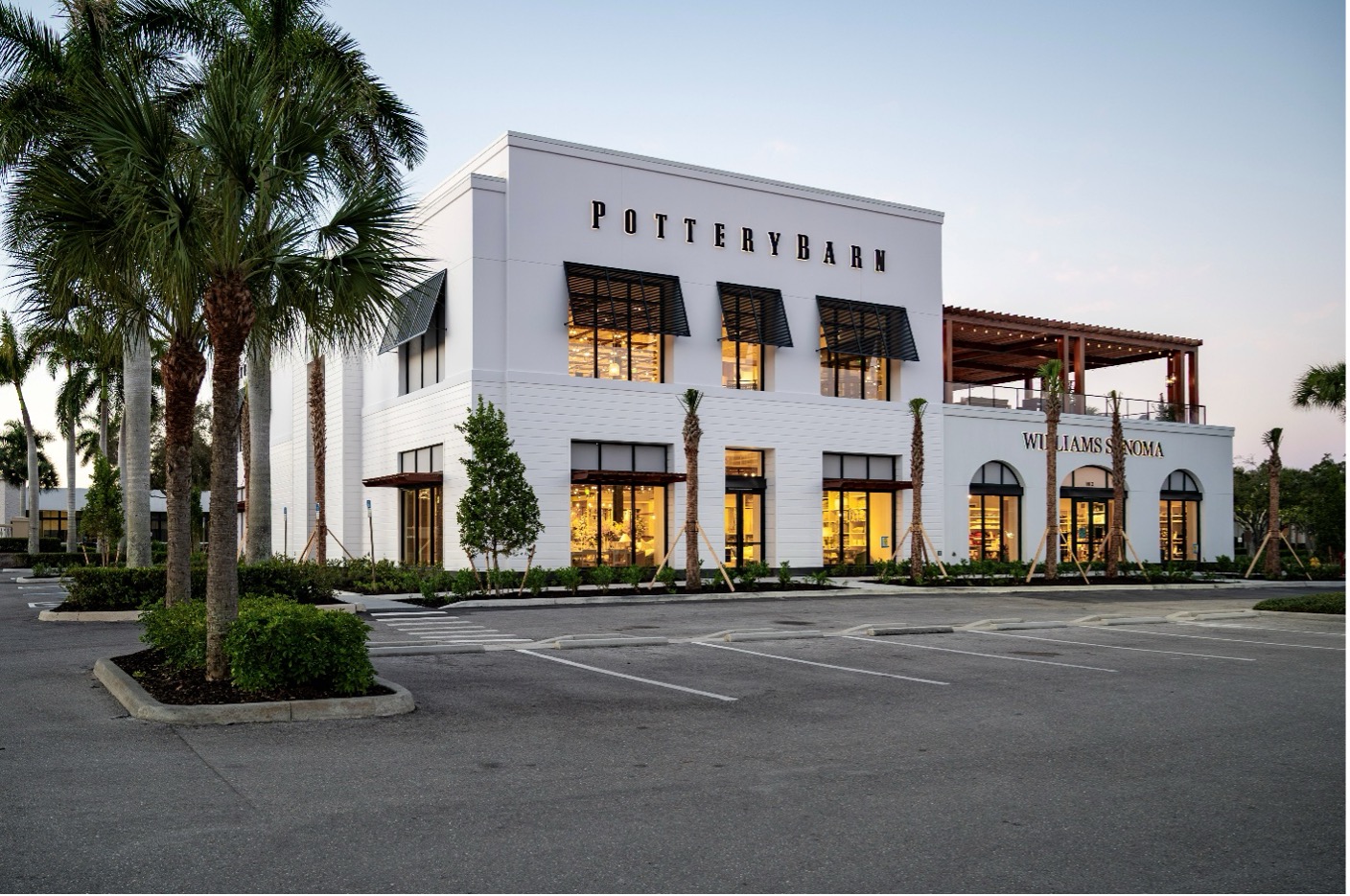
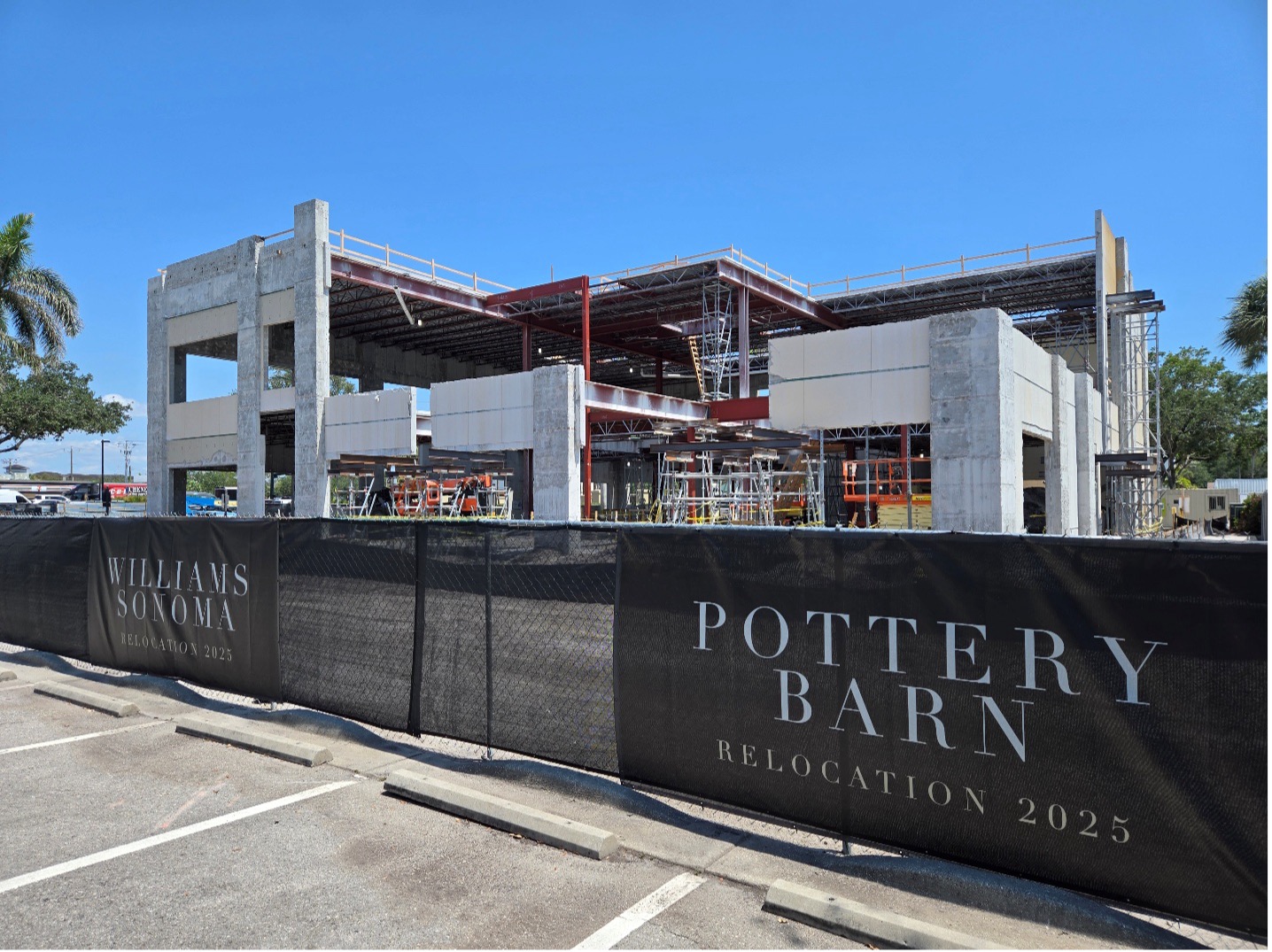
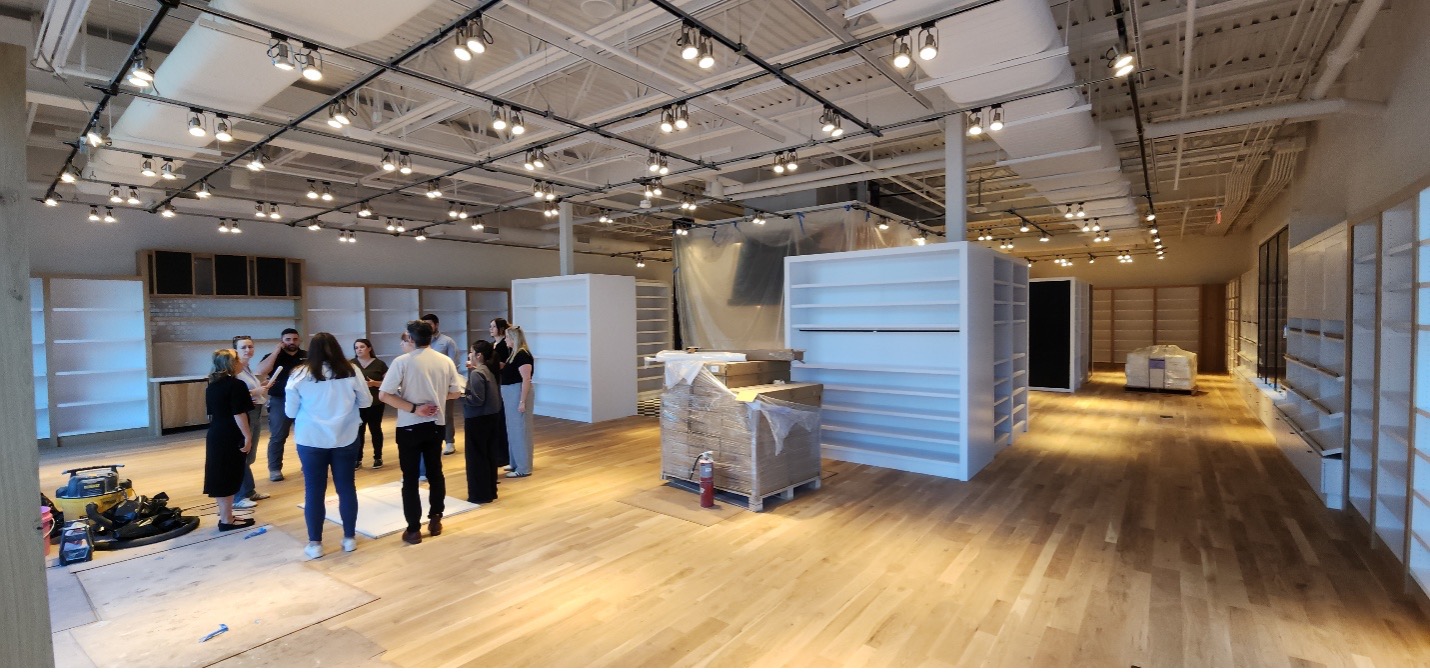
In Naples, FL, a former Barnes & Noble became a side-by-side location for Pottery Barn and Williams-Sonoma stores, with the addition of an inviting roof garden. IA has partnered with Williams-Sonoma, Inc. for over a decade as its sole architectural consultant, designing and providing services across its various brands. The new stores required extensive reconstruction and selective landscaping, while the interiors are consistent with each brand's nationwide signature style.
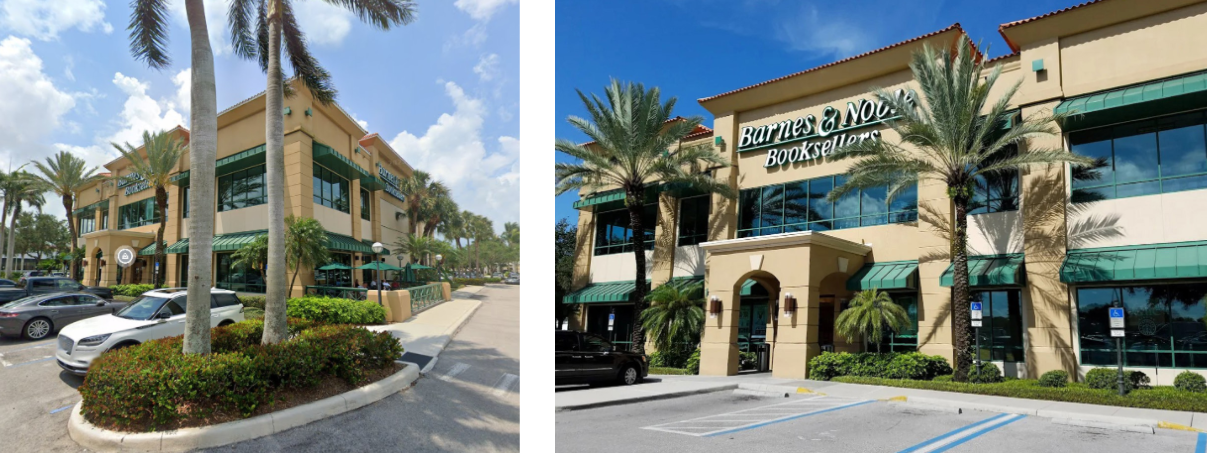
Before
Chipotle Mexican Grill
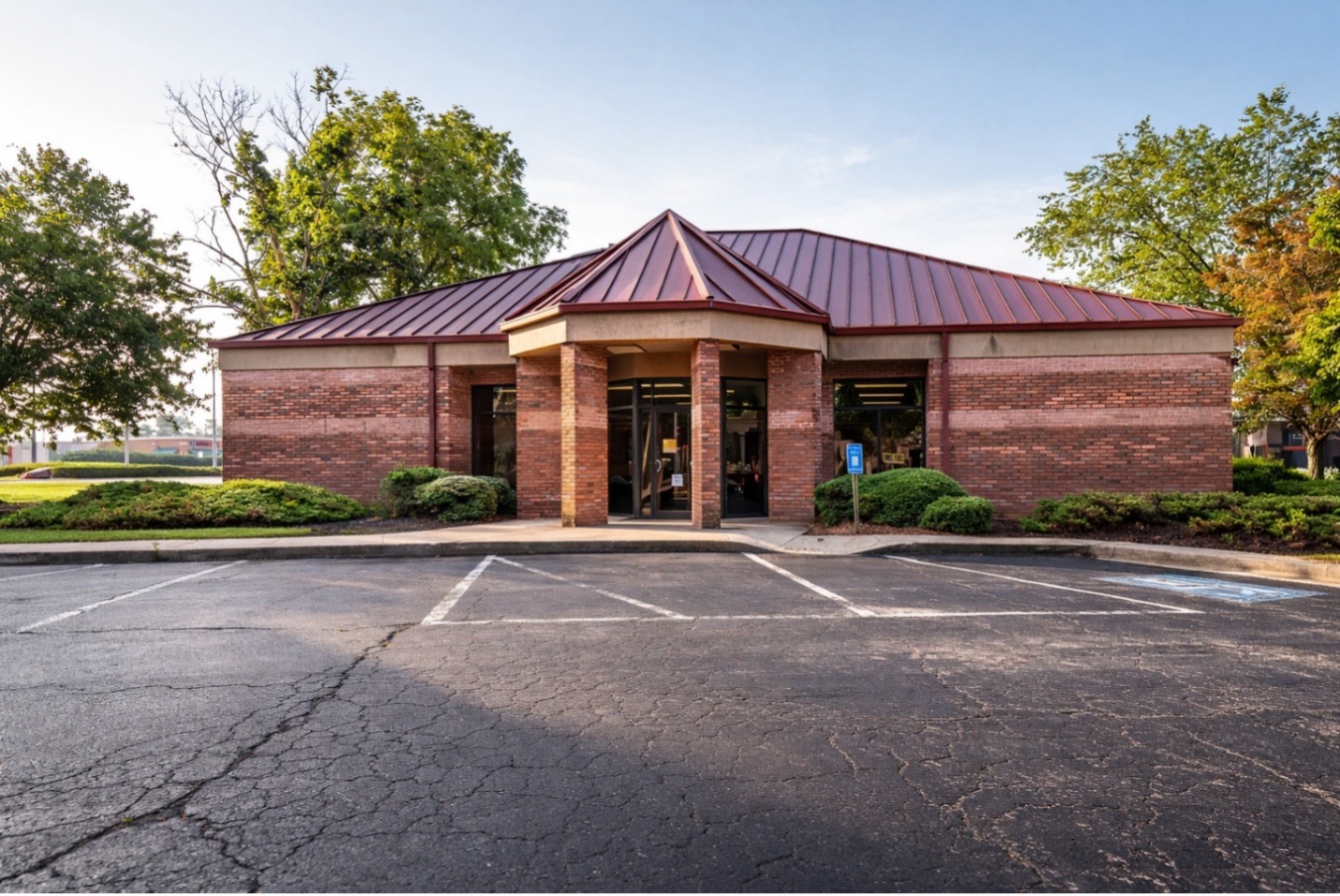
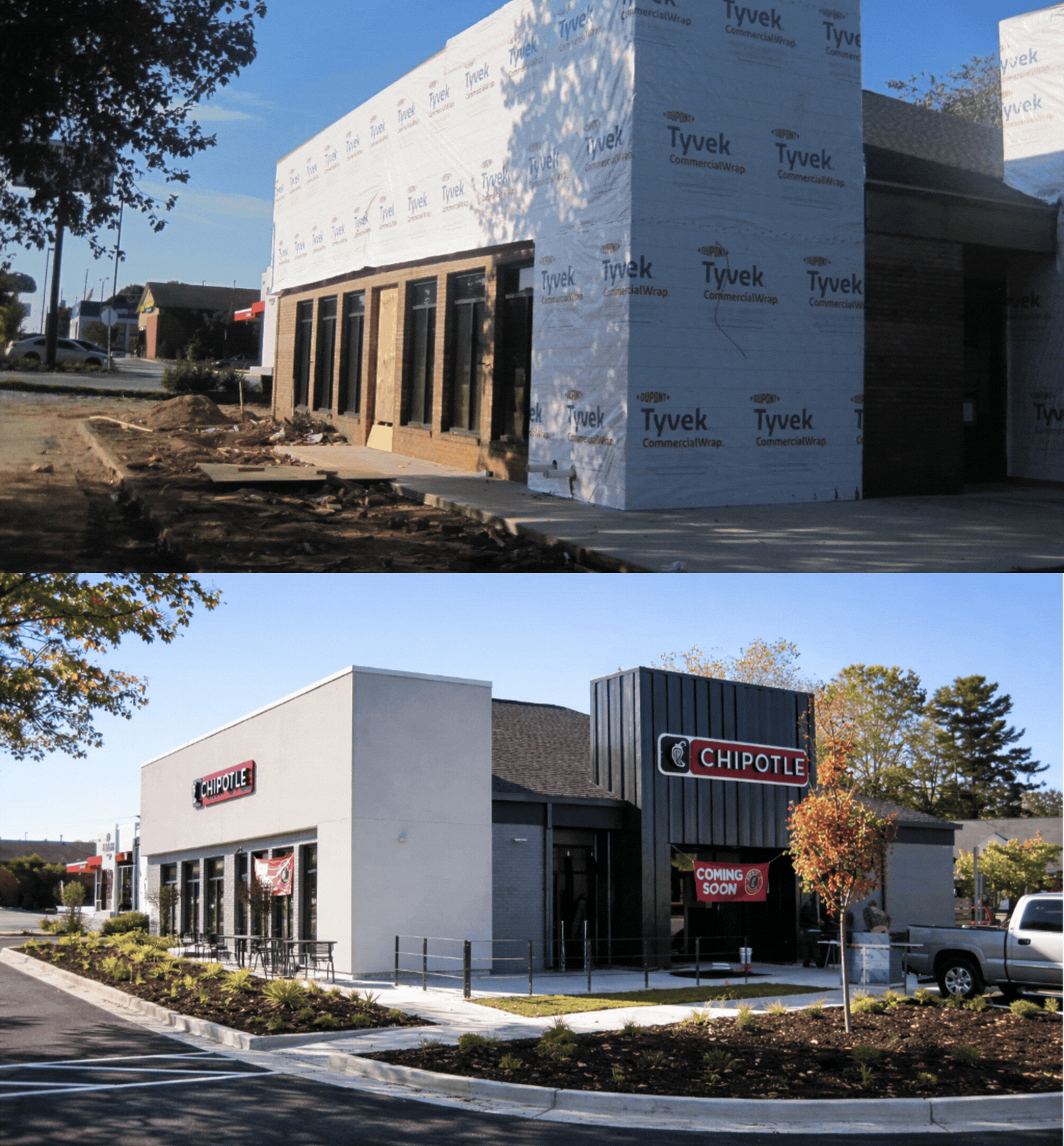
A bank branch in Oakwood, GA, recently became a Chipotle Mexican Grill. The transformation involved structural demolition, removal of deteriorated finishes, replacement of window and storefront systems, new roofing, and a new exterior façade. The interior was reconfigured and refurnished, with the addition of a kitchen and associated MEP and structural coordination. At the exterior, new sidewalks, a patio, plantings, and refinished parking surfaces modernize and reactivate the property. Before and after images demonstrate the striking metamorphosis.
Multi-Building Campus Reuses
In Silicon Valley, one of the larger projects—a building complex once the R&D facility that launched the first supercomputer (the CDC 6600) in the early 1960s—is now the site of a leading technology company. Fittingly reimagined for developing the technologies of the future, the complex is a symbiotic ecosystem uniting built environment, occupants, and nature. A model of sustainability, it has garnered numerous awards, including the IIDA Northern California Long View Award for Achievement in Sustainable Design, and earned Living Future Institute's Living Building Challenge 4.0 Certification for Materials, Equity, Beauty, and Place.
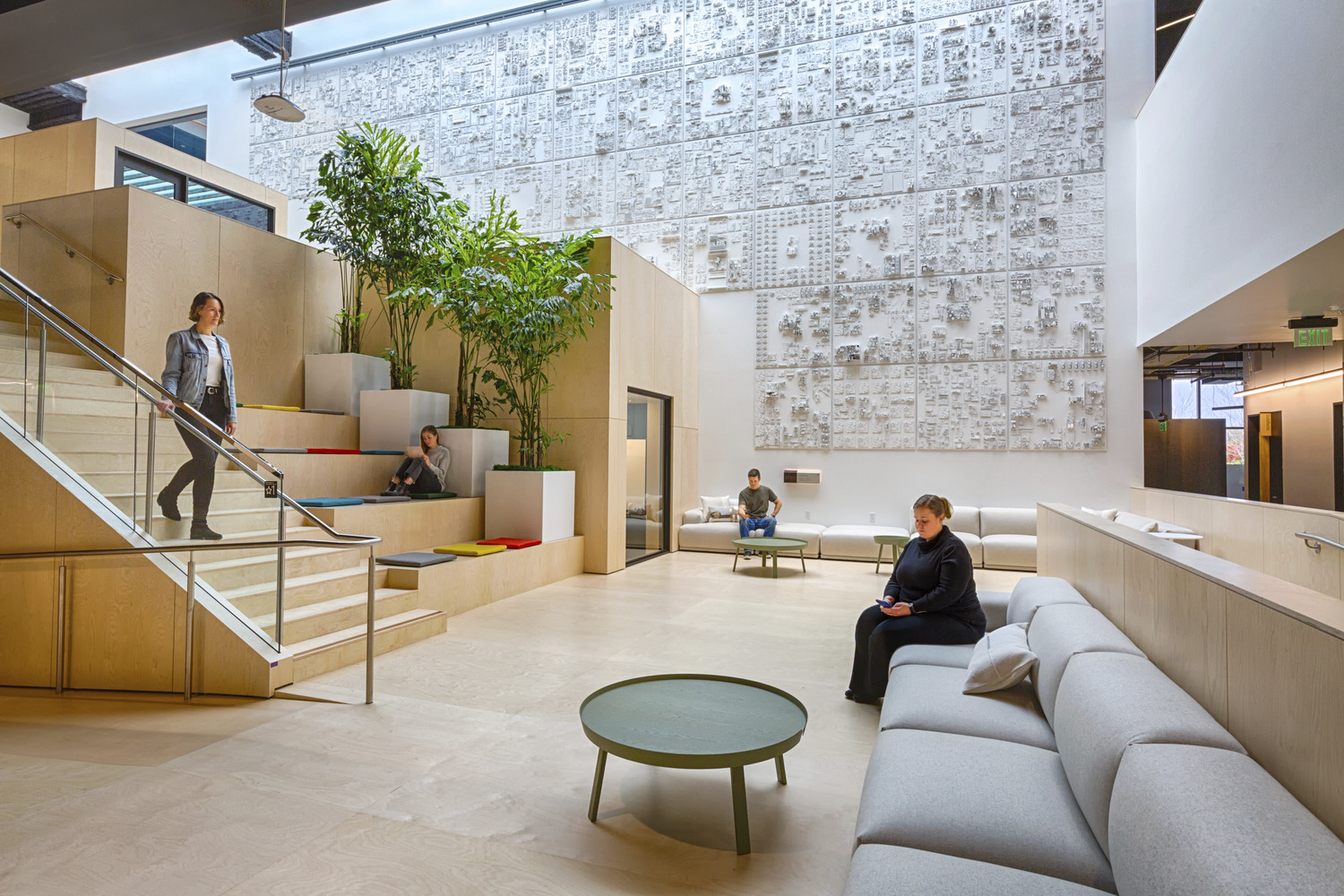
Confidential Client, Silicon Valley, CA | Photography by Marco Zecchin / Image Center
Another massive transformation is the repurposing of The Press, a five-building campus in Costa Mesa, CA—the newsroom and printing plant of the LA Times for 46 years. Today, as the headquarters of a defense technology company known for leading-edge products and a mission-oriented culture, the complex is streamlined and connected, providing the large volumes of space the client requires, as well as conference rooms and amenities for staff that celebrate the Southern California lifestyle.
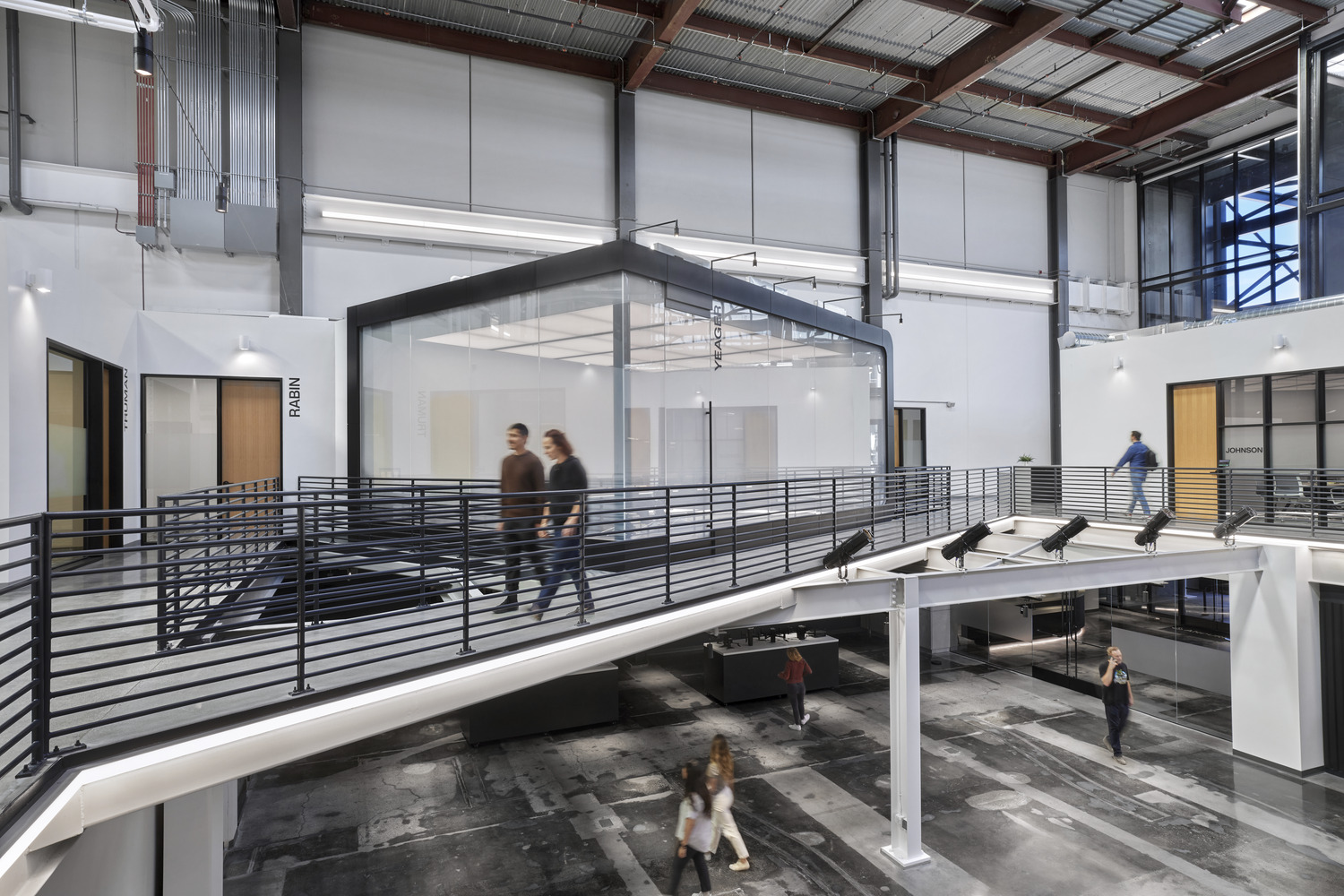
Confidential Client, Costa Mesa, CA | Photography by Garrett Rowland
Diverse Opportunities
The selection of an existing structure for reuse depends on a host of factors: the condition of the building, its location, the space it provides, the potential to realize client goals, and the vision and expertise to execute the transformation. The possibilities are nearly unlimited.
Popular options include department stores, increasingly candidates for reuse given their vast open floor plates. A former Sears store—celebrated in an earlier post—the anchor enterprise at one of Ontario, Canada's largest shopping malls, is now a 346,401-square-foot Bank of Montreal headquarters, housing over 3,000 professionals across four floors. At another mall in Edina, Minnesota, IA transformed a JCPenney into an experiential entertainment center for a confidential client. And the Lit Building in Philadelphia—a department store from 1895–1907 comprising 33 separate structures spanning an entire city block—is now a creative hub for innovative and visionary tenants.
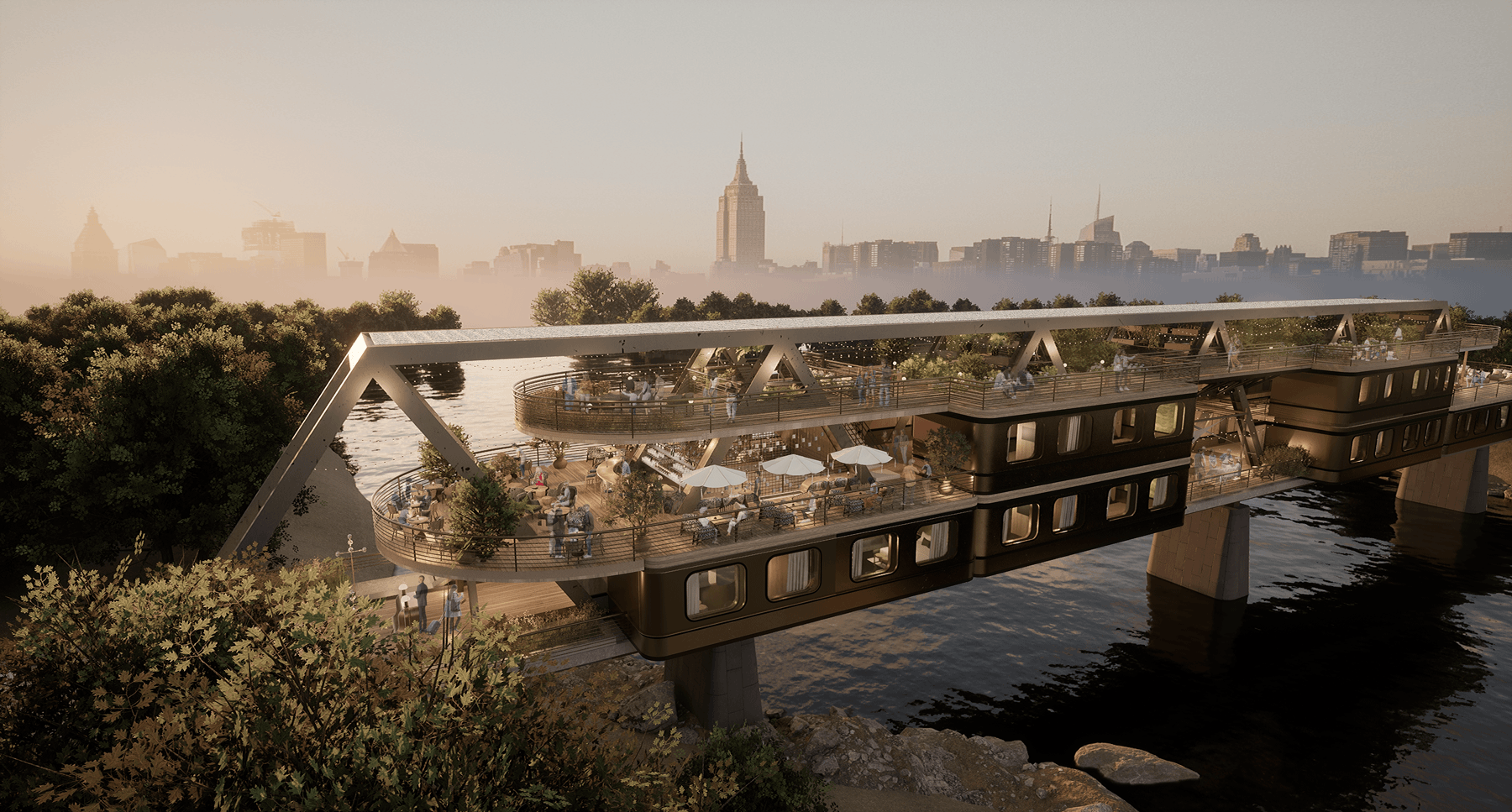
The potential for reuse is further exemplified by The Passage, the 2025 Radical Innovation Grand Prize Winner. The global Radical Innovation Awards are an annual juried competition that began 20 years ago, focusing on disruptive design, architecture, and technology concepts for the hospitality and travel industries.
The Passage is an adaptive reuse project proposed by IA's Hospitality Team that transforms abandoned railway bridges into immersive hospitality destinations, reducing the need for new construction. Featuring cantilevered guest pods, skywalks, and rooftop gardens, the design celebrates original trusses and operates as a closed-loop system powered by solar, wind, and rainwater. Applicable to diverse sites and viewable here, The Passage offers a first-of-its-kind experience combining sustainability, architectural heritage, and a deep connection to nature.
Conclusion
Through skill, vision, and innovation, the reuse and repurposing of buildings and abandoned structures—rather than new construction—supports the environment and the circular economy, saving materials and labor while delivering surprising features and floor plates that showcase architectural creativity and uniquely complement client goals.