
Workplace Beauty and Belonging:
Keys to Engagement, Transforming Culture,
and Boosting Employee Morale
Julia Leahy, IIDA, NCIDQ, LEED AP ID+C
Design Principal
We live in a time when the purpose of the physical workplace is continually challenged, examined, and reevaluated. Is it a place where people come to work every day? Is it a hub for collaboration and team building while individual work happens remotely? Is it both? There is no single model or consistent blueprint for success. However, there are some universal truths. Humans desire beauty and have a need for belonging, ingrained from their early ancestry. Beauty inspires. Belonging connects. Together, they create workplaces where people and organizations thrive.
Let us start with belonging. Online presence gives us reach and ease of access, but physical presence gives us the richness of connection. The deep sense of belonging that people feel when physically with others is rooted in biology, a legacy from the ancient need to bolster survival through community. It is felt in the warmth of a smile. Emotions are mirrored and enhanced when people are physically together. Physical touch has been shown to build trust. A handshake or a door held open triggers reward centers in the brain. Even informal communication over a cup of coffee can boost emotional connection and elicit feelings of satisfaction. The positive effects of these social connections are a cornerstone of human interaction and ward against rising loneliness. However, simply bringing people together under one roof is not enough.
Once physical presence is established (there is a workspace and people within it), the formula for an optimal work environment diverges. Let us assume the basics are covered: good tech, the ability to meet, to do focused work, and grab a cup of coffee. Factors such as company profile, culture, brand, and occupant profile can direct functional design into a multitude of different paths: many private offices vs no offices, activity-based workspace vs assigned seating, and so on. But like the need for belonging, there is another commonality etched into the biology of the human experience that must be considered: a desire for beauty.
Humans are wired to deeply care about physical beauty. When they experience something beautiful, they feel a sense of pleasure and reward. Beauty guides attention, elicits and enhances emotions, and reduces stress. Research has shown that incorporating beauty into design is vital for psychological well-being. It has positive effects on learning, creativity, social behavior, and emotional wellness.
Photography by Garrett Rowland
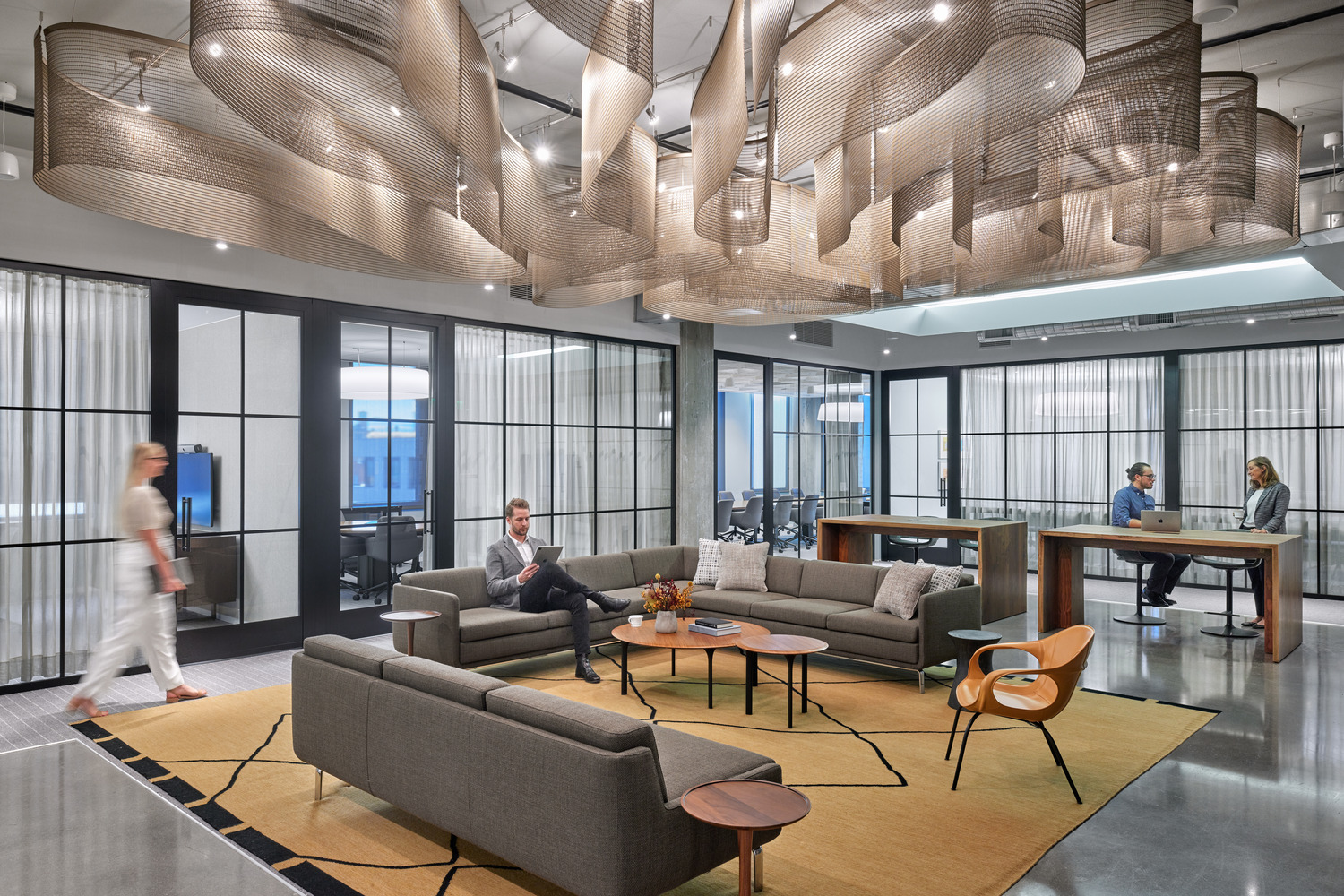
True beauty in design is the pairing of functional and aesthetic elements. While beauty is not universal or objective, it is achievable across a wide audience. Much of what people find beautiful in physical spaces stems from our early ancestry and the design principles found in nature: symmetry, rhythm, pattern, warmth, brightness, shadow, visual variety, refuge, color, and balance, exemplified by the well-organized pattern of gerbera daisy petals. The solace experienced when sitting under a tree or soaking up a mountain vista or the wonder of an unexpected break in the woods, revealing a tumbling waterfall, are additional examples. Something that soothes, awes, and draws you in for more. In the same way that the shared laughter of colleagues can create a feeling of warmth, beautiful spaces invite people to linger and interact.
Imagine: What if the workforce felt pleasure and reward when they walked into the office? Imagine a work environment that enhances the user's state of mind, ability to grow, to connect with colleagues, and thrive, while reducing cortisol and stress levels. With attention toward beauty and belonging, the workplace can create positive neurological responses from its occupants every day.
From our portfolio, there are many stories about creating beautiful workplaces for belonging and pleasure that deliver positive outcomes for their occupants and organizations. Here are three of those stories.
Cambridge AssociatesBoston, MA
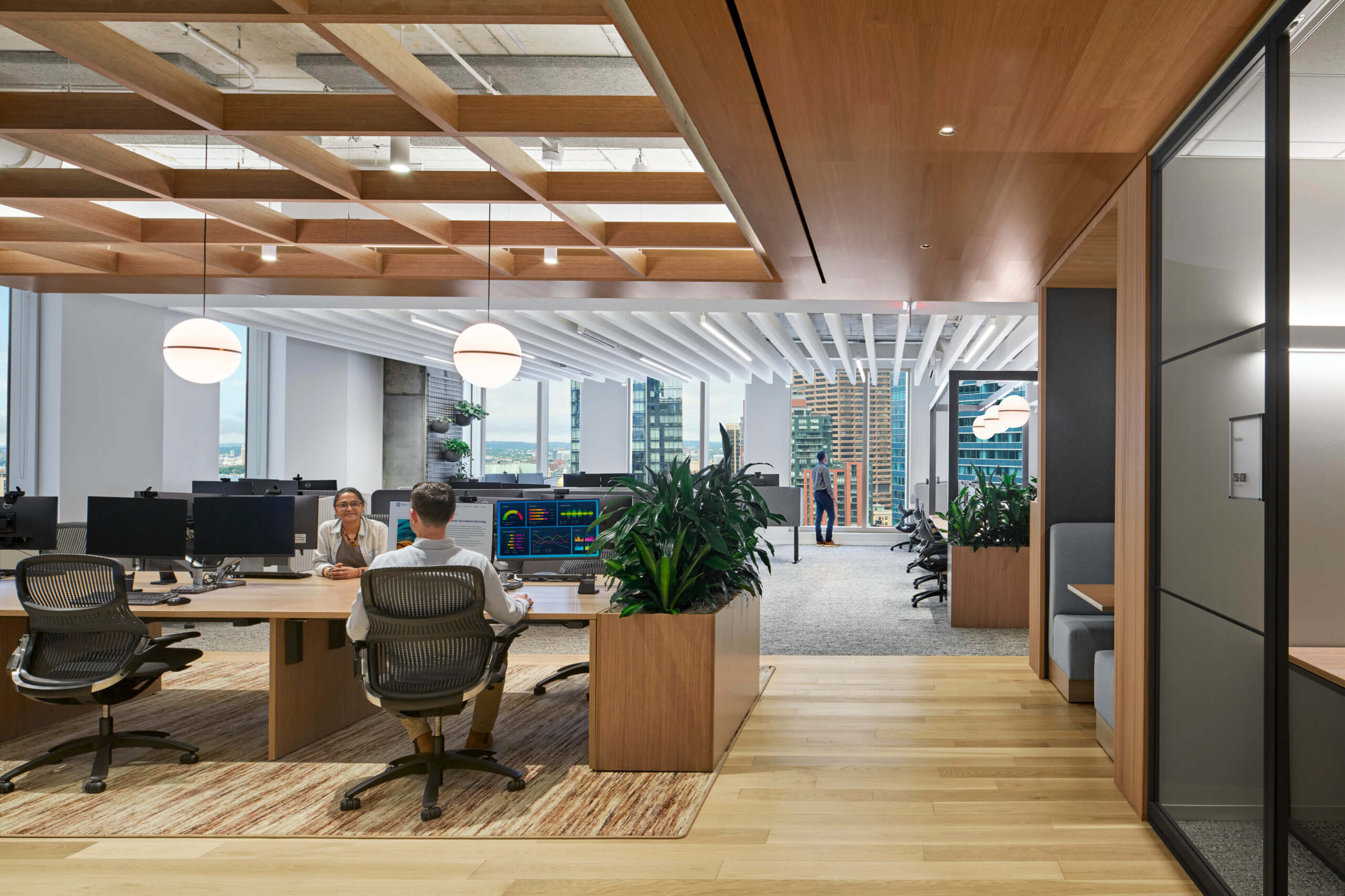
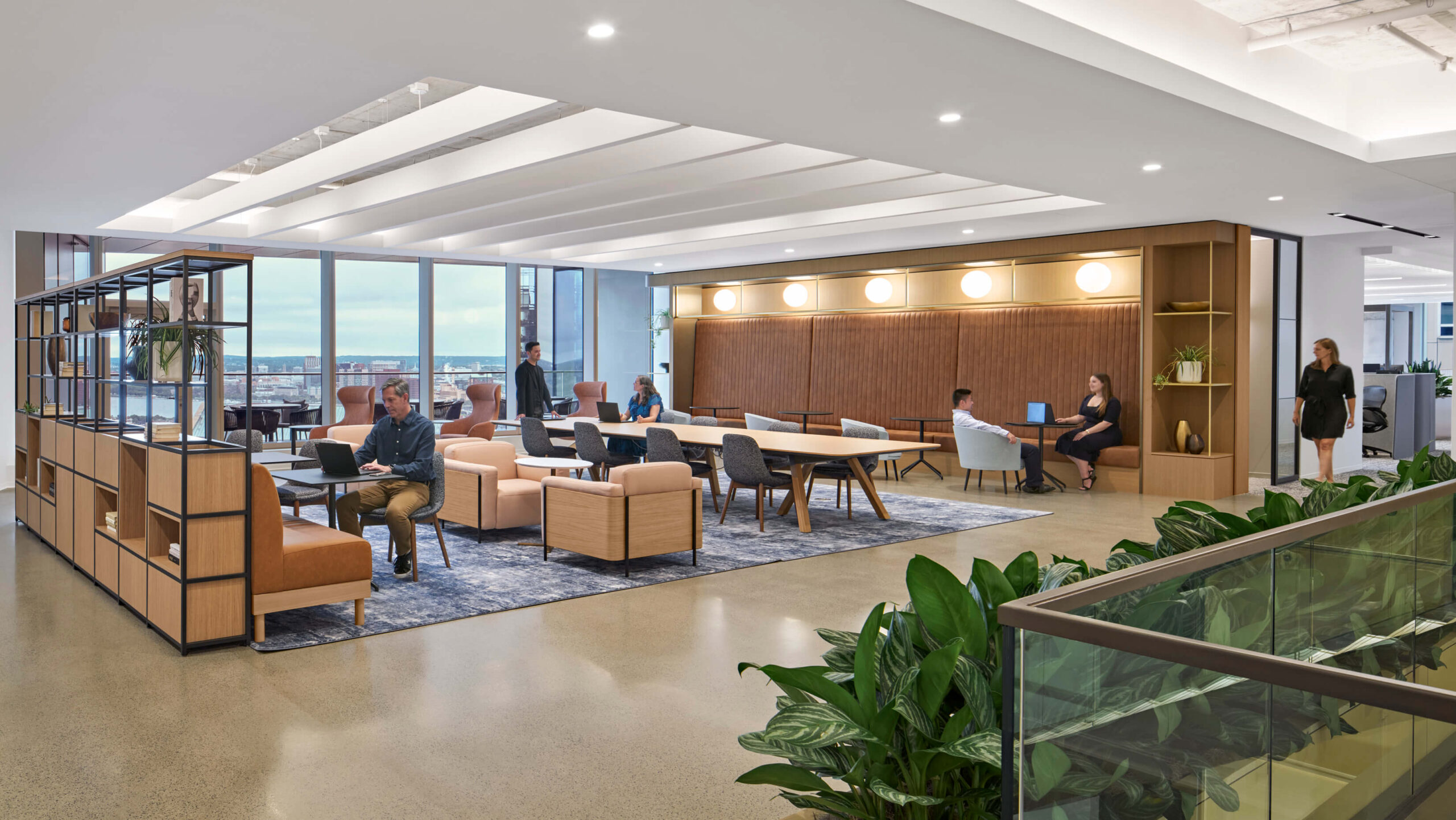
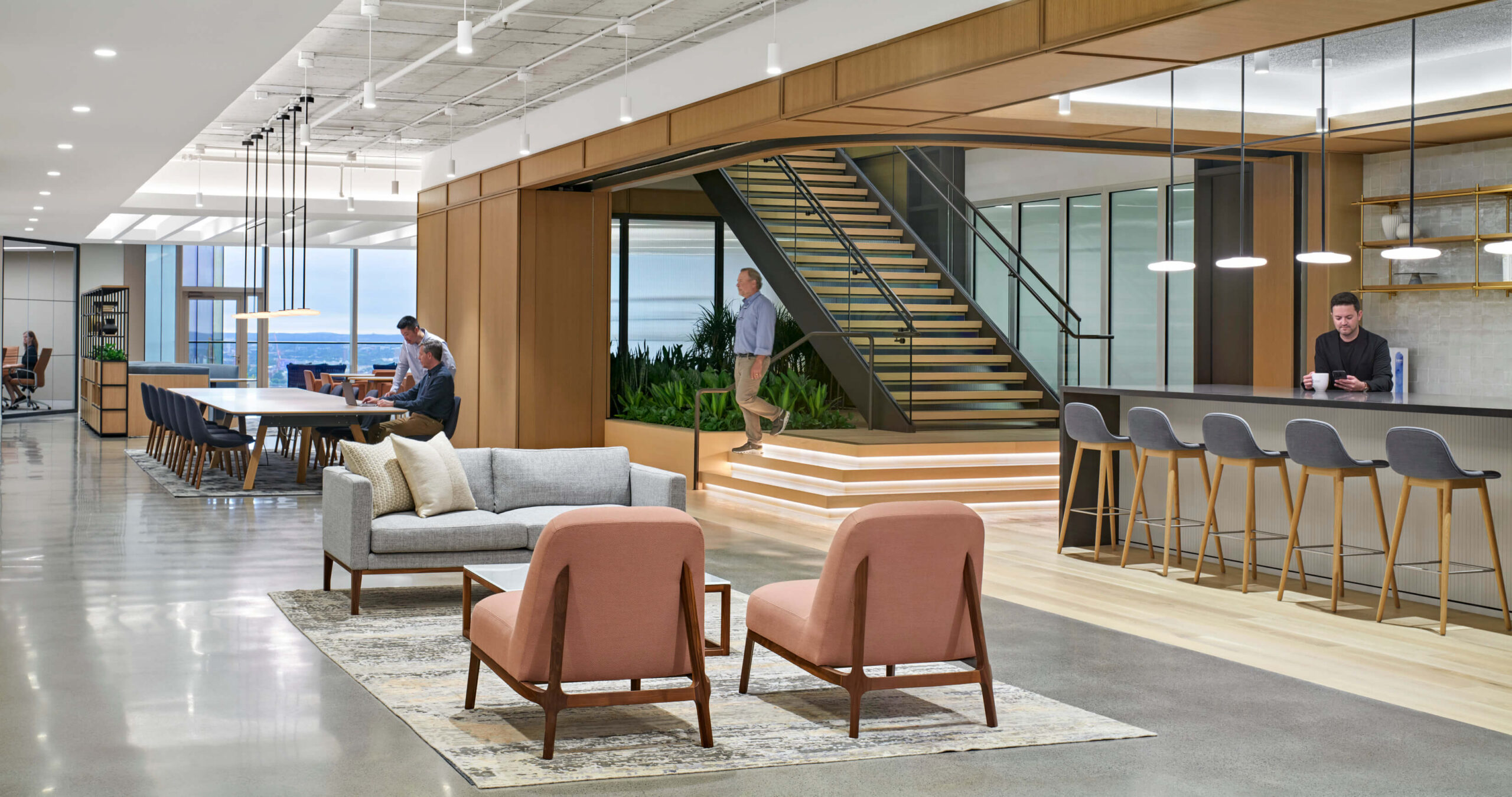
This workspace was a true transformation. Previously, employees sat in large perimeter offices and high-walled cubicles. The design of the space was basic, with wheat-colored carpet and cubicle panels, tile ceilings, and standard office lighting. The new space program has no offices, 100% unassigned seating (even for the CEO), and a large number of communal spaces for meetings and social connection. Despite the drastic change for employees, their feedback was overwhelmingly positive, and the Cambridge Associates brand statement, "Global scale and boutique touch," is felt throughout the space.
The two-story reception is expansive yet welcoming with approachable warmth. Cafes embrace the ideals of balance and sparkle. A diverse, but logical, open workplace landscape offers varied vistas. Result: Employee satisfaction with the workplace increased by 24 percentage points. One employee said, "I feel like I have a new job now."
Photography by Robert Benson
THLBoston, MA
THL's philosophy had considered private offices the gold standard. Every investment professional sat in a private office, a recruiting advantage. But the reality was a network of dark spaces, long corridors with no horizon or vista, and no visual connection to colleagues.
The new space celebrates openness and transparency. Sunlight fills the floorplate. A combination of glass-enclosed offices and comfortable open workstations provides greater visual and physical connection between colleagues. Shifts in materiality and lighting provide a sensory-rich experience using the client-requested restrained neutral color palette. Balance and symmetry provide a sense of calm that puts you at ease. The head of HR Operations noted the results. "We ended up with a spectacular space with nods to our culture everywhere. Employees have shared that the space transformed how they work, how they interact with colleagues, and their desire to come to work every day."
Photography by Ben Gancsos
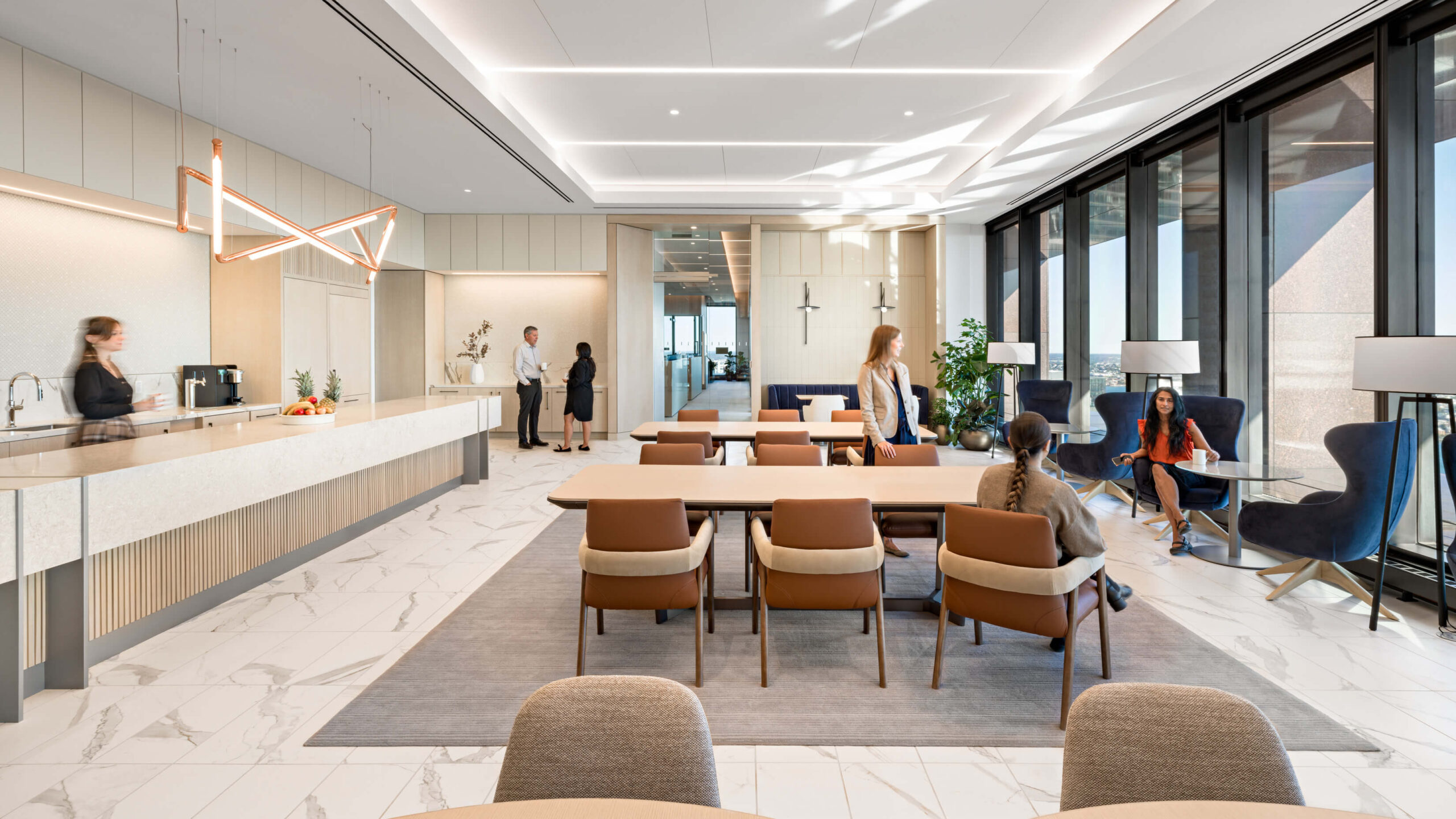
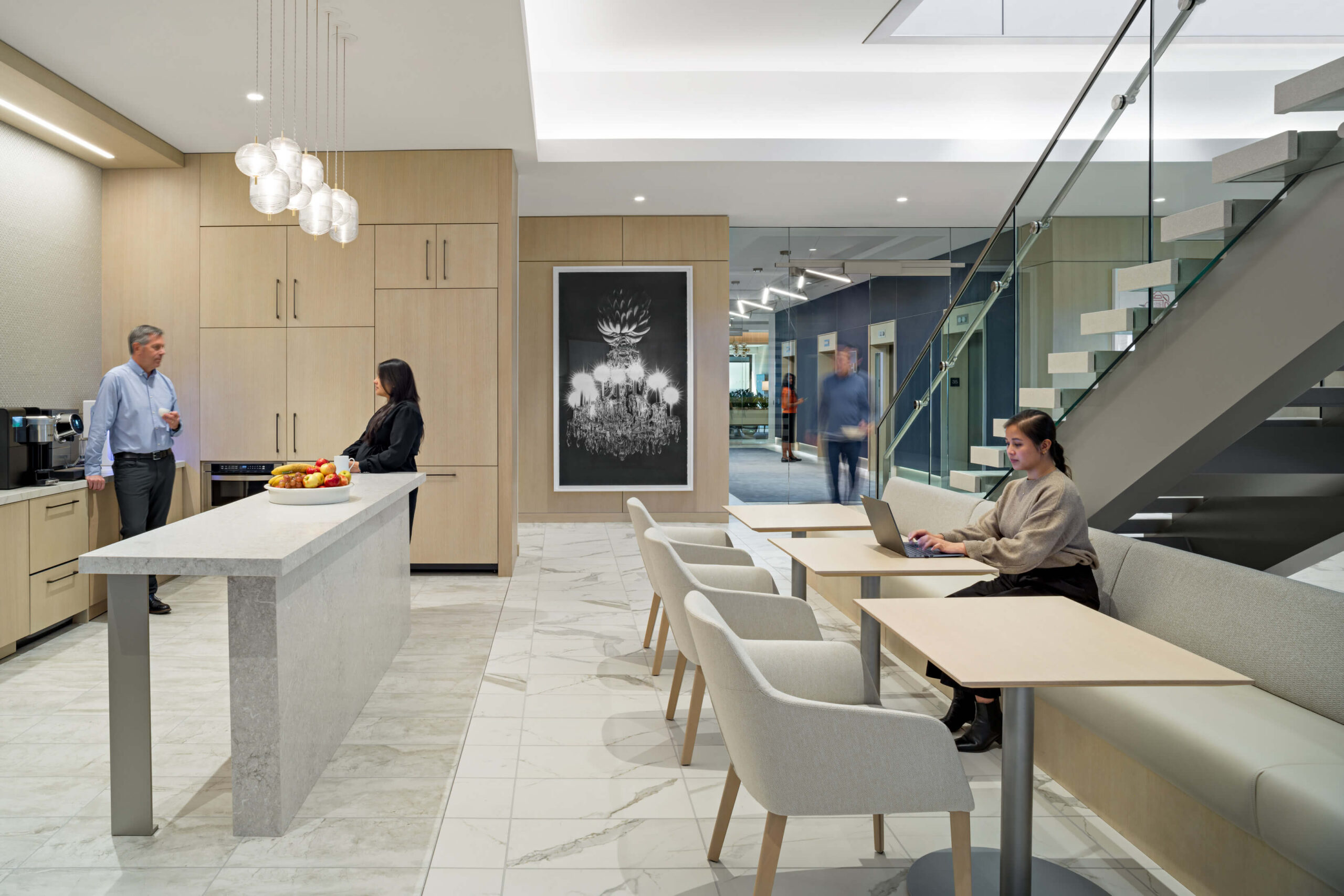
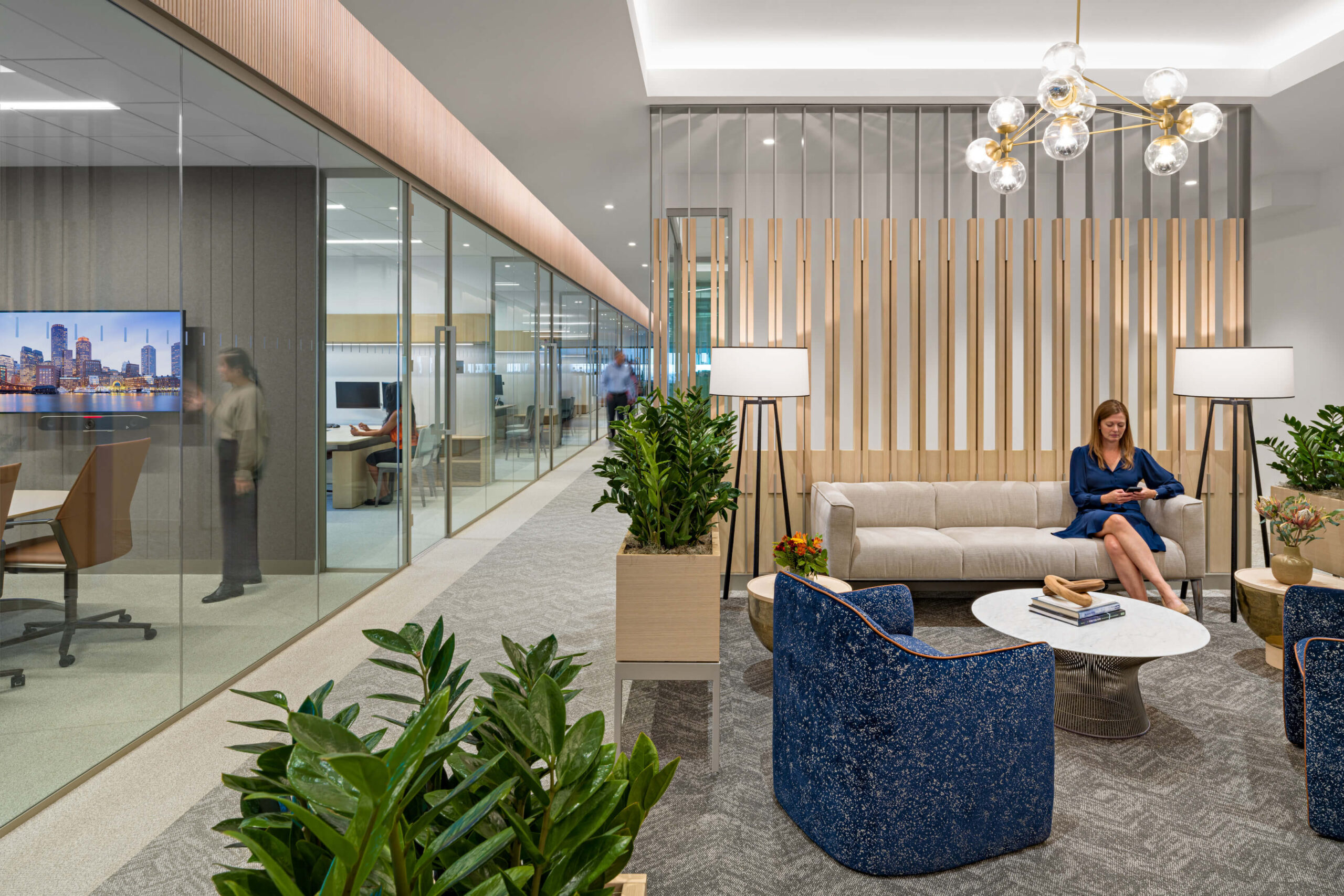
Boston PropertiesBoston, MA
Boston Properties set out to create an environment employees would be proud of. Deeply passionate about the power of the workplace, the firm encourages staff to be in the office five days a week.
Their new space program incorporates a combination of well-appointed workstations, efficient private offices, and a main street that threads together the community and collaboration zones. The beauty of a hospitality aesthetic harmoniously unifies the workplace and the people who occupy it. Every inch of the space has been carefully considered. Rich layers of lighting and contrasting textures adorn the active café, town hall, and lounge. Transitioning to the serene environment for concentrated work reveals a meticulous composition of ebb and flow that rhythmically transports you through the space. The result is a workplace that bolsters culture and connection. Every morning, the café bustles with impromptu conversations.
Photography by Ben Gancsos
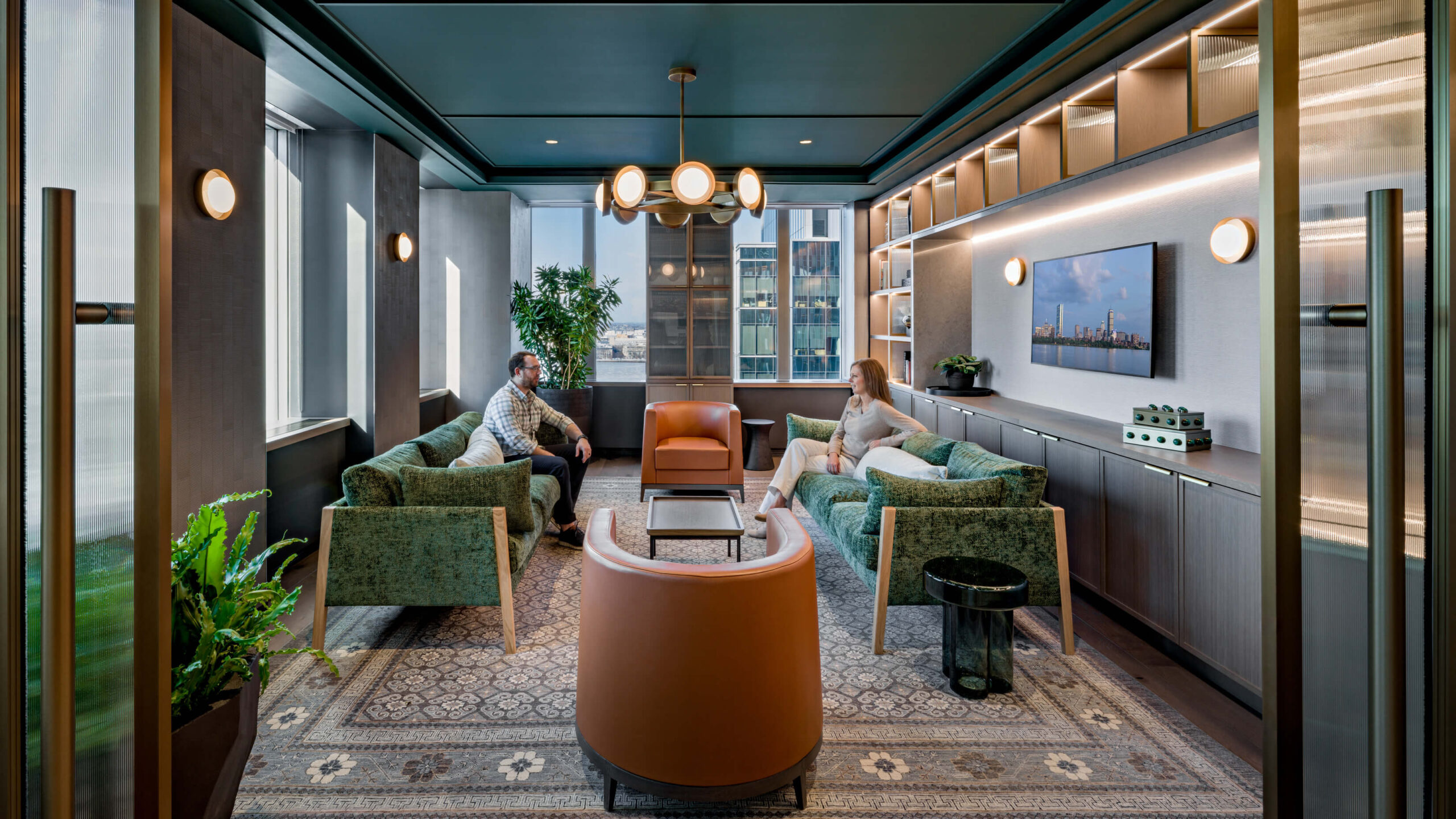
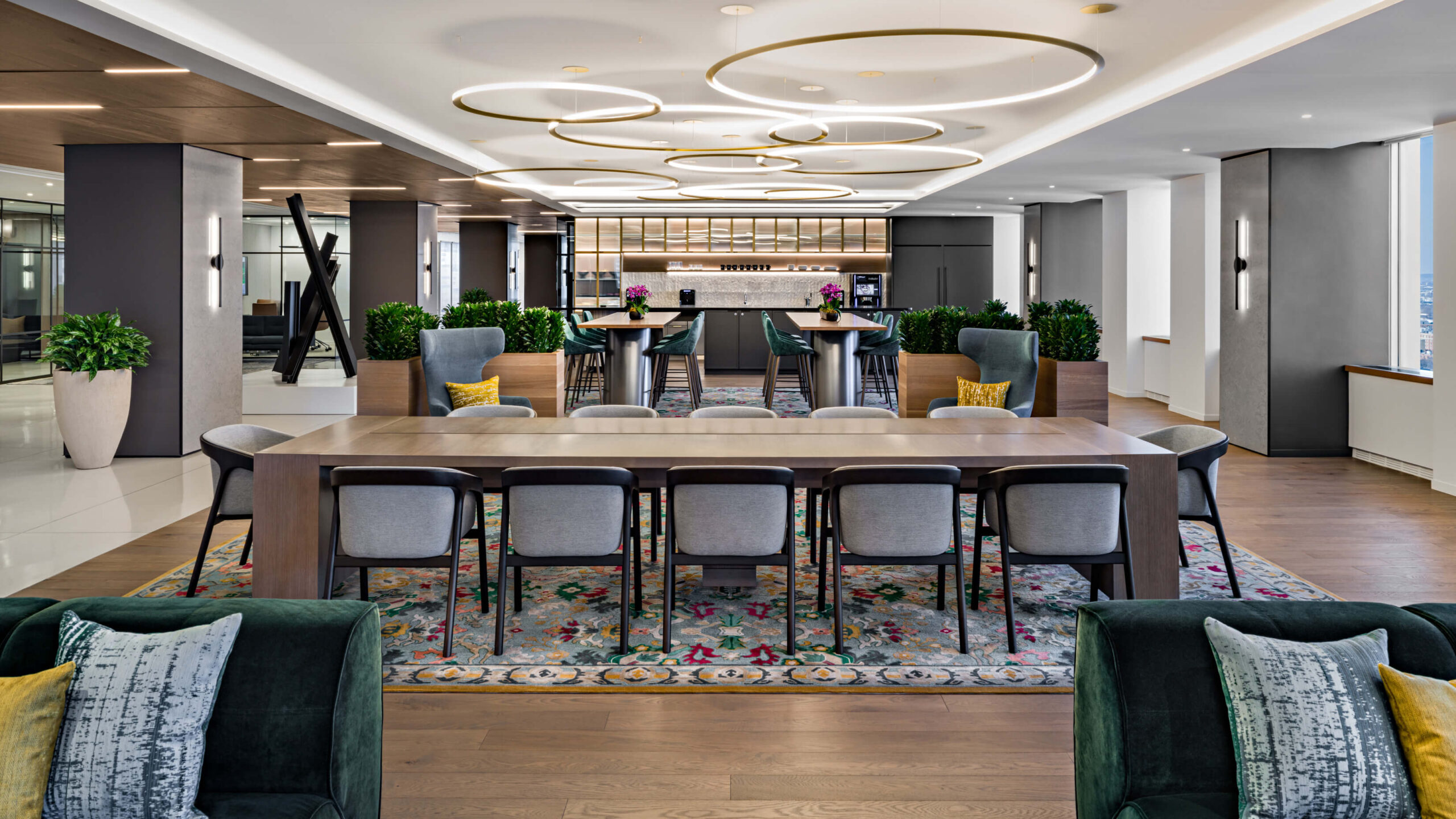
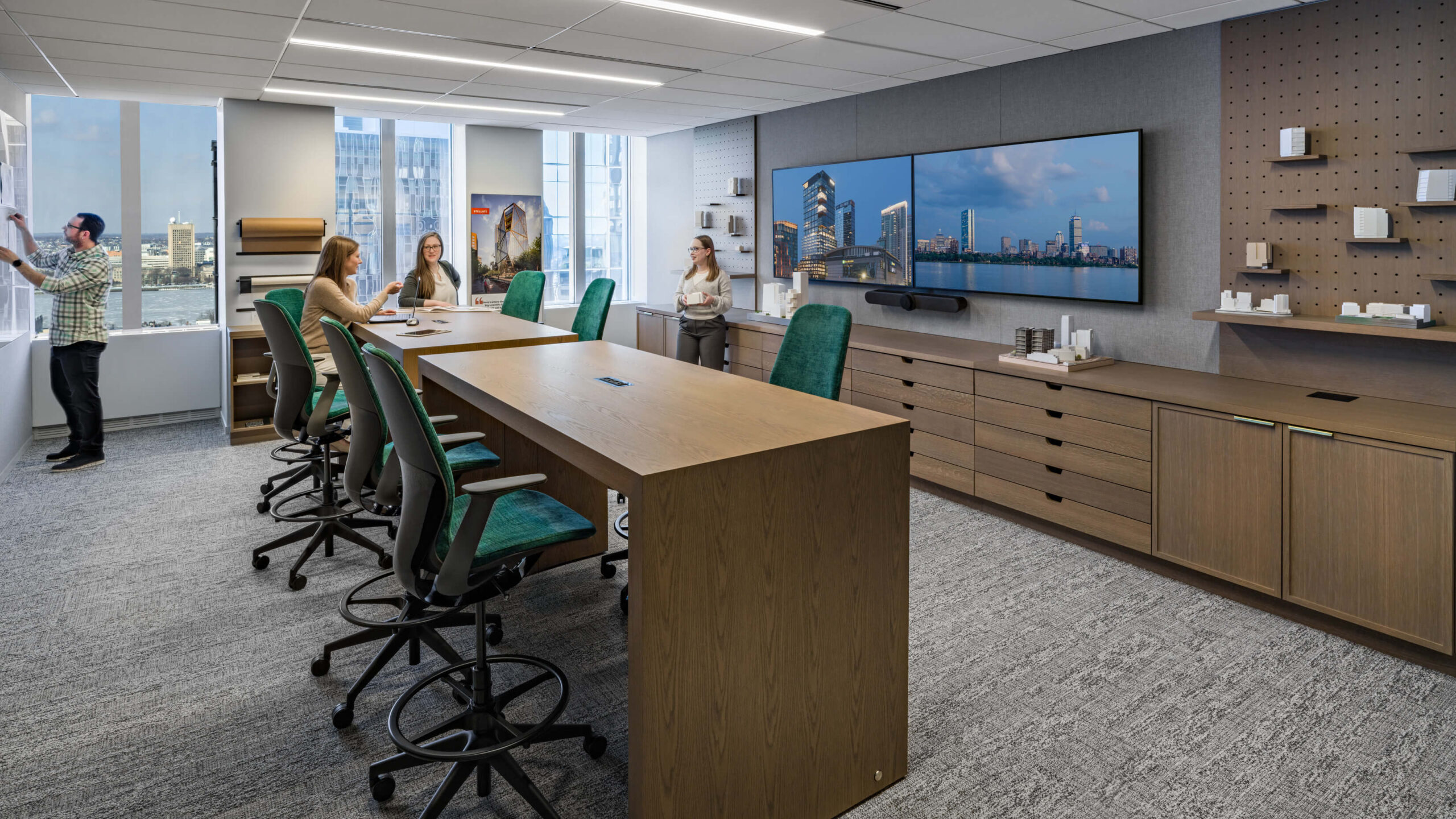
At any of these properties, the user perception could have been that something personal had been taken away: my private office at THL or Boston Properties or my assigned seat for Cambridge Associates. Had the trade-offs for these losses been only functional (more conference rooms for meetings, more focus rooms for concentrated work), the emotion of loss could have prevailed. But by incorporating elements of beauty, positive emotions were elicited. Equally, the sense of togetherness was extended beyond just being under one roof.
These new environments connect people physically through thoughtfully designed open workspaces, interconnecting stairs, and social cafes that bridge work and community. Pleasure, reward, and a sense of belonging were brought forward and celebrated. The results are spaces built for productivity, well-being, and happiness.

Julia Leahy, IIDA, NCIDQ, LEED AP ID+C
Design Principal
As both a designer and strategist, Julia has a passion for designing with a analytic lens, creating transformational environments that enable organizations and people to thrive. With a love for the arts, she sees every design challenge as an opportunity to elevate the human experience and inspire those within it. Throughout her design career Julia has worked with a diverse range of clients including Cambridge Associates, THL, Boston Properties, Wayfair, GSK, BJs Wholesale, and SunLife. Julia holds a Bachelor of Fine Arts in Interior Design from Syracuse University.