The Geography of Landlord Services
Although traditionally thought of as a routine aspect of the landlord-tenant interaction, in the current real estate environment Landlord Services has become a linchpin in the effort to attract, secure, and retain tenants, ultimately impacting a property’s return on investment. Encompassing building repositionings, spec suites, turnkey tenant spaces, and shared amenities, landlord services can check all the boxes most important to today’s potential tenants.
As a 2025 Spark fellow, Senior Associate Vikki Thorp, Project Manager at our Austin studio, considered IA’s longstanding commitment to the landlord services industry with a presentation focused on the firm’s innovative work in that sector and future expectations. As part of her research, Thorp surveyed landlord services across three key locations (New York City, Houston, and Los Angeles), noting similarities and differences, as well as universal trends. An understanding that capitalizes on trends and the subtle yet significant nuances of location can differentiate a property, making it more desirable and economically successful.
Landlord Services at Three Key Locations
The three markets Thorp surveyed are aligned on the importance of fitness centers, tenant lounges, and conference centers, although their responses to many common factors are shaped by location. And, overall, it is apparent that landlord services are most successful when owners/property management, brokers, and designers work in concert.
New York City
New York has one of the lowest vacancy rates in the country, with class A buildings at approximately 85% occupancy. A plethora of trophy buildings offer robust amenity packages and a concierge-style approach to tenant support, setting them apart from the rest of the city. In general, from design to technology to art programs, the level of sophistication across the city’s high-rise commercial properties is several steps ahead of other markets.
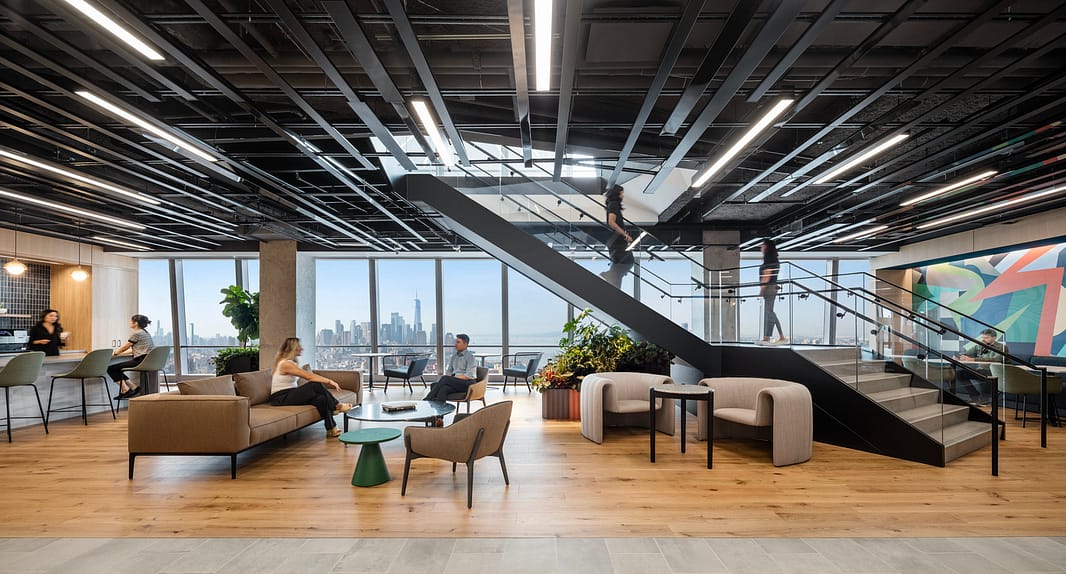
Hudson Yards Confidential Client, New York City | Photography Magda Biernat
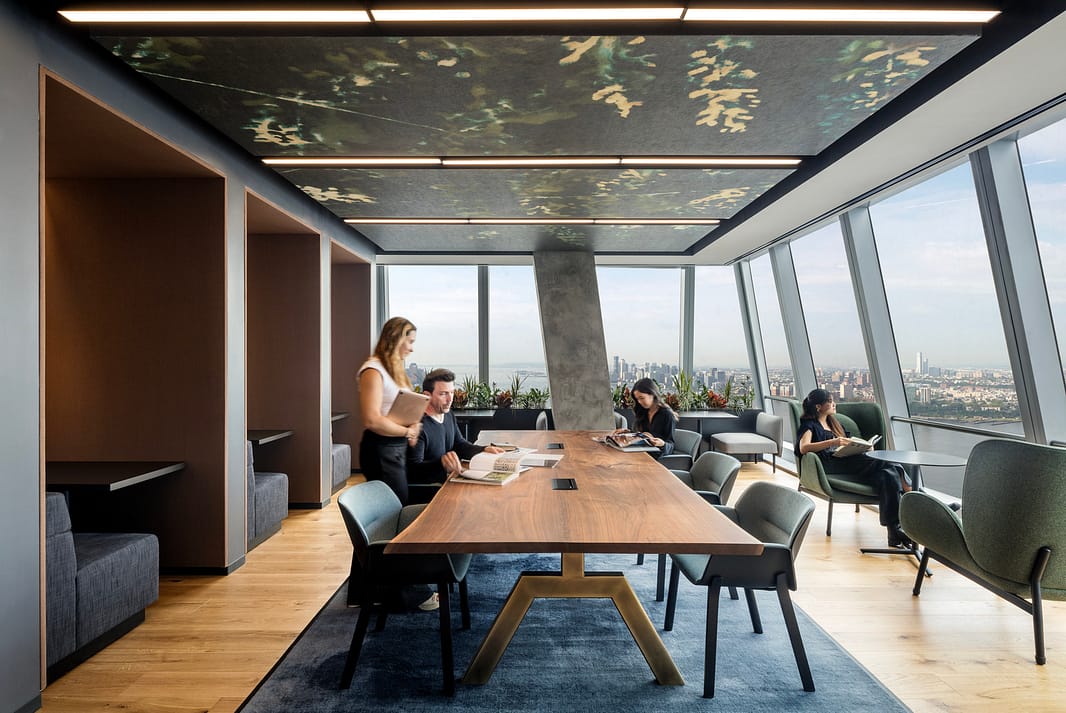
Hudson Yards Confidential Client, New York City | Photography Magda Biernat
Most leases are for above 100,000 square feet or more, or under 15,000 square feet. Design partners must be nimble, scaling their approach for each property and tenant type. Potential tenants are attracted by easy leasing processes, with landlords often providing furniture, which has become a negotiating point. Turnkey suites are appealing to potential tenants new to the process.
Test fits that offer multiple space-use options to optimize tenant needs, as well as architects who can speak directly to potential tenants about design prospects, can help secure a lease. According to one broker, when a landlord services architect is part of the leasing team, there is a 90% probability of signing a qualifying tenant.
The typical rental rate is $76 per RSF per year, and the average TI allowance is roughly $130 per RSF. However, landlords may offer free rent (the average is 12 months) in lieu of a higher TI allowance.
Houston
For Houston, a drive-heavy city, the street-to-suite experience is critical to a property’s success, as it is in Austin. Ensuring a curated journey from garage through lobby to interior is as important as the design of tenant suites and amenities.
Functional, efficient spaces, good lighting, interesting ceilings, and a generous use of glass to ensure natural light are sought. Overall, tenants want to be in new buildings; to compete, older buildings must be repositioned.
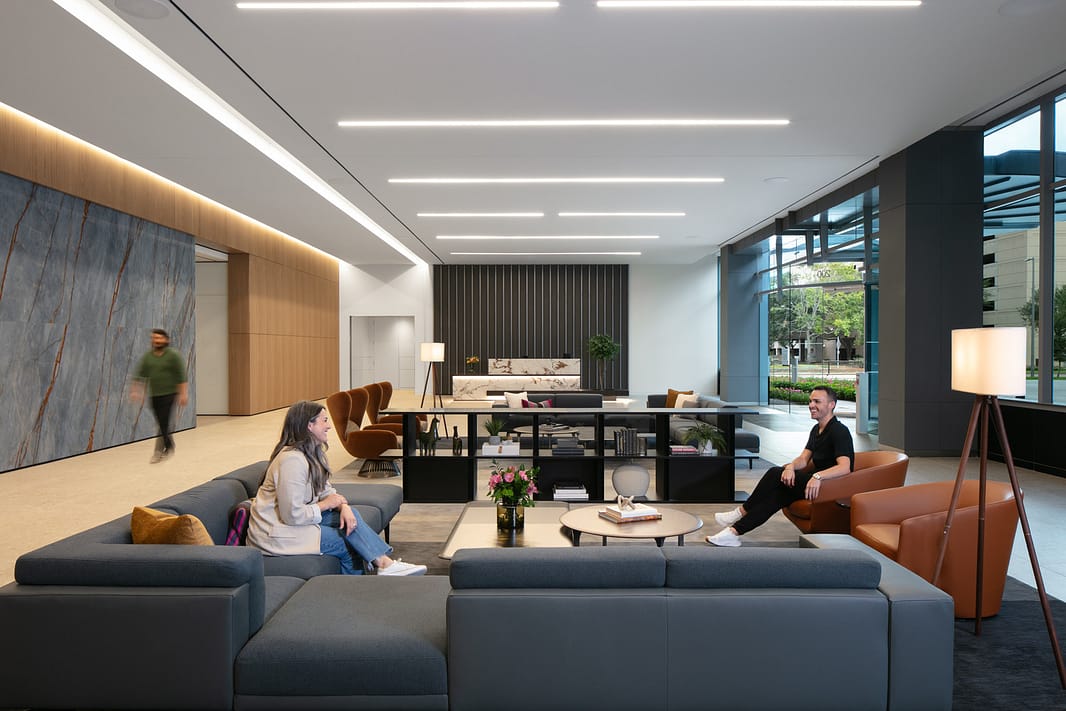
Confidential Client Repositioning, Houston | Photography Chris Barcarella
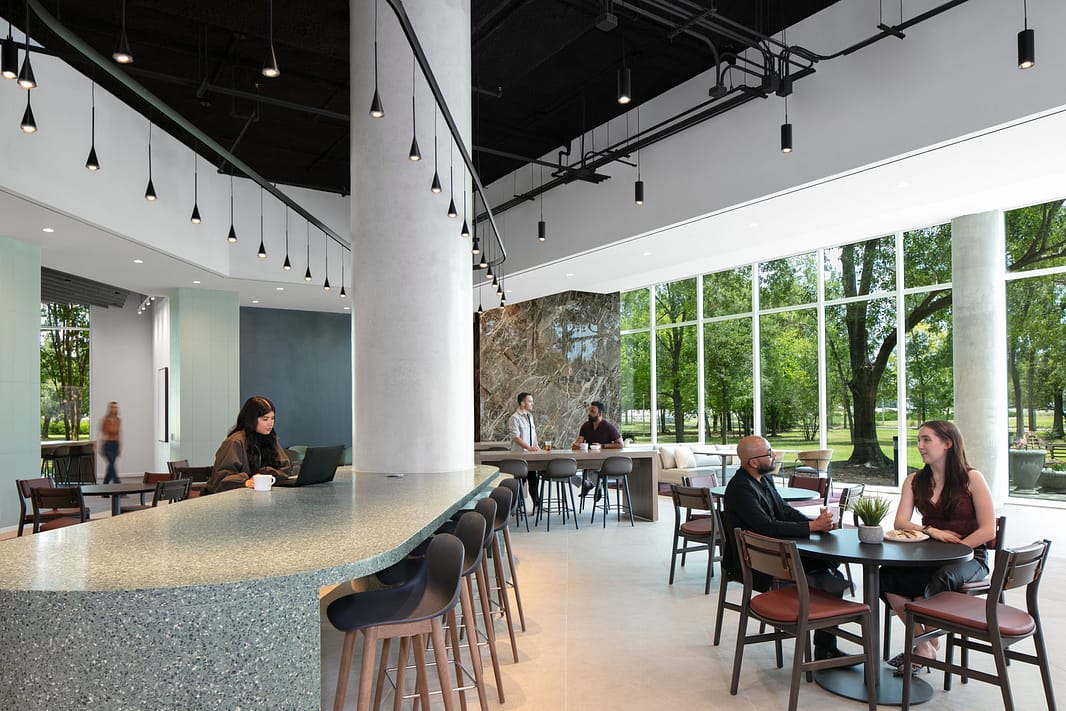
Confidential Client Repositioning, Houston | Photography Chris Barcarella
From property managers to security teams, a hospitality-industry approach to customer service is critical, with larger buildings requiring a full floor of amenities and communal gathering space. For first-generation buildings, owners are sometimes reluctant to break up a floor, preferring to wait for a full-floor tenant. But in general, buildings that support multi-tenant floors are the most successful in signing leases.
Buildings that offer the easiest path to occupancy and bear the cost of tenant buildout are the most successful at attracting tenants. Occupancy rates sit at 85% for Class A properties. Typical leases are between 10,000 to 20,000 RSF, with rental rates ranging from mid-$30 to $50+ per RSF per year. TI allowances are typically $115 per RSF for first-generation spaces and $80-$90 per RSF for second-generation spaces.
Los Angeles
In Los Angeles, a landlord’s customer service approach, which may include coordinating community events or even assisting tenants with some office administration tasks, can be a differentiator. Fitness centers, for instance, that offer an elevated design and a spa-like feel comparable to the best commercial fitness centers are expected and free. Amenities are a significant factor.
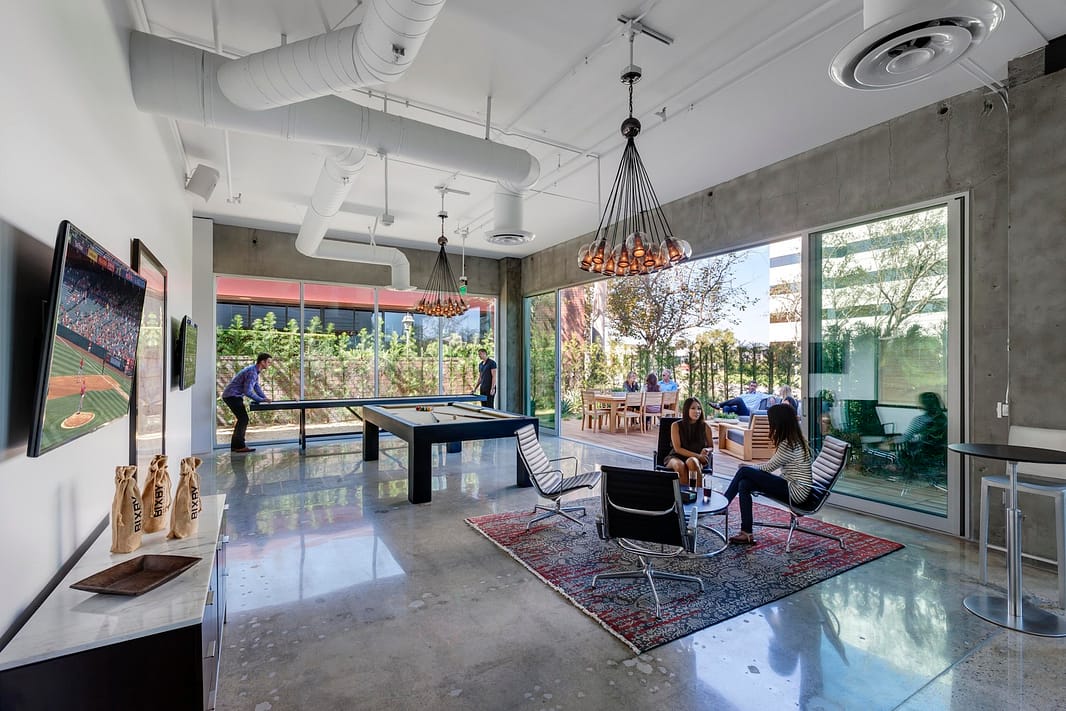
Bixby Building Repositioning, Newport Beach, CA | Photography RMA Architectural Photographers
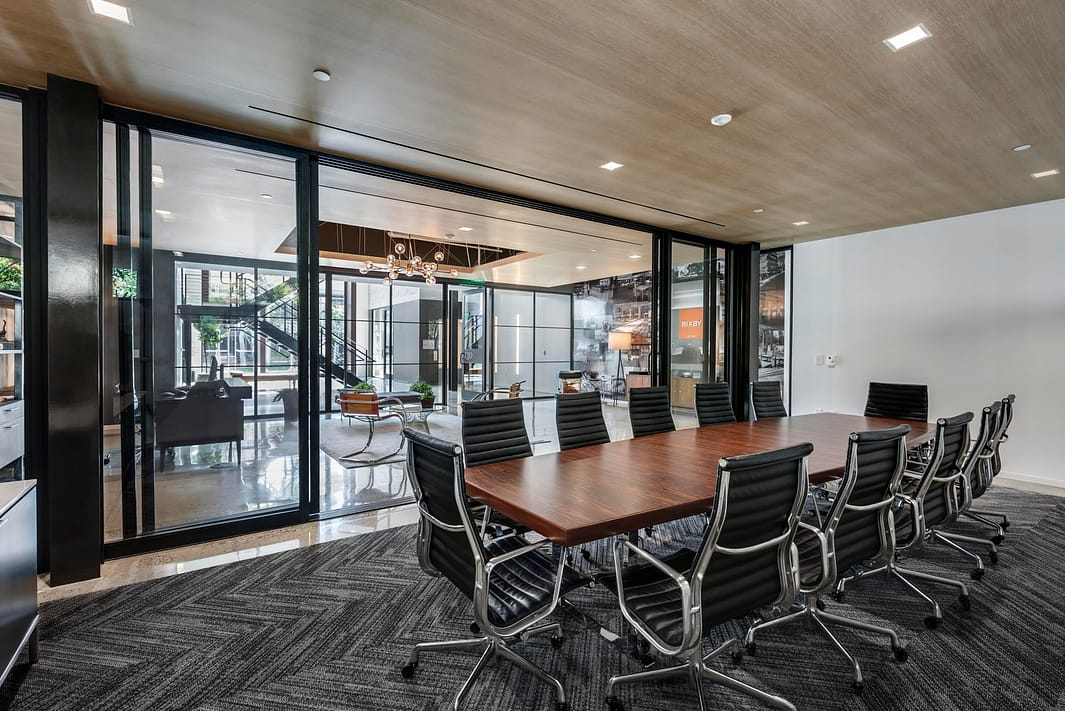
Bixby Building Repositioning, Newport Beach, CA | Photography RMA Architectural Photographers
Easy-to-reach buildings are a plus; no one wants to drive more than 40 minutes to work. Parking is an issue; properties with parking have an advantage. Free charging for electric cars is desirable here as it is in Houston. And some landlords are investing in curb appeal.
Spec suites are popular and most successful when geared toward professional services tenants. For the convenience of those tenants and to generate activity, retail tenants enjoy low rental rates.
Given the mild weather, outdoor amenities and events are emphasized. To enhance a building’s presence, the public is often encouraged to engage with the property and its amenities. This is in contrast to New York and Houston, where a more exclusive approach is taken, requiring tenancy or membership to access building amenities.
Preliminary pricing exercises for TI services are done at the ownership level; project managers no longer estimate costs due to the variable market. Occupancy is currently around 75% with a lease rate of $48 per RSF per year. TI allowances range from $80 to $115 per RSF for new construction or a completely renovated space that has never been leased. But not all building owners have the capital to pay for TI allowances.
Perks like concierge service and childcare are nice, but not deal makers for potential tenants. For extremely high-end tenants, a helipad is a common amenity.
Amenities are Trending
For all locations, amenities are a significant factor in attracting and retaining tenants. According to a 2024 Cushman & Wakefield survey, the top ten building amenities ranked among 30 options chosen by employees across 122 US companies are free snacks and beverages, an onsite cafe/pop-up restaurant, fitness center, onsite bar, pet daycare, green space, and recreation area/game room, as well as health and wellness support, personal care services, and a relaxation/meditation room.
Convenience-driven amenities, including parking, food services, bike storage, and technology, are highly desirable. Controlled site access and security at the lobby/reception and communal areas is assumed.
Amenity hubs and conference areas are particularly in demand. When these are positioned on each floor, tenant suites can be smaller and less costly, providing greater flexibility when suites need to be combined or separated.
Conclusion
For new and established properties, landlord services are a responsive, critical contributor to a building’s functionality and success for both property management and tenants, best delivered with a holistic approach rather than a commodity-driven perspective. Tailored to the realities, demands, and proclivities of location, as well as tenant business requirements, these services help establish powerful workplaces sensitive to human needs, business requirements, and real estate goals, affecting a property’s economic strength and viability.

Vikki Thorp, CID, RID
Senior Project Manager | IA's Austin Studio
Vikki is a 2025 Spark Fellow. Her background spans landlord services and large-scale workplace design, with campus and headquarters projects for major energy and technology clients, as well as clients in wealth management and real estate. She holds a Bachelor of Architecture from the University of Texas at Austin.